


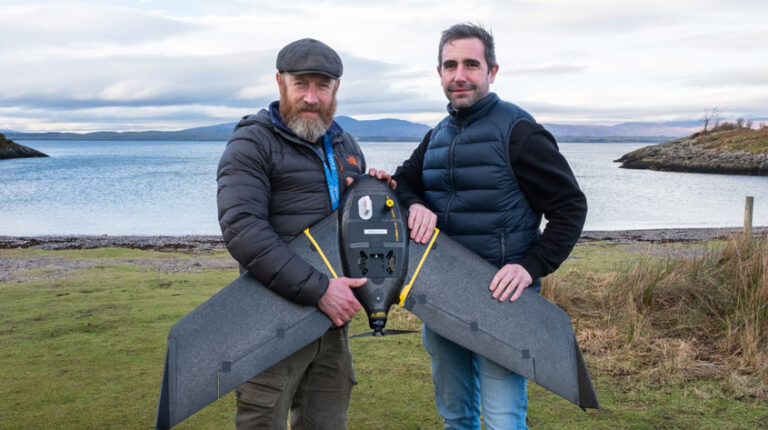
The Scientific Robotics Academy, based at the Scottish Association for Marine Science (SAMS) in Oban, is to host two courses to educate researchers and other professionals about how to use robotics in environmental data collection.
The courses, titled ‘Environmental monitoring using autonomous platforms’ and ‘Applied photogrammetry for environmental monitoring,’ come amid the rapid expansion of AI and robotics, which are transforming tasks such as survey work.
The courses are aimed at the beginner-to-intermediate and intermediate-and-advanced levels, respectively.
Dr Phil Anderson, who heads up the Scientific Robotics Academy, said, “By the end of this decade we will have seen a huge change in how we collect data. The affordability and reliability of autonomous systems mean that recording data in this way is very much the current direction of travel.
“Those who are familiar with such systems and understand their strengths and limitations will be ideally placed to not just adapt to this change but also help to develop and influence how robotics is used.
“Our course gives participants practical experience with autonomous systems and the necessary data processing skills to support that.”
The new offering follows on from a development course run by the Scientific Robotics Academy last September.
University of Stirling PhD student Ximena Aguilar Vega, who was a participant on the 2025 course, commented, “It has been amazing to see all the options out there in terms of robotics and all the things we could do, not just in facilitating fieldwork but what could be achieved through various sensors being used.”
The new courses are backed by Argyll and Bute Council, with renewable energy developer Nadara part-sponsoring places on the courses for the first 10 applicants.
Click here for more information on how to access the courses