


Close Menu
Meteorological Technology International
  • News
    • A-E
      • Agriculture
      • Automated Weather Stations
      • Aviation
      • Climate Measurement
      • Data
      • Developing Countries
      • Digital Applications
      • Early Warning Systems
      • Extreme Weather
    • G-P
      • Hydrology
      • Lidar
      • Lightning Detection
      • New Appointments
      • Nowcasting
      • Numerical Weather Prediction
      • Polar Weather
    • R-S
      • Radar
      • Rainfall
      • Remote Sensing
      • Renewable Energy
      • Satellites
      • Solar
      • Space Weather
      • Supercomputers
    • T-Z
      • Training
      • Transport
      • Weather Instruments
      • Wind
      • World Meteorological Organization
      • Meteorological Technology World Expo
  • Features
  • Online Magazines
    • January 2026
    • April 2025
    • January 2025
    • September 2024
    • April 2024
    • Archive Issues
    • Subscribe Free!
  • Opinion
  • Videos
  • Supplier Spotlight
  • Expo
LinkedIn X (Twitter) Facebook
  • Sign-up for Free Weekly E-Newsletter
  • Meet the Editors
  • Contact Us
  • Media Pack
LinkedIn Facebook
Subscribe
Meteorological Technology International
  • News
      • Agriculture
      • Automated Weather Stations
      • Aviation
      • Climate Measurement
      • Data
      • Developing Countries
      • Digital Applications
      • Early Warning Systems
      • Extreme Weather
      • Hydrology
      • Lidar
      • Lightning Detection
      • New Appointments
      • Nowcasting
      • Numerical Weather Prediction
      • Polar Weather
      • Radar
      • Rainfall
      • Remote Sensing
      • Renewable Energy
      • Satellites
      • Solar
      • Space Weather
      • Supercomputers
      • Training
      • Transport
      • Weather Instruments
      • Wind
      • World Meteorological Organization
      • Meteorological Technology World Expo
  • Features
  • Online Magazines
    1. April 2026
    2. January 2026
    3. September 2025
    4. April 2025
    5. January 2025
    6. September 2024
    7. April 2024
    8. January 2024
    9. Archive Issues
    10. Subscribe Free!
    Featured
    May 5, 2026

    In this Issue – April 2026

    By Web TeamMay 5, 2026
    Recent

    In this Issue – April 2026

    May 5, 2026

    In this Issue – January 2026

    November 27, 2025

    In this Issue – September 2025

    August 11, 2025
  • Opinion
  • Videos
  • Supplier Spotlight
  • Expo
Facebook LinkedIn
Subscribe
Meteorological Technology International
World Meteorological Organization

WMO celebrates 150 years of global data exchange this World Meteorological Day

Dan SymondsBy Dan SymondsMarch 23, 20233 Mins Read
Share LinkedIn Facebook Twitter Email
Share
LinkedIn Facebook Twitter Email

The World Meteorological Organization (WMO) is highlighting past achievements, current progress and future potential this World Meteorological Day (March 23), as it celebrates the 150th anniversary of its predecessor, the International Meteorological Organization.

This year’s theme – ‘the future of weather, climate and water across generations’ – highlights the progress made from the late 19th-century telegraphs and shipping forecasts to supercomputers and space technology, and urges current generations to live up to their responsibilities and ensure that future generations inherit a better tomorrow.

Professor Petteri Taalas, WMO secretary-general, said, “The demand for our expertise and our science has never been higher. For the past 150 years, national meteorological and hydrological services (NMHSs) have collected and standardized data that underpins the weather forecasts we now take for granted. The history of WMO data exchange is a success story of scientific cooperation to save lives and livelihoods.

“Weather, climate and water know no national or political boundaries. The need for international cooperation has guided our work since 1873 and will continue to do so in the future as we strive for a world that is more resilient to extreme weather, climate, water and other environmental events.”

Changing climate
The 150th anniversary serves as a reminder of the changing climate. The International Meteorological Organization was established in 1873 in an era when pollution from industrial and human activities was just beginning.

As a result of heat-trapping greenhouse gases, the average global temperature is now more than 1.1°C higher today than 150 years ago. Weather is more extreme, oceans are warmer and more acidic, sea levels have risen and ice is melting. The rate of change is accelerating.

“2023 must be a year of transformation, not tinkering,” said António Guterres, UN secretary-general. “Every year of insufficient action to keep global warming below 1.5°C drives us closer to the brink, increasing systemic risks and reducing our resilience against climate catastrophe. As countries hurtle past the 1.5° limit, climate change is intensifying heatwaves, droughts, flooding, wildfires and famines, while threatening to submerge low-lying countries and cities and drive more species to extinction. That means accelerating actions to limit temperature rise to 1.5° through scaled-up mitigation and adaptation measures.

“It means radically transforming our energy and transportation systems, breaking our addiction to fossil fuels and embracing a just transition to renewable energy. It means developed countries providing a revolution of financial and technical support to developing countries as they mitigate emissions, adapt to a renewable future, build resilience against extreme weather events and address the loss and damage resulting from climate change. And it means living up to the promise made last World Meteorological Day to ensure that early warning systems against climate disasters cover every person in the world.”

There is increasing momentum behind the ambitious drive to ensure that life-saving early warning systems cover everyone in the next five years. The Early Warnings for All Initiative, launched by Guterres on World Meteorological Day 2022, was endorsed at COP27 in Sharm-el-Sheikh in Egypt and has won support from developed and developing countries, the UN family and the private sector.
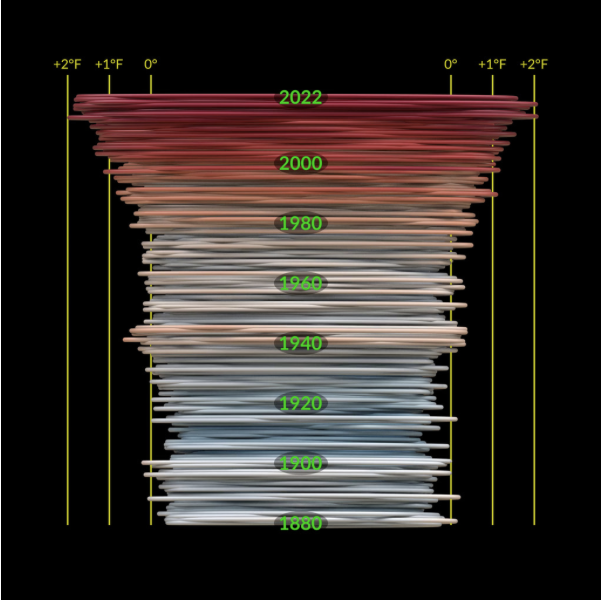
Climate spiral (1880-2020) in degrees Celsius
Previous ArticleUN and WMO look to fast-track support for early warnings initiative
Next Article World Meteorological Day: International collaboration has and will continue to be the key to future success, says ECMWF director

Read Similar Stories

Early Warning Systems

G7 countries pledge additional funding for CREWS early warning initiative

May 7, 20263 Mins Read
Climate Measurement

European climate report highlights record heat, glacier loss and rising extremes

April 27, 20263 Mins Read
Climate Measurement

WMO signals increasing likelihood of El Niño developing in 2026

April 24, 20263 Mins Read
Latest News

University of Vermont launches first station in statewide weather monitoring network

May 8, 2026

G7 countries pledge additional funding for CREWS early warning initiative

May 7, 2026

Wildfires can create ‘burn scar heat islands’ that alter weather patterns, study finds

May 6, 2026

Receive breaking stories and features in your inbox each week, for free


Enter your email address:


Supplier Spotlights
  • GAMIC GmbH
Getting in Touch
  • Contact Us / Advertise
  • Meet the Editors
  • Media Pack
  • Free Weekly E-Newsletter
Our Social Channels
  • Facebook
  • LinkedIn
© 2026 UKi Media & Events a division of UKIP Media & Events Ltd
  • Cookie Policy
  • Privacy Policy
  • Terms and Conditions
  • Notice and Takedown Policy

Type above and press Enter to search. Press Esc to cancel.