With domestic policy committing the UK to achieving net zero emissions by 2050, and by 2045 in Scotland, and with clear evidence that the Earth’s climate is changing, policymakers and environmental experts need reliable, high-quality information to make decisions to protect the planet.
Being able to accurately quantify the global carbon cycle, the anthropogenic contribution to it and the response of the natural environment is crucial to international efforts to manage a sustainable planet. Space-based sensors offer a unique opportunity to capture global data on climate over time. However, as we generate more and more data, we also need to ensure that the data collected is trusted and reliable. Having reliable data from Earth observation systems is critical to achieving UK and international targets.
These observations need to be stable and accurate, often within a few tenths of a percent per decade. In many cases, this requires measurement uncertainties that are normally only realizable in the laboratories of national metrology institutes (NMI) such as the National Physical Laboratory (NPL), tied to invariant constants of nature through primary standards of the international system of units (SI).
As the UK’s national metrology institute, NPL is leading international activities to improve the quality and reliability of Earth observation data. Its STAR facility is a vital piece in the climate monitoring puzzle. By providing innovative, high SI-traceable accuracy to the pre-flight calibration of satellite instruments, the facility will aid UK and global Earth observation missions.
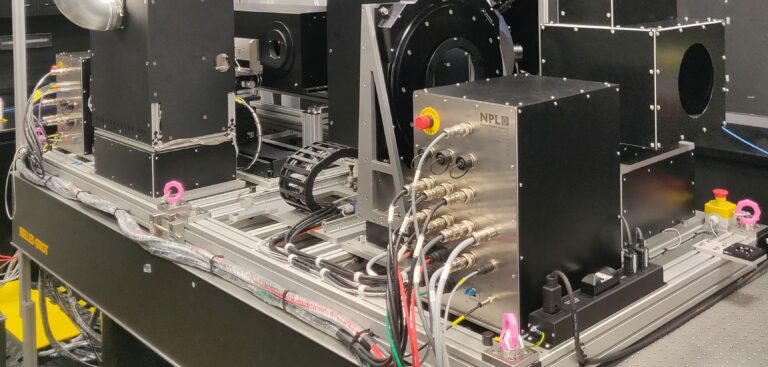
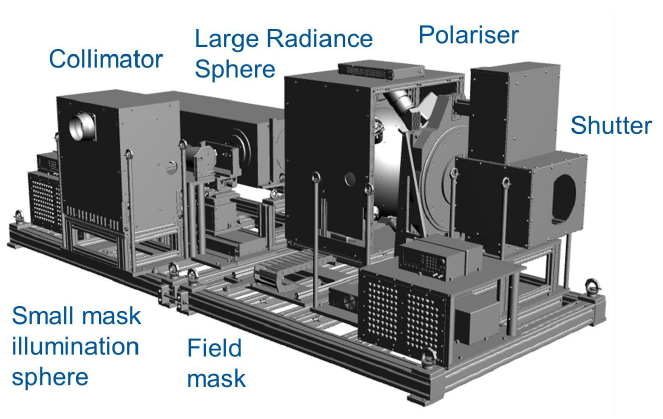
STAR-cc-OGSE, which stands for Spectroscopically Tuneable Absolute Radiometric, calibration and characterization, Optical Ground Support Equipment, provides a state-of-the-art solution for instrument calibration and characterization, ensuring that the required performance is achieved while also minimizing the time and effort involved in the pre-launch vacuum test environment. In essence, the facility combines in a single transportable package all of the NPL radiometric calibration capabilities, which normally occupy three laboratories at the Teddington site.
There are hundreds of Earth observation satellites orbiting our Earth and recording data, much of which is used to monitor the current environment and climate change. Using satellites, we can analyze the well-being of the planet by looking at the health of oceans and forests. Although it is widely understood that climate change is happening, there are still uncertainties around how various elements of the natural world are reacting to changes in the levels of greenhouse gases in the atmosphere, and playing their role as natural sinks storing emitted carbon, with land and ocean sequestering more than 50%. Even small, consistent errors in the measurement data can have a significant impact on our interpretation of the change observed.
The STAR facility is the result of a partnership between the Scottish laser company M Squared Lasers and NPL. The concepts embedded there were established at NPL more than three decades ago and have, in part, been exploited for some time in the US space sector. However, until recent innovations by M Squared Lasers, it has not been possible to create a transportable turnkey facility such as STAR that can deliver SI traceability with the accuracy levels needed for climate analysis.
Although designed to meet the demanding needs of climate and environmental monitoring, STAR’s flexibility, comprehensiveness and ease of use make it suitable for a wide range of applications. These attributes enable performance enhancements such as end-to-end calibration and characterization – which were previously deemed impossible due to cost and complexity – on missions such as the cubesats of new space providers, enabling the latter to achieve science quality observations.
The STAR-cc-OGSE is fully traceable to NPL’s primary radiometric standard, the cryogenic radiometer, and can provide unprecedented uncertainties well below 0.5% across a wide spectral region. The first mission that will utilize the STAR-cc-OGSE is the CNES/UKSA microsatellite MicroCarb, whose scientific objective is to monitor and characterize carbon dioxide (CO2) surface fluxes – the exchanges between the sources (natural or anthropogenic) and the sinks (the ocean, the land and the vegetation). Over the last 100 years, the mean temperature at Earth’s surface has increased by nearly 1ºC due to the increased CO2 concentration in the atmosphere.
Although an increase of 1ºC may seem minute, it is important to note this is the mean temperature. The continued increase is leading to rising sea levels resulting in coastal and low-level land loss, and is likely to lead to ever more unusual weather events.
NPL is underpinning the measurements provided by MicroCarb, providing traceability and confidence in the outputs of the mission – a vital tool in the UK’s efforts toward greenhouse gas monitoring.