

Close Menu
Meteorological Technology International
  • News
    • A-E
      • Agriculture
      • Automated Weather Stations
      • Aviation
      • Climate Measurement
      • Data
      • Developing Countries
      • Digital Applications
      • Early Warning Systems
      • Extreme Weather
    • G-P
      • Hydrology
      • Lidar
      • Lightning Detection
      • New Appointments
      • Nowcasting
      • Numerical Weather Prediction
      • Polar Weather
    • R-S
      • Radar
      • Rainfall
      • Remote Sensing
      • Renewable Energy
      • Satellites
      • Solar
      • Space Weather
      • Supercomputers
    • T-Z
      • Training
      • Transport
      • Weather Instruments
      • Wind
      • World Meteorological Organization
      • Meteorological Technology World Expo
  • Features
  • Online Magazines
    • January 2026
    • April 2025
    • January 2025
    • September 2024
    • April 2024
    • Archive Issues
    • Subscribe Free!
  • Opinion
  • Videos
  • Supplier Spotlight
  • Expo
LinkedIn X (Twitter) Facebook
  • Sign-up for Free Weekly E-Newsletter
  • Meet the Editors
  • Contact Us
  • Media Pack
LinkedIn Facebook
Subscribe
Meteorological Technology International
  • News
      • Agriculture
      • Automated Weather Stations
      • Aviation
      • Climate Measurement
      • Data
      • Developing Countries
      • Digital Applications
      • Early Warning Systems
      • Extreme Weather
      • Hydrology
      • Lidar
      • Lightning Detection
      • New Appointments
      • Nowcasting
      • Numerical Weather Prediction
      • Polar Weather
      • Radar
      • Rainfall
      • Remote Sensing
      • Renewable Energy
      • Satellites
      • Solar
      • Space Weather
      • Supercomputers
      • Training
      • Transport
      • Weather Instruments
      • Wind
      • World Meteorological Organization
      • Meteorological Technology World Expo
  • Features
  • Online Magazines
    1. April 2026
    2. January 2026
    3. September 2025
    4. April 2025
    5. January 2025
    6. September 2024
    7. April 2024
    8. January 2024
    9. Archive Issues
    10. Subscribe Free!
    Featured
    May 5, 2026

    In this Issue – April 2026

    By Web TeamMay 5, 2026
    Recent

    In this Issue – April 2026

    May 5, 2026

    In this Issue – January 2026

    November 27, 2025

    In this Issue – September 2025

    August 11, 2025
  • Opinion
  • Videos
  • Supplier Spotlight
  • Expo
Facebook LinkedIn
Subscribe
Meteorological Technology International
Aviation

Commercial flights deliver ozone insights

Lawrence ButcherBy Lawrence ButcherAugust 26, 20203 Mins Read
Share LinkedIn Facebook Twitter Email
Share
LinkedIn Facebook Twitter Email

In a first of its type study using ozone data collected by commercial aircraft, researchers at CIRES (Cooperative Institute for Research in Environmental Sciences) say they have found that levels of the pollutant in Earth’s atmosphere have increased across the northern hemisphere over the past 20 years. This is despite the fact that tighter controls on emissions of ozone precursors have lowered ground-level ozone in some places, including North America and Europe.

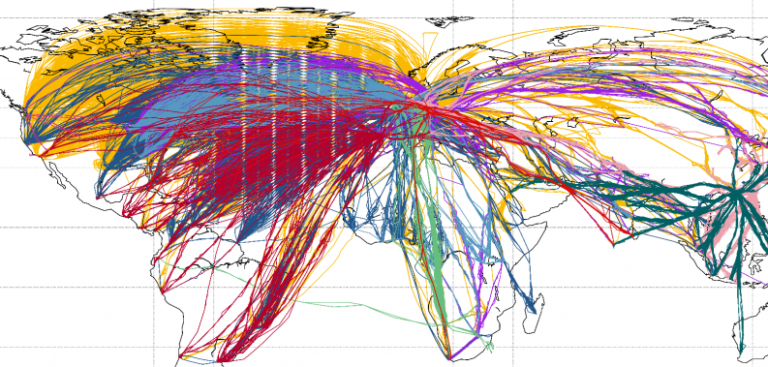
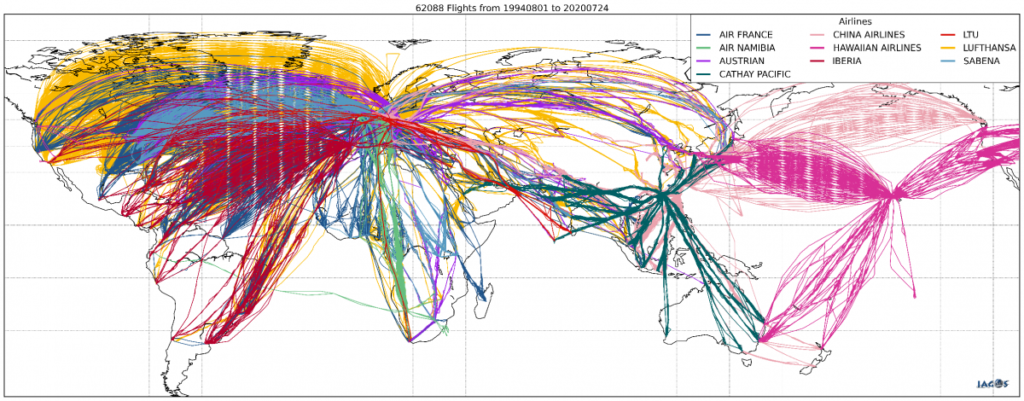
The findings were based on data gathered by IAGOS (In-service Aircraft for a Global Observing System), which makes global observations of atmospheric composition from commercial aircraft. Between 1994 and 2020, IAGOS collected measurements on more than 62,000 flights worldwide.

In research published in the journal Science Advances, the team found an overall increase in ozone levels above the northern hemisphere. “That’s a big deal because it means that as we try to limit our pollution locally, it might not work as well as we thought,” said Audrey Gaudel, a CIRES scientist working in the NOAA Chemical Sciences Laboratory and the study’s lead author. She and her colleagues documented the greatest ozone increases in the tropics, Gaudel noting that ozone exported from the tropics may be driving increases above other areas of the northern hemisphere.

The research also found the most striking increases in areas where ozone levels were once lowest – Malaysia/Indonesia, Southeast Asia and India, for example. Those regions had very low ozone values between 1994 and 2004, and very high levels between 2011 and 2016.

According to Gaudel, previous studies could not draw firm conclusions on northern hemisphere ozone trends, as there are too few long-term monitoring locations and because new satellites with near-global coverage have provided conflicting results on ozone trends.

Between 1994 and 2016, commercial aircraft captured 34,600 ozone profiles, or about four profiles each day. Gaudel and her colleagues used these measurements to calculate changes in tropospheric ozone from the mid-1990s to 2016 above 11 regions in the northern hemisphere. They found an overall increase in ozone in all regions where they looked, including four in the mid-latitudes, two in the subtropics, two in the tropics and three in equatorial regions. On average, median ozone values had increased by 5% per decade.

In the lower troposphere, the atmospheric layer closest to Earth’s surface, ozone has decreased above some mid-latitude regions including Europe and the United States, where ozone precursor emissions have decreased. The researchers found those reductions were offset by increases higher in the troposphere, with the net result being an overall ozone increase from the surface to 12km (7.5 miles).

To understand what was causing the observed ozone changes, the researchers looked at the emissions inventories of one of the main ozone precursors – nitrogen oxides (NOX ) – used as input for the global chemistry transport model MERRA-2 GMI, which reproduces accurately the IAGOS measurements. The model showed that increased anthropogenic emissions in the tropics were likely driving the observed increase of ozone in the northern hemisphere.
Previous ArticleCIRES research connects equatorial winds and South Pole waves
Next Article Oklahoma-based mobile radars tracking Hurricane Laura

Read Similar Stories

Aviation

Met Office launches platform to support needs of evolving aviation industry

March 24, 20262 Mins Read
Aviation

Singapore launches initiative to mitigate weather impacts on aviation

December 16, 20253 Mins Read
Aviation

ANA implements AI-based turbulence prediction technology

August 12, 20252 Mins Read
Latest News

SMILE mission launches to study Earth’s magnetic shield and space weather

May 20, 2026

Cloud measurement campaign targets improved climate model accuracy

May 20, 2026

VIDEO: Meteosat-12 imagery over Europe and Africa made available via YouTube streams

May 19, 2026

Receive breaking stories and features in your inbox each week, for free


Enter your email address:


Supplier Spotlights
  • Baron
Getting in Touch
  • Contact Us / Advertise
  • Meet the Editors
  • Media Pack
  • Free Weekly E-Newsletter
Our Social Channels
  • Facebook
  • LinkedIn
© 2026 UKi Media & Events a division of UKIP Media & Events Ltd
  • Cookie Policy
  • Privacy Policy
  • Terms and Conditions
  • Notice and Takedown Policy

Type above and press Enter to search. Press Esc to cancel.