

Close Menu
Meteorological Technology International
  • News
    • A-E
      • Agriculture
      • Automated Weather Stations
      • Aviation
      • Climate Measurement
      • Data
      • Developing Countries
      • Digital Applications
      • Early Warning Systems
      • Extreme Weather
    • G-P
      • Hydrology
      • Lidar
      • Lightning Detection
      • New Appointments
      • Nowcasting
      • Numerical Weather Prediction
      • Polar Weather
    • R-S
      • Radar
      • Rainfall
      • Remote Sensing
      • Renewable Energy
      • Satellites
      • Solar
      • Space Weather
      • Supercomputers
    • T-Z
      • Training
      • Transport
      • Weather Instruments
      • Wind
      • World Meteorological Organization
      • Meteorological Technology World Expo
  • Features
  • Online Magazines
    • January 2026
    • April 2025
    • January 2025
    • September 2024
    • April 2024
    • Archive Issues
    • Subscribe Free!
  • Opinion
  • Videos
  • Supplier Spotlight
  • Expo
LinkedIn X (Twitter) Facebook
  • Sign-up for Free Weekly E-Newsletter
  • Meet the Editors
  • Contact Us
  • Media Pack
LinkedIn Facebook
Subscribe
Meteorological Technology International
  • News
      • Agriculture
      • Automated Weather Stations
      • Aviation
      • Climate Measurement
      • Data
      • Developing Countries
      • Digital Applications
      • Early Warning Systems
      • Extreme Weather
      • Hydrology
      • Lidar
      • Lightning Detection
      • New Appointments
      • Nowcasting
      • Numerical Weather Prediction
      • Polar Weather
      • Radar
      • Rainfall
      • Remote Sensing
      • Renewable Energy
      • Satellites
      • Solar
      • Space Weather
      • Supercomputers
      • Training
      • Transport
      • Weather Instruments
      • Wind
      • World Meteorological Organization
      • Meteorological Technology World Expo
  • Features
  • Online Magazines
    1. April 2026
    2. January 2026
    3. September 2025
    4. April 2025
    5. January 2025
    6. September 2024
    7. April 2024
    8. January 2024
    9. Archive Issues
    10. Subscribe Free!
    Featured
    May 5, 2026

    In this Issue – April 2026

    By Web TeamMay 5, 2026
    Recent

    In this Issue – April 2026

    May 5, 2026

    In this Issue – January 2026

    November 27, 2025

    In this Issue – September 2025

    August 11, 2025
  • Opinion
  • Videos
  • Supplier Spotlight
  • Expo
Facebook LinkedIn
Subscribe
Meteorological Technology International
Extreme Weather

Oklahoma-based mobile radars tracking Hurricane Laura

Lawrence ButcherBy Lawrence ButcherAugust 26, 20202 Mins Read
Share LinkedIn Facebook Twitter Email
Share
LinkedIn Facebook Twitter Email

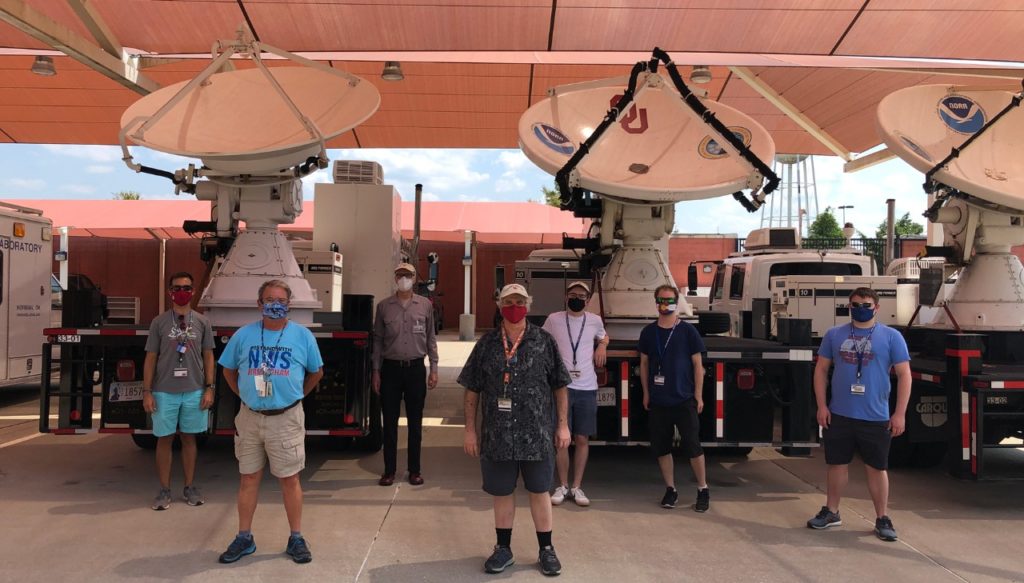
The University of Oklahoma’s Shared Mobile Atmospheric Research and Teaching (SMART) radar team says it is has deployed two mobile weather radars to the US northern Gulf Coast to study the landfall of Hurricane Laura, expected to hit the evening of Wednesday, August 26 or early Thursday, August 27. The project is sponsored by the National Institute of Standards and Technology as part of its National Windstorm Impact Reduction Program to develop new building codes for improving the resilience of the built environment including roads, bridges, homes and businesses.

The team says that its radars will be used to map the maximum winds observed during landfall of the storm, determine the duration of severe winds at each location within their domain, and evaluate the impact of tornado-like mesovortices – small-scale rotational features found in storms created by surface heating. These mesovortices are often found on the inner edge of the eyewall during landfall.

The SMART radars are operated through the Cooperative Institute for Mesoscale Meteorological Studies in the College of Atmospheric and Geographic Sciences. Via a partnership with AT&T and The Weather Channel, the SMART radar data will be distributed in real time and made available to local weather service offices, the National Hurricane Center and emergency management.

The OU team will be led by Michael Biggerstaff, professor in the School of Meteorology, and is part of the Digital Hurricane Consortium, a group of university and private sector scientists that deploy instruments ahead of landfalling hurricanes to improve the warning and prediction of storms. The OU team will also coordinate with scientists from Texas Tech University, the University of Florida, the Center for Severe Weather Research and The University of Alabama in Huntsville.
Previous ArticleCommercial flights deliver ozone insights
Next Article UAV monitoring of typhoons in China

Read Similar Stories

Extreme Weather

Impacts of extreme weather and rising temperatures intensify across Latin America and Caribbean

May 15, 20263 Mins Read
Automated Weather Stations

UNESCO hands over nine automated weather stations to the Ghana Meteorological Agency

May 12, 20262 Mins Read
Extreme Weather

Wildfires can create ‘burn scar heat islands’ that alter weather patterns, study finds

May 6, 20263 Mins Read
Latest News

SMILE mission launches to study Earth’s magnetic shield and space weather

May 20, 2026

Cloud measurement campaign targets improved climate model accuracy

May 20, 2026

VIDEO: Meteosat-12 imagery over Europe and Africa made available via YouTube streams

May 19, 2026

Receive breaking stories and features in your inbox each week, for free


Enter your email address:


Supplier Spotlights
  • Reuniwatt
Getting in Touch
  • Contact Us / Advertise
  • Meet the Editors
  • Media Pack
  • Free Weekly E-Newsletter
Our Social Channels
  • Facebook
  • LinkedIn
© 2026 UKi Media & Events a division of UKIP Media & Events Ltd
  • Cookie Policy
  • Privacy Policy
  • Terms and Conditions
  • Notice and Takedown Policy

Type above and press Enter to search. Press Esc to cancel.