


Close Menu
Meteorological Technology International
  • News
    • A-E
      • Agriculture
      • Automated Weather Stations
      • Aviation
      • Climate Measurement
      • Data
      • Developing Countries
      • Digital Applications
      • Early Warning Systems
      • Extreme Weather
    • G-P
      • Hydrology
      • Lidar
      • Lightning Detection
      • New Appointments
      • Nowcasting
      • Numerical Weather Prediction
      • Polar Weather
    • R-S
      • Radar
      • Rainfall
      • Remote Sensing
      • Renewable Energy
      • Satellites
      • Solar
      • Space Weather
      • Supercomputers
    • T-Z
      • Training
      • Transport
      • Weather Instruments
      • Wind
      • World Meteorological Organization
      • Meteorological Technology World Expo
  • Features
  • Online Magazines
    • January 2026
    • April 2025
    • January 2025
    • September 2024
    • April 2024
    • Archive Issues
    • Subscribe Free!
  • Opinion
  • Videos
  • Supplier Spotlight
  • Expo
LinkedIn X (Twitter) Facebook
  • Sign-up for Free Weekly E-Newsletter
  • Meet the Editors
  • Contact Us
  • Media Pack
LinkedIn Facebook
Subscribe
Meteorological Technology International
  • News
      • Agriculture
      • Automated Weather Stations
      • Aviation
      • Climate Measurement
      • Data
      • Developing Countries
      • Digital Applications
      • Early Warning Systems
      • Extreme Weather
      • Hydrology
      • Lidar
      • Lightning Detection
      • New Appointments
      • Nowcasting
      • Numerical Weather Prediction
      • Polar Weather
      • Radar
      • Rainfall
      • Remote Sensing
      • Renewable Energy
      • Satellites
      • Solar
      • Space Weather
      • Supercomputers
      • Training
      • Transport
      • Weather Instruments
      • Wind
      • World Meteorological Organization
      • Meteorological Technology World Expo
  • Features
  • Online Magazines
    1. April 2026
    2. January 2026
    3. September 2025
    4. April 2025
    5. January 2025
    6. September 2024
    7. April 2024
    8. January 2024
    9. Archive Issues
    10. Subscribe Free!
    Featured
    May 5, 2026

    In this Issue – April 2026

    By Web TeamMay 5, 2026
    Recent

    In this Issue – April 2026

    May 5, 2026

    In this Issue – January 2026

    November 27, 2025

    In this Issue – September 2025

    August 11, 2025
  • Opinion
  • Videos
  • Supplier Spotlight
  • Expo
Facebook LinkedIn
Subscribe
Meteorological Technology International
Climate Measurement

Bureau of Meteorology opens Space Weather Forecasting Centre

Dan SymondsBy Dan SymondsOctober 7, 20222 Mins Read
Share LinkedIn Facebook Twitter Email
Credit: Pixabay-NASA Imagery
Share
LinkedIn Facebook Twitter Email

Australia’s Bureau of Meteorology (BoM) has officially opened its new Space Weather Forecasting Centre.

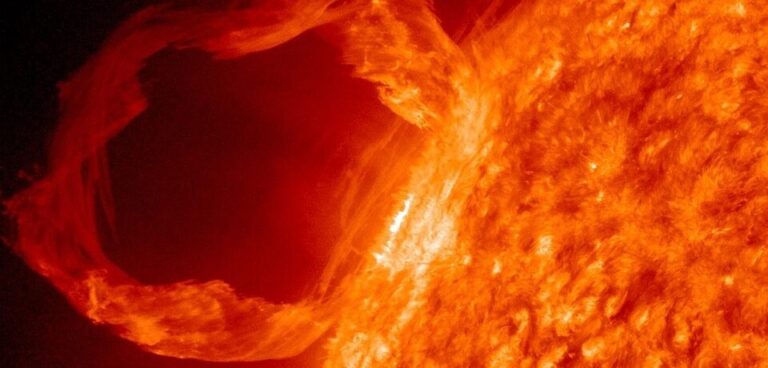
Space weather events such as solar flares can impact communications, GPS, energy supply, aviation and other critical infrastructure. The new center will provide around the clock space weather forecasting and warning services to help Australia’s space industry understand, prepare for, and respond to space weather events.

BoM’s expansion of its space weather capabilities will improve industry and government understanding of space weather events, as well as the impact on Australia’s security and Australian lives.

Dr Kate Brand, operations manager at the Australian Space Weather Forecasting Centre, said, “The sun’s turbulent activity is the main source of space weather. Solar events that cause space weather impact include solar flares, coronal mass ejections and particle radiation events. As our reliance on technology grows, so does the risk of disruption to our lives from these events.”

The Australian Space Weather Forecasting Centre is based at Lot Fourteen in Adelaide, alongside 80 other space industry agencies and businesses. The Bureau collaborates closely with its industry and government partners to devise, refine and deliver real-time services to those who need it most.

“From our forecasting center in Adelaide, we can predict how events on the sun might affect us here on Earth, 150,000,000km away,” said Brand.

Previous ArticleAncient North Sea tunnel valleys provide indications of future ice sheet change, finds BAS
Next Article Strong hurricanes re-energized by jet stream winds twice as likely to impact Europe

Read Similar Stories

Space Weather

NOAA’s SOLAR-1 satellite becomes operational, boosting space weather forecasting capability

June 16, 20262 Mins Read
Climate Measurement

Global warming reached 1.37°C in 2025 as heat accumulation hits record rate

June 12, 20263 Mins Read
Climate Measurement

Cambridge AI tool converts satellite archives into accessible Earth intelligence

June 10, 20262 Mins Read
Latest News

NOAA’s SOLAR-1 satellite becomes operational, boosting space weather forecasting capability

June 16, 2026

Global warming reached 1.37°C in 2025 as heat accumulation hits record rate

June 12, 2026

NSF NCAR researchers develop advanced model for neighborhood-scale low-altitude wind prediction

June 11, 2026

Receive breaking stories and features in your inbox each week, for free


Enter your email address:


Supplier Spotlights
  • Sommer GmbH
Getting in Touch
  • Contact Us / Advertise
  • Meet the Editors
  • Media Pack
  • Free Weekly E-Newsletter
Our Social Channels
  • Facebook
  • LinkedIn
© 2026 UKi Media & Events a division of UKIP Media & Events Ltd
  • Cookie Policy
  • Privacy Policy
  • Terms and Conditions
  • Notice and Takedown Policy

Type above and press Enter to search. Press Esc to cancel.