


Close Menu
Meteorological Technology International
  • News
    • A-E
      • Agriculture
      • Automated Weather Stations
      • Aviation
      • Climate Measurement
      • Data
      • Developing Countries
      • Digital Applications
      • Early Warning Systems
      • Extreme Weather
    • G-P
      • Hydrology
      • Lidar
      • Lightning Detection
      • New Appointments
      • Nowcasting
      • Numerical Weather Prediction
      • Polar Weather
    • R-S
      • Radar
      • Rainfall
      • Remote Sensing
      • Renewable Energy
      • Satellites
      • Solar
      • Space Weather
      • Supercomputers
    • T-Z
      • Training
      • Transport
      • Weather Instruments
      • Wind
      • World Meteorological Organization
      • Meteorological Technology World Expo
  • Features
  • Online Magazines
    • January 2026
    • April 2025
    • January 2025
    • September 2024
    • April 2024
    • Archive Issues
    • Subscribe Free!
  • Opinion
  • Videos
  • Supplier Spotlight
  • Expo
LinkedIn X (Twitter) Facebook
  • Sign-up for Free Weekly E-Newsletter
  • Meet the Editors
  • Contact Us
  • Media Pack
LinkedIn Facebook
Subscribe
Meteorological Technology International
  • News
      • Agriculture
      • Automated Weather Stations
      • Aviation
      • Climate Measurement
      • Data
      • Developing Countries
      • Digital Applications
      • Early Warning Systems
      • Extreme Weather
      • Hydrology
      • Lidar
      • Lightning Detection
      • New Appointments
      • Nowcasting
      • Numerical Weather Prediction
      • Polar Weather
      • Radar
      • Rainfall
      • Remote Sensing
      • Renewable Energy
      • Satellites
      • Solar
      • Space Weather
      • Supercomputers
      • Training
      • Transport
      • Weather Instruments
      • Wind
      • World Meteorological Organization
      • Meteorological Technology World Expo
  • Features
  • Online Magazines
    1. January 2026
    2. September 2025
    3. April 2025
    4. January 2025
    5. September 2024
    6. April 2024
    7. January 2024
    8. September 2023
    9. April 2023
    10. Archive Issues
    11. Subscribe Free!
    Featured
    November 27, 2025

    In this Issue – January 2026

    By Hazel KingNovember 27, 2025
    Recent

    In this Issue – January 2026

    November 27, 2025

    In this Issue – September 2025

    August 11, 2025

    In this Issue – April 2025

    April 15, 2025
  • Opinion
  • Videos
  • Supplier Spotlight
  • Expo
Facebook LinkedIn
Subscribe
Meteorological Technology International
Agriculture

Extreme heat posing significant risks to ecosystems and agriculture, FAO-WMO report warns

Alex PackBy Alex PackApril 22, 20263 Mins Read
Share LinkedIn Facebook Twitter Email
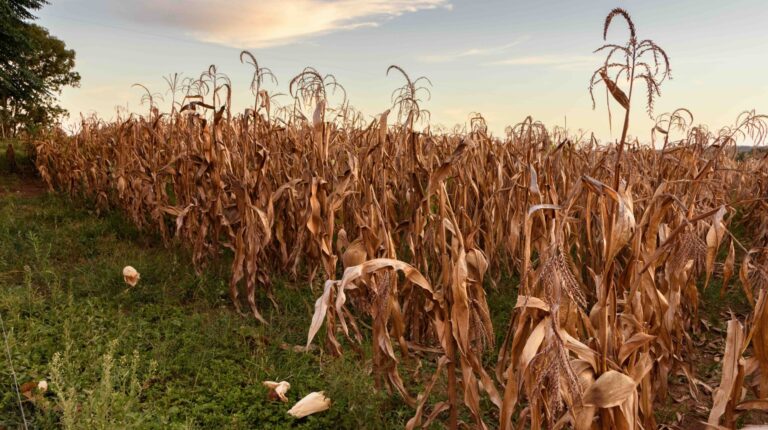
Extreme heat posing significant risks to ecosystems and agriculture, FAO-WMO report warns.
Share
LinkedIn Facebook Twitter Email

The sharp increase in the frequency, intensity and duration of extreme heat events over the past 50 years is set to create significant risks to agrifood systems and ecosystems in the future, according to a new report from the Food and Agriculture Organization (FAO) of the United Nations and the World Meteorological Organization (WMO).

The joint FAO-WMO report describes the physical science of extreme heat, the vulnerabilities observed and the projected impacts on agriculture. It also offers adaptation strategies, case studies and policy recommendations.

“This work highlights how extreme heat is a major risk multiplier, exerting mounting pressure on crops, livestock, fisheries and forests, and on the communities and economies that depend upon them,” said FAO director-general Qu Dongyu.

WMO secretary-general Celeste Saulo added, “Extreme heat is increasingly defining the conditions under which agrifood systems operate. More than simply an isolated climatic hazard, it acts as a compounding risk factor that magnifies existing weaknesses across agricultural systems. Early warnings and climate services like seasonal outlooks are vital to help us adapt to the new reality.”

Impact on environment, ecosystems and people

The report found that for the most common livestock species, stress begins at above 25°C, which can be lower for animals such as chickens and pigs, which cannot cool themselves by sweating.

Fish can suffer cardiac failure as they struggle to maintain elevated respiration rates in waters where extreme heat events drive dissolved oxygen levels lower. In 2025, more than 90% of the global ocean experienced at least one marine heat wave, according to WMO’s State of the Global Climate 2025 report.

For most major agricultural crops, yield declines begin to occur above 30°C – lower for some crops, such as potatoes and barley. Evidence in the report underlines a strong correlation between heat waves and wildfires, with longer and more intense fire seasons.

Extreme heat also poses a danger to agricultural laborers, and the number of days when it is too hot to work could rise to 250 per year in much of South Asia, tropical Sub-Saharan Africa and parts of Central and South America, according to the report.

The report says that it is not just the direct impacts that pose a danger, but also the role of extreme heat as a risk multiplier for water stress, flash droughts and wildfires, or fostering the spread of pests and diseases.

The report covers such effects, including the less-understood consequences of a rapid rise in temperature, such as flash drought.

Report recommendations

The report points to the need for innovation and the implementation of adaptive measures such as selective breeding and crop choices adjusted to the new climate reality, adjusted planting windows and altered management practices that can shelter crops and agricultural activities from the impacts of extreme heat.

Early warning systems are a particularly important tool to help farmers respond to extreme heat.

Access to financial services – cash transfers, insurance and payment schemes, shock-responsive social protection schemes and other forms – underpins all categories of adaptation options.

In related news, a study has identified the atmospheric trigger behind flash droughts in Puerto Rico

Previous ArticleAtmospheric G2 secures Japan weather forecasting license

Read Similar Stories

Extreme Weather

AI model improves real-time prediction of wildfire spread

April 16, 20263 Mins Read
Climate Measurement

Study identifies atmospheric trigger behind flash droughts in Puerto Rico

April 15, 20263 Mins Read
Climate Measurement

Regional training aims to improve flood forecasting in Central Africa

April 1, 20263 Mins Read
Latest News

Extreme heat posing significant risks to ecosystems and agriculture, FAO-WMO report warns

April 22, 2026

Atmospheric G2 secures Japan weather forecasting license

April 21, 2026

China completes Antarctic meteorological research mission with Xuelong icebreaker

April 21, 2026

Receive breaking stories and features in your inbox each week, for free


Enter your email address:


Supplier Spotlights
  • Nel Hydrogen
Getting in Touch
  • Contact Us / Advertise
  • Meet the Editors
  • Media Pack
  • Free Weekly E-Newsletter
Our Social Channels
  • Facebook
  • LinkedIn
© 2026 UKi Media & Events a division of UKIP Media & Events Ltd
  • Cookie Policy
  • Privacy Policy
  • Terms and Conditions
  • Notice and Takedown Policy

Type above and press Enter to search. Press Esc to cancel.