


Close Menu
Meteorological Technology International
  • News
    • A-E
      • Agriculture
      • Automated Weather Stations
      • Aviation
      • Climate Measurement
      • Data
      • Developing Countries
      • Digital Applications
      • Early Warning Systems
      • Extreme Weather
    • G-P
      • Hydrology
      • Lidar
      • Lightning Detection
      • New Appointments
      • Nowcasting
      • Numerical Weather Prediction
      • Polar Weather
    • R-S
      • Radar
      • Rainfall
      • Remote Sensing
      • Renewable Energy
      • Satellites
      • Solar
      • Space Weather
      • Supercomputers
    • T-Z
      • Training
      • Transport
      • Weather Instruments
      • Wind
      • World Meteorological Organization
      • Meteorological Technology World Expo
  • Features
  • Online Magazines
    • January 2026
    • April 2025
    • January 2025
    • September 2024
    • April 2024
    • Archive Issues
    • Subscribe Free!
  • Opinion
  • Videos
  • Supplier Spotlight
  • Expo
LinkedIn X (Twitter) Facebook
  • Sign-up for Free Weekly E-Newsletter
  • Meet the Editors
  • Contact Us
  • Media Pack
LinkedIn Facebook
Subscribe
Meteorological Technology International
  • News
      • Agriculture
      • Automated Weather Stations
      • Aviation
      • Climate Measurement
      • Data
      • Developing Countries
      • Digital Applications
      • Early Warning Systems
      • Extreme Weather
      • Hydrology
      • Lidar
      • Lightning Detection
      • New Appointments
      • Nowcasting
      • Numerical Weather Prediction
      • Polar Weather
      • Radar
      • Rainfall
      • Remote Sensing
      • Renewable Energy
      • Satellites
      • Solar
      • Space Weather
      • Supercomputers
      • Training
      • Transport
      • Weather Instruments
      • Wind
      • World Meteorological Organization
      • Meteorological Technology World Expo
  • Features
  • Online Magazines
    1. January 2026
    2. September 2025
    3. April 2025
    4. January 2025
    5. September 2024
    6. April 2024
    7. January 2024
    8. September 2023
    9. April 2023
    10. Archive Issues
    11. Subscribe Free!
    Featured
    November 27, 2025

    In this Issue – January 2026

    By Hazel KingNovember 27, 2025
    Recent

    In this Issue – January 2026

    November 27, 2025

    In this Issue – September 2025

    August 11, 2025

    In this Issue – April 2025

    April 15, 2025
  • Opinion
  • Videos
  • Supplier Spotlight
  • Expo
Facebook LinkedIn
Subscribe
Meteorological Technology International
Climate Measurement

Glaciers to disappear from Washington’s Olympic Peninsula by 2070

Dan SymondsBy Dan SymondsApril 20, 20223 Mins Read
Share LinkedIn Facebook Twitter Email
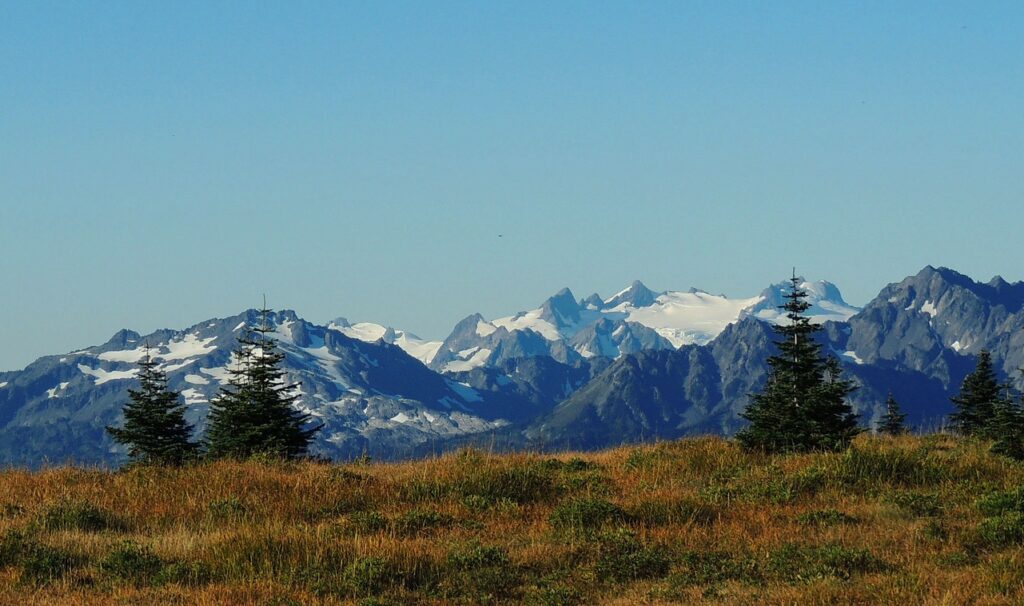
Olympic National Park, Washington State - credit: Pixabay
Share
LinkedIn Facebook Twitter Email

The glaciers on the Olympic Peninsula in Washington State will have largely disappeared by 2070, according to a new study.

The Olympic Mountains, which range from sea level to just under 2,440m in elevation, are almost entirely within the bounds of Olympic National Park on the western peninsula of Washington state. The park hosts approximately 200 glaciers and in recent years typically receives well over 254cm of precipitation, much of which falls as snow.

However, since around 1900, the Olympic Peninsula has lost half of its glacier area and, since 1980, 35 glaciers and 16 perennial snowfields have disappeared. Nearly all the glaciers on the peninsula are located within Olympic National Park or are otherwise on surrounding state lands.
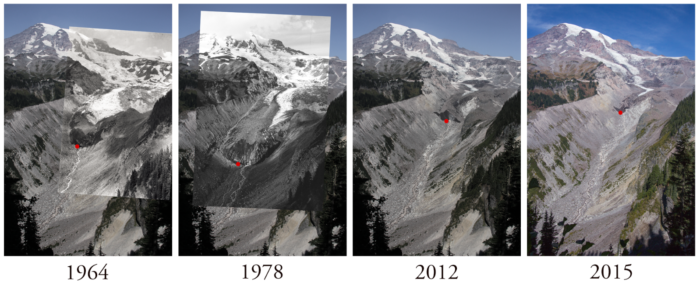
The shrinking of Nisqually Glacier, Mount Rainier, Washington – credit: 1964 – F.M Veatch, US Geological Survey; 1978 – D.R. Crandell, US Geological Survey; 2012, 2015 – Hassan Basagic

Andrew Fountain, lead author and professor of geology and geography at Portland State University, said, “There’s little we can do to prevent the disappearance of these glaciers. We’re on this global warming train right now. Even if we’re super good citizens and stop adding carbon dioxide in the atmosphere immediately, it will still be 100 years or so before the climate responds.”

Even though preventing climate-change-driven glacier disappearances is not likely, ensuring things don’t get worse is a critical goal, Fountain said.

“This is yet another tangible call for us to take climate change seriously and take actions to minimize our climate impact,” he added.

US Geological Survey (USGS) data shows a similar decline of glacier ice in the North Cascades of Washington, farther inland in Glacier National Park, Montana, and farther north in Alaska.

According to USGS research physical scientist Caitlyn Florentine, the new study highlights glaciers’ vulnerability to warmer temperatures in summer, which increases glacial melt, and winter, which decreases glacial growth. “This double whammy has downstream implications for glacier-adapted ecosystems in the US Pacific Northwest,” said Florentine.

Fountain added, “Once you lose your seasonal snow, the only source of water in these alpine areas is glacier melt. And without the glaciers, you’re not going to have that melt contributing to the stream flow, therefore impacting the ecology in alpine areas. That’s a big deal with disastrous fallout.”

The Olympic glaciers are particularly vulnerable to climate change because of their low elevation compared with glaciers elsewhere at higher elevations where temperatures are significantly cooler, such as the Cascade Mountains of Oregon and Washington.

“As the temperatures warm, not only will the glaciers melt more in summer, which you’d expect, but in the wintertime, it changes the phase of the precipitation from snow to rain,” Fountain said. “So the glaciers get less nourished in the winter, more melt in the summer, and then they just fall off the map.”

To view the complete study published today in AGU’s Journal of Geophysical Research Earth Surface, click here.

Previous ArticleWildfires altering pollution patterns across North America, finds NCAR
Next Article ESA third generation Meteosat fitted with lightning imager ahead of launch

Read Similar Stories

Climate Measurement

China completes Antarctic meteorological research mission with Xuelong icebreaker

April 21, 20262 Mins Read
Climate Measurement

Study identifies atmospheric trigger behind flash droughts in Puerto Rico

April 15, 20263 Mins Read
Satellites

AI tool uses weather satellite data to map ocean currents in near real time

April 14, 20263 Mins Read
Latest News

Extreme heat posing significant risks to ecosystems and agriculture, FAO-WMO report warns

April 22, 2026

Atmospheric G2 secures Japan weather forecasting license

April 21, 2026

China completes Antarctic meteorological research mission with Xuelong icebreaker

April 21, 2026

Receive breaking stories and features in your inbox each week, for free


Enter your email address:


Supplier Spotlights
  • Reuniwatt
Getting in Touch
  • Contact Us / Advertise
  • Meet the Editors
  • Media Pack
  • Free Weekly E-Newsletter
Our Social Channels
  • Facebook
  • LinkedIn
© 2026 UKi Media & Events a division of UKIP Media & Events Ltd
  • Cookie Policy
  • Privacy Policy
  • Terms and Conditions
  • Notice and Takedown Policy

Type above and press Enter to search. Press Esc to cancel.