


Close Menu
Meteorological Technology International
  • News
    • A-E
      • Agriculture
      • Automated Weather Stations
      • Aviation
      • Climate Measurement
      • Data
      • Developing Countries
      • Digital Applications
      • Early Warning Systems
      • Extreme Weather
    • G-P
      • Hydrology
      • Lidar
      • Lightning Detection
      • New Appointments
      • Nowcasting
      • Numerical Weather Prediction
      • Polar Weather
    • R-S
      • Radar
      • Rainfall
      • Remote Sensing
      • Renewable Energy
      • Satellites
      • Solar
      • Space Weather
      • Supercomputers
    • T-Z
      • Training
      • Transport
      • Weather Instruments
      • Wind
      • World Meteorological Organization
      • Meteorological Technology World Expo
  • Features
  • Online Magazines
    • January 2026
    • April 2025
    • January 2025
    • September 2024
    • April 2024
    • Archive Issues
    • Subscribe Free!
  • Opinion
  • Videos
  • Supplier Spotlight
  • Expo
LinkedIn X (Twitter) Facebook
  • Sign-up for Free Weekly E-Newsletter
  • Meet the Editors
  • Contact Us
  • Media Pack
LinkedIn Facebook
Subscribe
Meteorological Technology International
  • News
      • Agriculture
      • Automated Weather Stations
      • Aviation
      • Climate Measurement
      • Data
      • Developing Countries
      • Digital Applications
      • Early Warning Systems
      • Extreme Weather
      • Hydrology
      • Lidar
      • Lightning Detection
      • New Appointments
      • Nowcasting
      • Numerical Weather Prediction
      • Polar Weather
      • Radar
      • Rainfall
      • Remote Sensing
      • Renewable Energy
      • Satellites
      • Solar
      • Space Weather
      • Supercomputers
      • Training
      • Transport
      • Weather Instruments
      • Wind
      • World Meteorological Organization
      • Meteorological Technology World Expo
  • Features
  • Online Magazines
    1. January 2026
    2. September 2025
    3. April 2025
    4. January 2025
    5. September 2024
    6. April 2024
    7. January 2024
    8. September 2023
    9. April 2023
    10. Archive Issues
    11. Subscribe Free!
    Featured
    November 27, 2025

    In this Issue – January 2026

    By Hazel KingNovember 27, 2025
    Recent

    In this Issue – January 2026

    November 27, 2025

    In this Issue – September 2025

    August 11, 2025

    In this Issue – April 2025

    April 15, 2025
  • Opinion
  • Videos
  • Supplier Spotlight
  • Expo
Facebook LinkedIn
Subscribe
Meteorological Technology International
Lightning Detection

ESA third generation Meteosat fitted with lightning imager ahead of launch

Dan SymondsBy Dan SymondsApril 21, 20223 Mins Read
Share LinkedIn Facebook Twitter Email
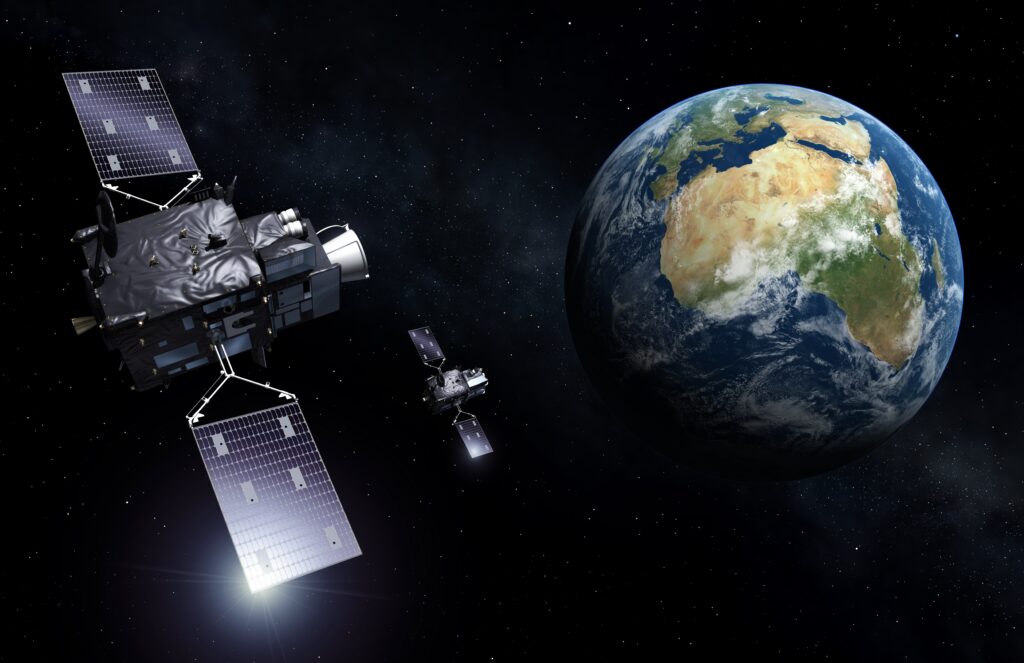
Meteosat Third Generation (MTG) - credit: ESA
Share
LinkedIn Facebook Twitter Email

The European Space Agency (ESA) has announced that its first Meteosat Third Generation (MTG) weather satellite is being fitted with its Lightning Imager in one of the last major milestones to take place before liftoff at the end of the year.

Once in geostationary orbit, the instrument will continuously monitor lightning over more than 80% of Earth’s disc for early warnings of dangerous storms. It is even capable of imaging relatively weak lightning events in full sunlight.

Following on from the first and second generations of Meteosat satellites, the MTG mission will deliver essential data for weather forecasting from geostationary orbit for the next two decades. The MTG mission comprises two types of satellite: four MTG-Imagers (MTG-I) and two MTG-Sounders (MTG-S).

MTG-I1 has already been equipped with one of its instruments, the Flexible Combined Imager, which will deliver a full image of Earth every 10 minutes to monitor and forecast the weather. It can also zoom in to deliver images of selected regions every 2.5 minutes.

The Lightning Imager was developed by meteorological equipment specialist Leonardo in Florence, Italy, and has now been delivered to the Thales Alenia Space’s facilities in Cannes, France, where it is being integrated into the MTG-I satellite.

Despite a relatively simple instrument architecture, with no moving parts, the complexity of the Lightning Imager is in the resolution and speed of the detectors, and the subsequent image processing of the data on board, which automatically rejects any data not related to lightning. “At the heart of the instrument are four optical heads, which each have detector arrays of more than 1.2 million pixels,” explained Paul Blythe, ESA’s Meteosat program manager. “These arrays are sampled every millisecond to measure the energy emitted in their respective fields of view.

“For each of the more than 4.8 million pixels, these signals are then compared to a reference image of Earth to determine if a lightning flash has occurred. With this number of pixels and a sampling rate of 1 millisecond, the raw data rate of the instrument is enormous, at several Gbit/second. This is then reduced by over a factor of 250 through clever logic in the front-end electronics, followed by advanced signal processing in the state-of-the-art single board computer provided by Thales Alenia Space.

“The net result is an output from the instrument of around 30Mbit/second, so that only relevant data are transmitted to the ground stations for further analysis,” he said.
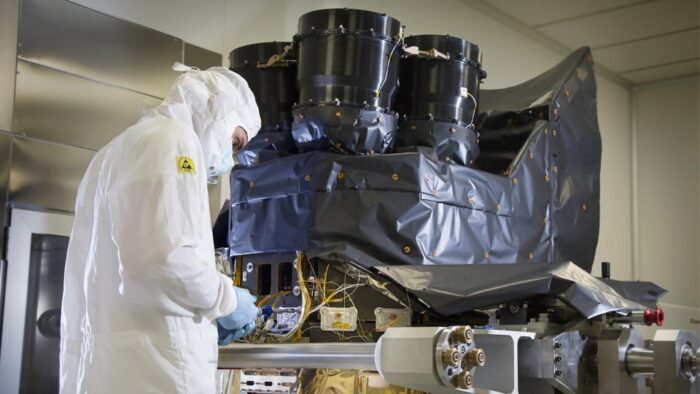
MTG-I1’s Lightning Imager during testing
Previous ArticleGlaciers to disappear from Washington’s Olympic Peninsula by 2070
Next Article NASA awards contracts for GeoXO lightning mapper study

Read Similar Stories

Space Weather

Northumbria University secures £4m to study Earth’s radiation belts

April 16, 20262 Mins Read
Extreme Weather

AI model improves real-time prediction of wildfire spread

April 16, 20263 Mins Read
Satellites

AI tool uses weather satellite data to map ocean currents in near real time

April 14, 20263 Mins Read
Latest News

European climate report highlights record heat, glacier loss and rising extremes

April 27, 2026

WMO signals increasing likelihood of El Niño developing in 2026

April 24, 2026

Alabama partners with Climavision to expand weather radar coverage statewide

April 24, 2026

Receive breaking stories and features in your inbox each week, for free


Enter your email address:


Supplier Spotlights
  • Meteomatics AG
Getting in Touch
  • Contact Us / Advertise
  • Meet the Editors
  • Media Pack
  • Free Weekly E-Newsletter
Our Social Channels
  • Facebook
  • LinkedIn
© 2026 UKi Media & Events a division of UKIP Media & Events Ltd
  • Cookie Policy
  • Privacy Policy
  • Terms and Conditions
  • Notice and Takedown Policy

Type above and press Enter to search. Press Esc to cancel.