


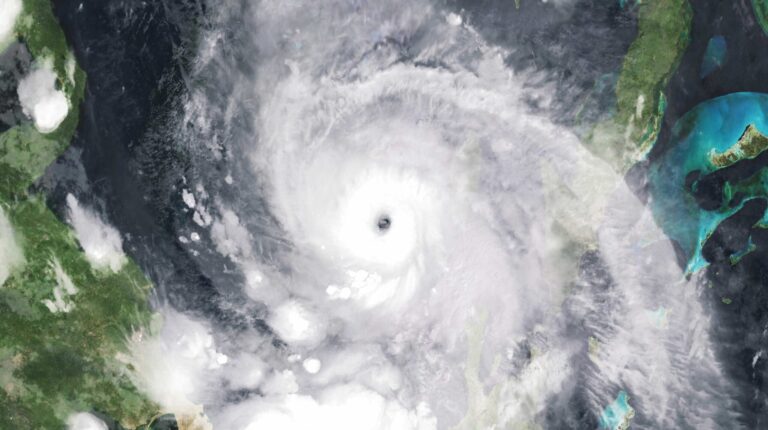
The World Meteorological Organization (WMO) has retired the name Melissa from its Atlantic hurricane naming list following the destruction caused by Hurricane Melissa in the Caribbean in October 2025. The name will be replaced with Molly in future storm name rotations.
The decision was made by the WMO Hurricane Committee during a meeting in Mexico City from March 2-5. The committee consists of experts from national meteorological and hydrological services across North America, Central America and the Caribbean under WMO Regional Association IV.
Hurricane Melissa reached Category 5 intensity on the Saffir-Simpson Hurricane Wind Scale, with maximum sustained winds of around 300km/h. The storm brought storm surge and destructive winds to Jamaica and Cuba, as well as extreme rainfall and flooding in the Dominican Republic, Haiti, Jamaica and Cuba.
More than 90 people were killed across the affected region. Melissa was the strongest hurricane on record to make landfall in Jamaica and tied as the strongest landfalling storm in the Atlantic basin, alongside Hurricane Dorian in the Bahamas and the 1935 Labor Day Hurricane in terms of maximum sustained wind speed.
Celeste Saulo, WMO secretary-general, said, “The risks associated with tropical cyclones are both real and increasing. It only takes one landfalling tropical cyclone to roll back years of development. And this was unfortunately the case with Hurricane Melissa.
“Despite the force of Melissa, loss of life was in the dozens rather than the thousands. This is testimony to the accuracy of advance forecasts and the use of these early warnings to support early action.”
Principal director at Meteorological Service, Jamaica, and president of WMO’s Regional Association IV Evan Thompson welcomed the decision to retire the name.
“Melissa has now been engraved in the collective memory of the nation,” he said, adding that Jamaica supported retiring the name to avoid repeated reminders of the disaster.
Under WMO procedures, hurricane names are reused every six years unless a storm is considered so deadly or destructive that its name is retired. The naming system is designed to make storm warnings easier to communicate and understand across the region.
Michael Brennan, chair of the Hurricane Committee, director of NOAA’s National Hurricane Center, and director of the Regional Specialized Meteorological Centre Miami, said collaboration between forecasting centers and national meteorological services played a key role in the response: “Every forecast and warning is a lifeline for real people, and a constant reminder that our work is not just about science, but about saving lives.”
The replacement name Molly will enter the Atlantic hurricane naming rotation in 2031.
Related, Windracers ULTRA drones to be deployed in Greenland on glacier surveying mission