


Close Menu
Meteorological Technology International
  • News
    • A-E
      • Agriculture
      • Automated Weather Stations
      • Aviation
      • Climate Measurement
      • Data
      • Developing Countries
      • Digital Applications
      • Early Warning Systems
      • Extreme Weather
    • G-P
      • Hydrology
      • Lidar
      • Lightning Detection
      • New Appointments
      • Nowcasting
      • Numerical Weather Prediction
      • Polar Weather
    • R-S
      • Radar
      • Rainfall
      • Remote Sensing
      • Renewable Energy
      • Satellites
      • Solar
      • Space Weather
      • Supercomputers
    • T-Z
      • Training
      • Transport
      • Weather Instruments
      • Wind
      • World Meteorological Organization
      • Meteorological Technology World Expo
  • Features
  • Online Magazines
    • January 2026
    • April 2025
    • January 2025
    • September 2024
    • April 2024
    • Archive Issues
    • Subscribe Free!
  • Opinion
  • Videos
  • Supplier Spotlight
  • Expo
LinkedIn X (Twitter) Facebook
  • Sign-up for Free Weekly E-Newsletter
  • Meet the Editors
  • Contact Us
  • Media Pack
LinkedIn Facebook
Subscribe
Meteorological Technology International
  • News
      • Agriculture
      • Automated Weather Stations
      • Aviation
      • Climate Measurement
      • Data
      • Developing Countries
      • Digital Applications
      • Early Warning Systems
      • Extreme Weather
      • Hydrology
      • Lidar
      • Lightning Detection
      • New Appointments
      • Nowcasting
      • Numerical Weather Prediction
      • Polar Weather
      • Radar
      • Rainfall
      • Remote Sensing
      • Renewable Energy
      • Satellites
      • Solar
      • Space Weather
      • Supercomputers
      • Training
      • Transport
      • Weather Instruments
      • Wind
      • World Meteorological Organization
      • Meteorological Technology World Expo
  • Features
  • Online Magazines
    1. January 2026
    2. September 2025
    3. April 2025
    4. January 2025
    5. September 2024
    6. April 2024
    7. January 2024
    8. September 2023
    9. April 2023
    10. Archive Issues
    11. Subscribe Free!
    Featured
    November 27, 2025

    In this Issue – January 2026

    By Hazel KingNovember 27, 2025
    Recent

    In this Issue – January 2026

    November 27, 2025

    In this Issue – September 2025

    August 11, 2025

    In this Issue – April 2025

    April 15, 2025
  • Opinion
  • Videos
  • Supplier Spotlight
  • Expo
Facebook LinkedIn
Subscribe
Meteorological Technology International
Climate Measurement

NOAA predicts 30% maximum Great Lakes ice cover for 2021 winter

Lawrence ButcherBy Lawrence ButcherJanuary 22, 20213 Mins Read
Share LinkedIn Facebook Twitter Email
Share
LinkedIn Facebook Twitter Email

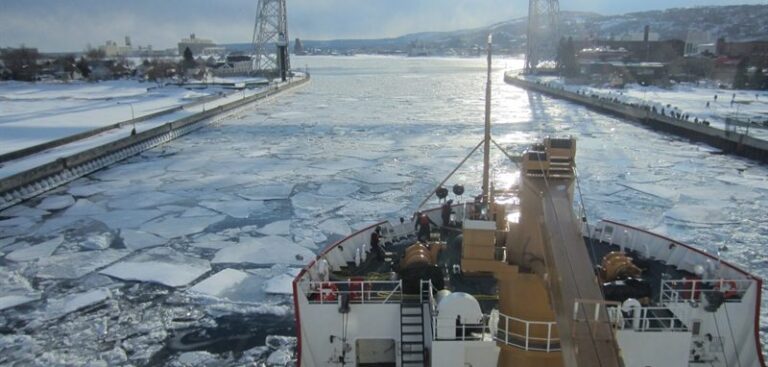
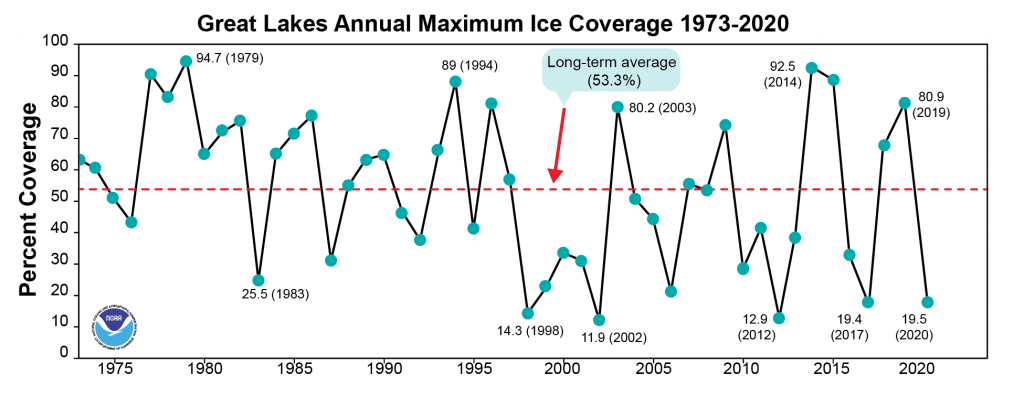
Scientists at the US National Oceanic and Atmospheric Administration (NOAA) project that the maximum Great Lakes ice cover for 2021 will be 30%, which is higher than last year’s maximum of 19.5%, but that a long-term pattern of declining ice cover, likely driven by climate change, remains. The maximum typically occurs between mid-February and early March.

The 30% projected maximum ice cover forecast is an average of ice coverage across the five Great Lakes. Using an improved forecast system, NOAA’s team at the Great Lakes Environmental Research Laboratory (GLERL) have said they will update seasonal ice cover projections twice a month. Each iteration will take into account the most recent surface air temperature data leading to a more accurate forecast.

“Great Lakes ice cover often swings back and forth between higher and lower levels with each new year,” said Jia Wang, ice climatologist at NOAA GLERL. “Global climate patterns such as El Nino play a major role in driving these changes. But if annual cycles are removed, a long-term trend is visible showing that overall ice cover has been declining by 5% per decade based on 1973-2020 data.” Wang attributes the decline to human-caused climate change, primarily rising atmospheric temperature.

The 2021 maximum ice cover prediction of 30% is significantly lower than the long-term average maximum coverage of 53%. The 2021 prediction is higher than the 2017 and 2020 maximums (both about 19.5%) and much lower than the 2018 maximum of 70% percent and the 2019 maximum of 81%.

NOAA GLERL produces ice projections using a model that ingests statistical ice data as well as data on global air circulation patterns. Its research has shown that the year-to-year variability of Great Lakes ice cover is heavily influenced by four large-scale climate patterns referred to as teleconnections: the North Atlantic Oscillation (NAO), the Atlantic Multidecadal Oscillation (AMO), the El Nino/Southern Oscillation (ENSO) and the Pacific Decadal Oscillation (PDO). These patterns affect Great Lakes regional climate and ice cover by influencing the location of the westerly jet stream over North America.

GLERL produces ice projections for the five lakes taken together as well as individual lakes. Each lake has a different pattern of ice cover with Lake Erie often experiencing the highest percentage of ice cover because its shallow water accelerates freezing.

The maximum ice cover projections for each lake are as follows:

Lake Superior: 30%
Lake Michigan: 23%
Lake Huron: 39%
Lake Erie: 63%
Lake Ontario: 7%

Experimental ice cover projections will be updated twice monthly and can be found on the NOAA GLERL Ice Cover Forecasting page.
Previous ArticleLockdowns reduced air pollution less than initially thought
Next Article Vaisala develops method for improving weather radar observations

Read Similar Stories

Extreme Weather

Researchers investigate links between air pollution, extreme weather and climate

May 1, 20262 Mins Read
Radar

Météo-France begins construction of France’s tallest weather radar tower in Sembadel

April 29, 20262 Mins Read
Climate Measurement

European climate report highlights record heat, glacier loss and rising extremes

April 27, 20263 Mins Read
Latest News

Researchers investigate links between air pollution, extreme weather and climate

May 1, 2026

China expands MAZU early warning system for developing countries

April 30, 2026

Météo-France begins construction of France’s tallest weather radar tower in Sembadel

April 29, 2026

Receive breaking stories and features in your inbox each week, for free


Enter your email address:


Supplier Spotlights
  • ZOGLAB Microsystem Co., Ltd
Getting in Touch
  • Contact Us / Advertise
  • Meet the Editors
  • Media Pack
  • Free Weekly E-Newsletter
Our Social Channels
  • Facebook
  • LinkedIn
© 2026 UKi Media & Events a division of UKIP Media & Events Ltd
  • Cookie Policy
  • Privacy Policy
  • Terms and Conditions
  • Notice and Takedown Policy

Type above and press Enter to search. Press Esc to cancel.