


Close Menu
Meteorological Technology International
  • News
    • A-E
      • Agriculture
      • Automated Weather Stations
      • Aviation
      • Climate Measurement
      • Data
      • Developing Countries
      • Digital Applications
      • Early Warning Systems
      • Extreme Weather
    • G-P
      • Hydrology
      • Lidar
      • Lightning Detection
      • New Appointments
      • Nowcasting
      • Numerical Weather Prediction
      • Polar Weather
    • R-S
      • Radar
      • Rainfall
      • Remote Sensing
      • Renewable Energy
      • Satellites
      • Solar
      • Space Weather
      • Supercomputers
    • T-Z
      • Training
      • Transport
      • Weather Instruments
      • Wind
      • World Meteorological Organization
      • Meteorological Technology World Expo
  • Features
  • Online Magazines
    • January 2026
    • April 2025
    • January 2025
    • September 2024
    • April 2024
    • Archive Issues
    • Subscribe Free!
  • Opinion
  • Videos
  • Supplier Spotlight
  • Expo
LinkedIn X (Twitter) Facebook
  • Sign-up for Free Weekly E-Newsletter
  • Meet the Editors
  • Contact Us
  • Media Pack
LinkedIn Facebook
Subscribe
Meteorological Technology International
  • News
      • Agriculture
      • Automated Weather Stations
      • Aviation
      • Climate Measurement
      • Data
      • Developing Countries
      • Digital Applications
      • Early Warning Systems
      • Extreme Weather
      • Hydrology
      • Lidar
      • Lightning Detection
      • New Appointments
      • Nowcasting
      • Numerical Weather Prediction
      • Polar Weather
      • Radar
      • Rainfall
      • Remote Sensing
      • Renewable Energy
      • Satellites
      • Solar
      • Space Weather
      • Supercomputers
      • Training
      • Transport
      • Weather Instruments
      • Wind
      • World Meteorological Organization
      • Meteorological Technology World Expo
  • Features
  • Online Magazines
    1. April 2026
    2. January 2026
    3. September 2025
    4. April 2025
    5. January 2025
    6. September 2024
    7. April 2024
    8. January 2024
    9. Archive Issues
    10. Subscribe Free!
    Featured
    May 5, 2026

    In this Issue – April 2026

    By Web TeamMay 5, 2026
    Recent

    In this Issue – April 2026

    May 5, 2026

    In this Issue – January 2026

    November 27, 2025

    In this Issue – September 2025

    August 11, 2025
  • Opinion
  • Videos
  • Supplier Spotlight
  • Expo
Facebook LinkedIn
Subscribe
Meteorological Technology International
Climate Measurement

Lockdowns reduced air pollution less than initially thought

Lawrence ButcherBy Lawrence ButcherJanuary 19, 20212 Mins Read
Share LinkedIn Facebook Twitter Email
Share
LinkedIn Facebook Twitter Email

The first Covid-19 lockdowns led to significant changes in urban air pollution levels in major cities around the world but the changes were smaller than expected, according to a new study led by researchers at Birmingham University in the UK.

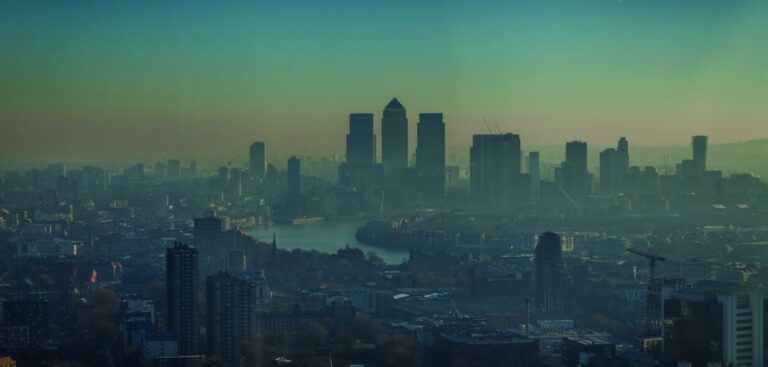
After developing new corrections for the impact of weather and seasonal trends, such as reduced NO2 emissions from winter to summer, the researchers evaluated changes in ambient NO2 , O3 and fine particle (PM2.5) concentrations arising from lockdown emission changes in 11 global cities: Beijing, Wuhan, Milan, Rome, Madrid, London, Paris, Berlin, New York, Los Angeles and Delhi.

The researchers used machine learning to strip out weather impacts and seasonal trends before analyzing the data, which consisted of site-specific hourly concentrations of key pollutants from December 2015 to May 2020.

The team of scientists discovered that the beneficial reductions in NO2 due to the lockdowns were smaller than expected, after removing the effects of weather. In parallel, the lockdowns caused (weather-corrected) concentrations of ozone in cities to increase.

Publishing their findings in Science Advances, the research team also found that concentrations of PM2.5, which can worsen medical conditions such as asthma and heart disease, decreased in all cities studied except London and Paris.

Lead-author Zongbo Shi, Professor of Atmospheric Biogeochemistry at the University of Birmingham, commented, “Rapid, unprecedented reduction in economic activity provided a unique opportunity to study the impact of interventions on air quality. Emission changes associated with the early lockdown restrictions led to abrupt changes in air pollutant levels but their impacts on air quality were more complex than we thought, and smaller than we expected.

“Weather changes can mask changes in emissions on air quality. Importantly, our study has provided a new framework for assessing air pollution interventions, by separating the effects of weather and season from the effects of emission changes.”

William Bloss, Professor of Atmospheric Sciences and a co-author on the paper, added, “We found increases in ozone levels due to lockdown in all the cities studied. This is what we expect from the air chemistry, but this will counteract at least some of the health benefit from NO2  reductions. The changes in PM2.5 differ from city to city. Future mitigation measures require a systematic air pollution control approach towards NO2 , O3  and PM2.5 which is tailored for specific cities, to maximize the overall benefits of air quality changes to human health.”

Previous ArticleNOAA revamps drought portal
Next Article NOAA predicts 30% maximum Great Lakes ice cover for 2021 winter

Read Similar Stories

Climate Measurement

Global warming reached 1.37°C in 2025 as heat accumulation hits record rate

June 12, 20263 Mins Read
Climate Measurement

Cambridge AI tool converts satellite archives into accessible Earth intelligence

June 10, 20262 Mins Read
Climate Measurement

ECMWF prepares release of new ORAS6 ocean reanalysis system

June 10, 20263 Mins Read
Latest News

NOAA’s SOLAR-1 satellite becomes operational, boosting space weather forecasting capability

June 16, 2026

Global warming reached 1.37°C in 2025 as heat accumulation hits record rate

June 12, 2026

NSF NCAR researchers develop advanced model for neighborhood-scale low-altitude wind prediction

June 11, 2026

Receive breaking stories and features in your inbox each week, for free


Enter your email address:


Supplier Spotlights
  • ELDES S.r.l.
Getting in Touch
  • Contact Us / Advertise
  • Meet the Editors
  • Media Pack
  • Free Weekly E-Newsletter
Our Social Channels
  • Facebook
  • LinkedIn
© 2026 UKi Media & Events a division of UKIP Media & Events Ltd
  • Cookie Policy
  • Privacy Policy
  • Terms and Conditions
  • Notice and Takedown Policy

Type above and press Enter to search. Press Esc to cancel.