


Close Menu
Meteorological Technology International
  • News
    • A-E
      • Agriculture
      • Automated Weather Stations
      • Aviation
      • Climate Measurement
      • Data
      • Developing Countries
      • Digital Applications
      • Early Warning Systems
      • Extreme Weather
    • G-P
      • Hydrology
      • Lidar
      • Lightning Detection
      • New Appointments
      • Nowcasting
      • Numerical Weather Prediction
      • Polar Weather
    • R-S
      • Radar
      • Rainfall
      • Remote Sensing
      • Renewable Energy
      • Satellites
      • Solar
      • Space Weather
      • Supercomputers
    • T-Z
      • Training
      • Transport
      • Weather Instruments
      • Wind
      • World Meteorological Organization
      • Meteorological Technology World Expo
  • Features
  • Online Magazines
    • January 2026
    • April 2025
    • January 2025
    • September 2024
    • April 2024
    • Archive Issues
    • Subscribe Free!
  • Opinion
  • Videos
  • Supplier Spotlight
  • Expo
LinkedIn X (Twitter) Facebook
  • Sign-up for Free Weekly E-Newsletter
  • Meet the Editors
  • Contact Us
  • Media Pack
LinkedIn Facebook
Subscribe
Meteorological Technology International
  • News
      • Agriculture
      • Automated Weather Stations
      • Aviation
      • Climate Measurement
      • Data
      • Developing Countries
      • Digital Applications
      • Early Warning Systems
      • Extreme Weather
      • Hydrology
      • Lidar
      • Lightning Detection
      • New Appointments
      • Nowcasting
      • Numerical Weather Prediction
      • Polar Weather
      • Radar
      • Rainfall
      • Remote Sensing
      • Renewable Energy
      • Satellites
      • Solar
      • Space Weather
      • Supercomputers
      • Training
      • Transport
      • Weather Instruments
      • Wind
      • World Meteorological Organization
      • Meteorological Technology World Expo
  • Features
  • Online Magazines
    1. January 2026
    2. September 2025
    3. April 2025
    4. January 2025
    5. September 2024
    6. April 2024
    7. January 2024
    8. September 2023
    9. April 2023
    10. Archive Issues
    11. Subscribe Free!
    Featured
    November 27, 2025

    In this Issue – January 2026

    By Hazel KingNovember 27, 2025
    Recent

    In this Issue – January 2026

    November 27, 2025

    In this Issue – September 2025

    August 11, 2025

    In this Issue – April 2025

    April 15, 2025
  • Opinion
  • Videos
  • Supplier Spotlight
  • Expo
Facebook LinkedIn
Subscribe
Meteorological Technology International
Climate Measurement

Research identifies Greenland Ice Sheet tipping points

Dan SymondsBy Dan SymondsMarch 30, 20233 Mins Read
Share LinkedIn Facebook Twitter Email
Photo credit: Pixabay
Share
LinkedIn Facebook Twitter Email

A new study from the Potsdam Institute for Climate Impact Research in Germany has used simulations to identify two tipping points for the Greenland Ice Sheet.

According to the study, releasing 1,000 gigatons of carbon into the atmosphere will cause the southern portion of the ice sheet to melt, and around 2,500 gigatons of carbon would result in the permanent loss of nearly the entire ice sheet.

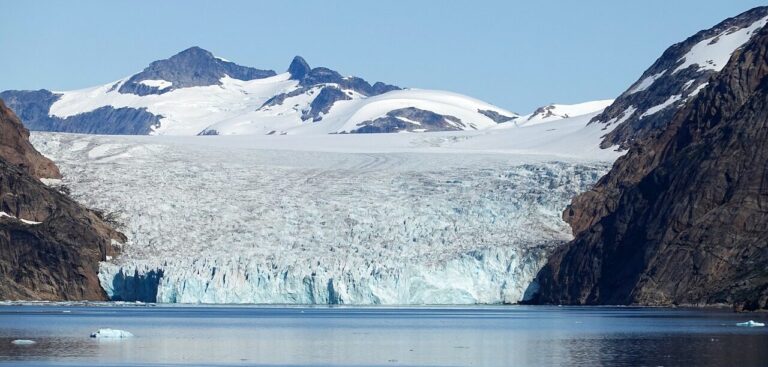
The Greenland Ice Sheet covers 1,700,000km2 in the Arctic and would result in a global sea level rise of 7m if it melted completely.

Around 500 gigatons of carbon have been emitted into the atmosphere to date, which is halfway to the first tipping point.

Dennis Höning, a climate scientist at the Potsdam Institute for Climate Impact Research, who led the study, said, “The first tipping point is not far from today’s climate conditions, so we’re in danger of crossing it. Once we start sliding, we will fall off this cliff and cannot climb back up.”

The Greenland Ice Sheet is already melting and lost an average of 255 gigatons (billions of tons) of ice each year between 2003 and 2016. Much of the melt to date has been in the southern part of the ice sheet. Air and water temperature, ocean currents, precipitation and other factors all determine how quickly the ice sheet melts and where it loses ice.

The complexity of how those factors influence each other, along with the long timescales scientists need to consider for melting an ice sheet of this size, make it difficult to predict how the ice sheet will respond to different climate and carbon emissions scenarios.

Previous research identified global warming of between 1°C and 3°C as the threshold beyond which the Greenland Ice Sheet will melt irreversibly.

To more comprehensively model how the ice sheet’s response to climate could evolve, Höning’s study for the first time used a complex model of the whole Earth system, which includes all the key climate feedback processes, paired with a model of ice sheet behavior. They first used simulations with constant temperatures to find equilibrium states of the ice sheet, or points where ice loss equaled ice gain. Then they ran a set of 20,000-year-long simulations with carbon emissions ranging from 0 to 4,000 gigatons of carbon.

From those simulations, the researchers derived the 1,000-gigaton carbon tipping point for the melting of the southern portion of the ice sheet and the even more perilous 2,500-gigaton carbon tipping point for the disappearance of nearly the entire ice sheet.

As the ice sheet melts, its surface will be at ever-lower elevations, exposed to warmer air temperatures. Warmer air temperatures accelerate melt, making it drop and warm further. Global air temperatures have to remain elevated for hundreds of years or even longer for this feedback loop to become effective; a quick blip of 2°C wouldn’t trigger it, Höning said. But once the ice crosses the threshold, it would inevitably continue to melt. Even if atmospheric carbon dioxide were reduced to pre-industrial levels, it wouldn’t be enough to allow the ice sheet to regrow substantially.

“We cannot continue carbon emissions at the same rate for much longer without risking crossing the tipping points,” Höning said. “Most of the ice sheet melting won’t occur in the next decade, but it won’t be too long before we will not be able to work against it anymore.”

To view the study published in AGU’s journal Geophysical Research Letters, click here.

Previous ArticleUAE and Pakistan meteorological agencies form cooperation program
Next Article Coastal salt marshes could disappear with rapid sea level rise, warns study

Read Similar Stories

Climate Measurement

WMO signals increasing likelihood of El Niño developing in 2026

April 24, 20263 Mins Read
Radar

Alabama partners with Climavision to expand weather radar coverage statewide

April 24, 20262 Mins Read
Climate Measurement

China completes Antarctic meteorological research mission with Xuelong icebreaker

April 21, 20262 Mins Read
Latest News

WMO signals increasing likelihood of El Niño developing in 2026

April 24, 2026

Alabama partners with Climavision to expand weather radar coverage statewide

April 24, 2026

Extreme heat posing significant risks to ecosystems and agriculture, FAO-WMO report warns

April 22, 2026

Receive breaking stories and features in your inbox each week, for free


Enter your email address:


Supplier Spotlights
  • ZOGLAB Microsystem Co., Ltd
Getting in Touch
  • Contact Us / Advertise
  • Meet the Editors
  • Media Pack
  • Free Weekly E-Newsletter
Our Social Channels
  • Facebook
  • LinkedIn
© 2026 UKi Media & Events a division of UKIP Media & Events Ltd
  • Cookie Policy
  • Privacy Policy
  • Terms and Conditions
  • Notice and Takedown Policy

Type above and press Enter to search. Press Esc to cancel.