


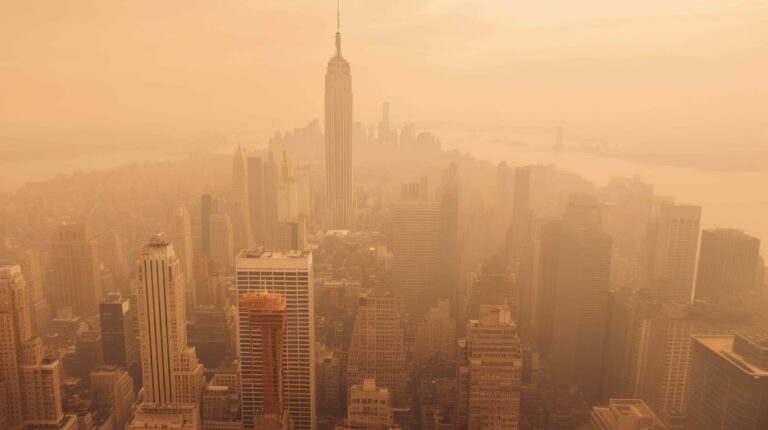
Existing particulate pollution, from sources such as vehicle exhausts and consumer products, is now combining with wildfire smoke – transported from thousands of miles away – to create secondary pollution that is often more toxic and contributes to the formation of ozone in hot weather, researchers at Colorado State University have found.
While air quality in the USA’s largest cities has steadily improved thanks to tighter regulations on key sources of particulate pollution, increased heat, wildfire smoke and other emerging drivers of urban aerosol pollution are combining to create a new set of challenges for public health officials on the East Coast.
Prof. Delphine Farmer from the university’s department of chemistry, led the research, with data collected from continuous on-the-ground readings at a site on Long Island during the summer of 2023. The research was published in npj Climate and Atmospheric Science.
“We did not set out to study air quality, wildfire and heat in that way, but smoke from fires in Canada arrived and, unfortunately, that is likely to be more and more common in the future,” Farmer said.
“Cities on the West Coast have been dealing with these combined issues for a while, but the developing situation in New York is a good test case to understand how variables like the nearby natural forests and denser populations on the East Coast may contribute to these emerging drivers of air pollution in megacities.”
Aerosol pollution consists of tiny particles of smoke or other compounds from many common sources, such as cleaning solutions or cooking in restaurants. It can also occur naturally from the gases plants release every day.
Hotter temperatures can cause plants to release more of those gases and speed the evaporation of some of those consumer products into particulate air pollution.
Meanwhile, wildfire smoke particles absorb and react to those same gases – amplifying natural and man-made sources of pollution.
Because these particles can enter the lungs, they reportedly may lead to heart disease, cancer and even dementia, making them a key focus area for health regulation.
Farmer said the situation in New York presented an opportunity to begin to understand the relationships between sources and their impacts overall. Her team found evidence that 90% of the aerosol pollution over the city was indeed sensitive to at least one aspect of these global changes, such as high temperatures – meaning effects from the pollutants were made worse during a heat wave, for example.
Some volatile chemical products, such as paints and solvents, are sensitive to these changes, and the team’s work shows that those sources are responsible for more than double the estimated contribution from cars to the city’s air pollution total in this category.
New York also has many restaurants, where daily cooking and cleaning activities can contribute to overall pollution totals as well. However, the team found that although those emissions were also sensitive to the introduction of smoke or higher temperatures, the effects were localized.
“We found that restaurants do have a big impact on their own local neighborhoods, but their associated aerosols are only a minor component of the total average load across the region,” Farmer said. “Still, any worsening of those conditions from the arrival of wildfire smoke – for example – could lead to environmental health inequality for those areas that health policymakers will need to consider.”
She added that context like that will help policymakers prioritize sources of pollution to target for their overall contributions to the area’s air quality and their localized impact on public health.
In related news, Texas A&M University uses AI to show link between weather and pollution