


Close Menu
Meteorological Technology International
  • News
    • A-E
      • Agriculture
      • Automated Weather Stations
      • Aviation
      • Climate Measurement
      • Data
      • Developing Countries
      • Digital Applications
      • Early Warning Systems
      • Extreme Weather
    • G-P
      • Hydrology
      • Lidar
      • Lightning Detection
      • New Appointments
      • Nowcasting
      • Numerical Weather Prediction
      • Polar Weather
    • R-S
      • Radar
      • Rainfall
      • Remote Sensing
      • Renewable Energy
      • Satellites
      • Solar
      • Space Weather
      • Supercomputers
    • T-Z
      • Training
      • Transport
      • Weather Instruments
      • Wind
      • World Meteorological Organization
      • Meteorological Technology World Expo
  • Features
  • Online Magazines
    • January 2026
    • April 2025
    • January 2025
    • September 2024
    • April 2024
    • Archive Issues
    • Subscribe Free!
  • Opinion
  • Videos
  • Supplier Spotlight
  • Expo
LinkedIn X (Twitter) Facebook
  • Sign-up for Free Weekly E-Newsletter
  • Meet the Editors
  • Contact Us
  • Media Pack
LinkedIn Facebook
Subscribe
Meteorological Technology International
  • News
      • Agriculture
      • Automated Weather Stations
      • Aviation
      • Climate Measurement
      • Data
      • Developing Countries
      • Digital Applications
      • Early Warning Systems
      • Extreme Weather
      • Hydrology
      • Lidar
      • Lightning Detection
      • New Appointments
      • Nowcasting
      • Numerical Weather Prediction
      • Polar Weather
      • Radar
      • Rainfall
      • Remote Sensing
      • Renewable Energy
      • Satellites
      • Solar
      • Space Weather
      • Supercomputers
      • Training
      • Transport
      • Weather Instruments
      • Wind
      • World Meteorological Organization
      • Meteorological Technology World Expo
  • Features
  • Online Magazines
    1. January 2026
    2. September 2025
    3. April 2025
    4. January 2025
    5. September 2024
    6. April 2024
    7. January 2024
    8. September 2023
    9. April 2023
    10. Archive Issues
    11. Subscribe Free!
    Featured
    November 27, 2025

    In this Issue – January 2026

    By Hazel KingNovember 27, 2025
    Recent

    In this Issue – January 2026

    November 27, 2025

    In this Issue – September 2025

    August 11, 2025

    In this Issue – April 2025

    April 15, 2025
  • Opinion
  • Videos
  • Supplier Spotlight
  • Expo
Facebook LinkedIn
Subscribe
Meteorological Technology International
Oceans

Devices mounted to elephant seals to gather Antarctic Ocean data

Dan SymondsBy Dan SymondsFebruary 2, 20222 Mins Read
Share LinkedIn Facebook Twitter Email
Credit: Clive McMahon
Share
LinkedIn Facebook Twitter Email

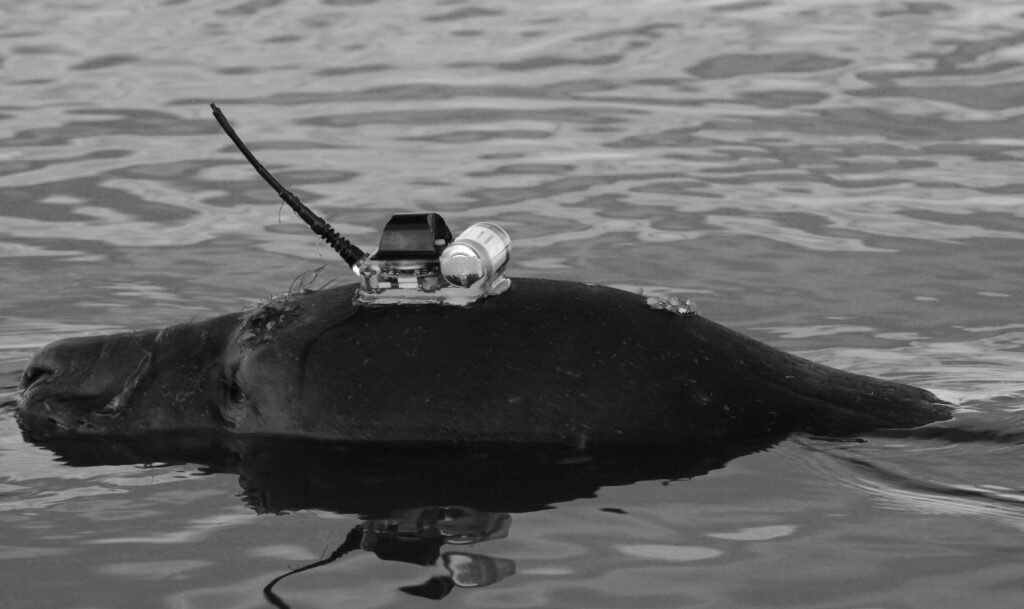
Elephant seals on Kerguelen Island, in the sub-Antarctic, are being fitted with devices to gather ocean information to provide a clearer picture of global climate processes.

Members of the Animal-Borne Ocean Sensors (AniBOS) network team are fitting around 40 elephant seals with the devices during the molting season, which lasts throughout January and February. AniBOS integrates oceanography with biology and is an emerging network of the Global Ocean Observing System (GOOS).

Once a device is fixed to the elephant seal’s new hair and the animal is swimming in the Antarctic Ocean, it will send information from around 80 deep dives daily. The devices cost roughly €7,000 (US$7,900) each.

Dr Clive McMahon of the AniBOS network, who has studied elephant seals for his entire career, said, “If we know what’s happening in the High Antarctic Ocean we have a much better grasp of global climate processes. Obtaining high-latitude observations is critical. Elephant seals can dive up to 2,000m and have the fantastic ability to access platforms like coastal shelves that other platforms are unable to easily reach.”

The AniBOS Ethical Advisory Board oversees the fitting of devices, which weigh roughly 0.1% of the elephant seal’s body mass.

Emma Heslop, a program specialist for GOOS, said, “The AniBOS network provides vital profiles of the upper ocean temperature and salinity in hard-to-reach areas such as the north and south polar regions. These profiles flow into weather models in real time and are also used for climate change analysis. The information that elephant seals provide also enhances our knowledge of their behavior; for example, how, what and where they forage for food. This and the oceanographic data provide powerful tools for conservation and management.”

Previous ArticleNOAA satellites help rescue more than 300 people in 2021
Next Article New dates for Meteorological Technology World Expo North America

Read Similar Stories

Data

Atmospheric G2 secures Japan weather forecasting license

April 21, 20262 Mins Read
Climate Measurement

China completes Antarctic meteorological research mission with Xuelong icebreaker

April 21, 20262 Mins Read
Satellites

AI tool uses weather satellite data to map ocean currents in near real time

April 14, 20263 Mins Read
Latest News

Extreme heat posing significant risks to ecosystems and agriculture, FAO-WMO report warns

April 22, 2026

Atmospheric G2 secures Japan weather forecasting license

April 21, 2026

China completes Antarctic meteorological research mission with Xuelong icebreaker

April 21, 2026

Receive breaking stories and features in your inbox each week, for free


Enter your email address:


Supplier Spotlights
  • Raymetrics
Getting in Touch
  • Contact Us / Advertise
  • Meet the Editors
  • Media Pack
  • Free Weekly E-Newsletter
Our Social Channels
  • Facebook
  • LinkedIn
© 2026 UKi Media & Events a division of UKIP Media & Events Ltd
  • Cookie Policy
  • Privacy Policy
  • Terms and Conditions
  • Notice and Takedown Policy

Type above and press Enter to search. Press Esc to cancel.