


Close Menu
Meteorological Technology International
  • News
    • A-E
      • Agriculture
      • Automated Weather Stations
      • Aviation
      • Climate Measurement
      • Data
      • Developing Countries
      • Digital Applications
      • Early Warning Systems
      • Extreme Weather
    • G-P
      • Hydrology
      • Lidar
      • Lightning Detection
      • New Appointments
      • Nowcasting
      • Numerical Weather Prediction
      • Polar Weather
    • R-S
      • Radar
      • Rainfall
      • Remote Sensing
      • Renewable Energy
      • Satellites
      • Solar
      • Space Weather
      • Supercomputers
    • T-Z
      • Training
      • Transport
      • Weather Instruments
      • Wind
      • World Meteorological Organization
      • Meteorological Technology World Expo
  • Features
  • Online Magazines
    • January 2026
    • April 2025
    • January 2025
    • September 2024
    • April 2024
    • Archive Issues
    • Subscribe Free!
  • Opinion
  • Videos
  • Supplier Spotlight
  • Expo
LinkedIn X (Twitter) Facebook
  • Sign-up for Free Weekly E-Newsletter
  • Meet the Editors
  • Contact Us
  • Media Pack
LinkedIn Facebook
Subscribe
Meteorological Technology International
  • News
      • Agriculture
      • Automated Weather Stations
      • Aviation
      • Climate Measurement
      • Data
      • Developing Countries
      • Digital Applications
      • Early Warning Systems
      • Extreme Weather
      • Hydrology
      • Lidar
      • Lightning Detection
      • New Appointments
      • Nowcasting
      • Numerical Weather Prediction
      • Polar Weather
      • Radar
      • Rainfall
      • Remote Sensing
      • Renewable Energy
      • Satellites
      • Solar
      • Space Weather
      • Supercomputers
      • Training
      • Transport
      • Weather Instruments
      • Wind
      • World Meteorological Organization
      • Meteorological Technology World Expo
  • Features
  • Online Magazines
    1. January 2026
    2. September 2025
    3. April 2025
    4. January 2025
    5. September 2024
    6. April 2024
    7. January 2024
    8. September 2023
    9. April 2023
    10. Archive Issues
    11. Subscribe Free!
    Featured
    November 27, 2025

    In this Issue – January 2026

    By Hazel KingNovember 27, 2025
    Recent

    In this Issue – January 2026

    November 27, 2025

    In this Issue – September 2025

    August 11, 2025

    In this Issue – April 2025

    April 15, 2025
  • Opinion
  • Videos
  • Supplier Spotlight
  • Expo
Facebook LinkedIn
Subscribe
Meteorological Technology International
Data

Researchers publish findings from historic lake-sediment sample taken from subglacial Antarctica

Dan SymondsBy Dan SymondsMarch 17, 20233 Mins Read
Share LinkedIn Facebook Twitter Email
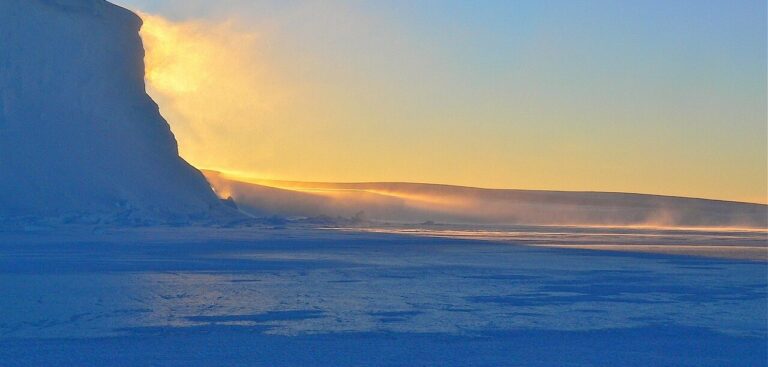
Credit - Pixabay
Share
LinkedIn Facebook Twitter Email

Researchers have published their analysis of the first layered lake-sediment sample ever extracted from subglacial Antarctica, providing critical information about the past dynamics of the Antarctic ice sheet and its ecosystems.

Since the discovery of subglacial lakes in Antarctica around half a century ago, scientists have attempted to extract lakebed sediment to learn about the formation, movement and past conditions of the ice sheet. Now, a team of researchers with the National Science Foundation-funded project Subglacial Antarctic Lakes Scientific Access (SALSA) has published its analysis following the recovery of the first layered sediments from beneath the modern Antarctic ice sheet.

The researchers’ findings provide important insight into the larger dynamics of the Antarctic ice sheet and its history, including when the ice sheet was smaller than its current size. Their work adds to the sedimentary record of knowledge of Antarctica and also holds implications for understanding how Antarctica may contribute to global sea level change.

The study was led by authors at the Colorado School of Mines, with a large team of co-authors from more than 20 other scientific research organizations, including UC San Diego’s Scripps Institution of Oceanography, which was instrumental in leading the SALSA project.

Previous studies of modern subglacial lakes were limited to the timescale of the modern ice sheet due to the challenge of sampling an environment locked beneath thousands of feet of ice. The sediment sample extracted by the SALSA team will allow researchers to better understand subglacial activity across almost two centuries, instead of merely two decades.

Matthew Siegfried, assistant professor of geophysics at Colorado School of Mines and a lead author of the paper, said, “There are places on Earth that we still haven’t explored. We have now one sample trying to understand an environment that is one-and-a-half times the size of the continental United States. It’s like pulling up a rock in New Orleans and understanding how the Mississippi River and its entire basin has acted for the past 1,000 years.”

Siegfried began working on the SALSA project while a postdoctoral researcher at Scripps Oceanography, where he studied with glaciologist Helen Amanda Fricker, a co-author of the new study, and helped write the original proposal. Fricker said that the recent recovery of subglacial lake-sediment builds upon previous discoveries made possible by NASA’s ICESat satellite, which once orbited more than 370 miles above the surface of the earth, measuring surface elevation of large ice sheets.

Active lakes under ice streams in Antarctica, like the one sampled by the SALSA Project, were not known about until 2006 when ICESat laser altimetry detected meter-scale changes in the ice surface which were caused by the transfer of water from one lake to another.

“The satellite data pointed us to where we needed to go, then we were able to write a proposal to go and drill into two of those lakes and learn more about the system,” said Fricker. “When we first discovered active subglacial lakes in 2006, two big questions were: How long have they been there?; and how often do they drain? It’s so exciting to me that this serendipitous discovery has set off this entire research program. The recovery of a layered sediment from the bottom of one of these lakes 12 years later moves us closer to answering both of these questions.”

To read more from the analysis, click here.

Previous ArticleQuantum Pathways Institute to develop quantum sensing technology for climate research
Next Article UAE and China to collaborate on advancing meteorological technologies

Read Similar Stories

Digital Applications

ForecastWatch expands with launch of new independent platform for weather forecast verification

April 28, 20262 Mins Read
Data

Atmospheric G2 secures Japan weather forecasting license

April 21, 20262 Mins Read
Climate Measurement

China completes Antarctic meteorological research mission with Xuelong icebreaker

April 21, 20262 Mins Read
Latest News

China expands MAZU early warning system for developing countries

April 30, 2026

Météo-France begins construction of France’s tallest weather radar tower in Sembadel

April 29, 2026

ForecastWatch expands with launch of new independent platform for weather forecast verification

April 28, 2026

Receive breaking stories and features in your inbox each week, for free


Enter your email address:


Supplier Spotlights
  • LCJ Capteurs
Getting in Touch
  • Contact Us / Advertise
  • Meet the Editors
  • Media Pack
  • Free Weekly E-Newsletter
Our Social Channels
  • Facebook
  • LinkedIn
© 2026 UKi Media & Events a division of UKIP Media & Events Ltd
  • Cookie Policy
  • Privacy Policy
  • Terms and Conditions
  • Notice and Takedown Policy

Type above and press Enter to search. Press Esc to cancel.