


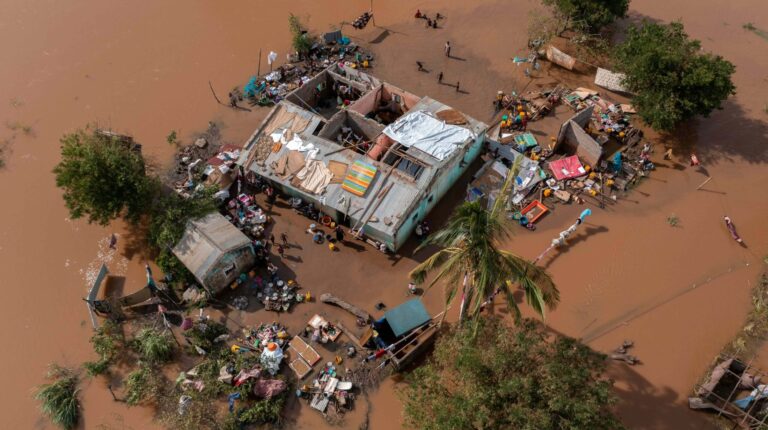
A regional training initiative is underway to strengthen flood forecasting capabilities in Central Africa, where floods are becoming more frequent and severe.
The World Meteorological Organization (WMO), in collaboration with the AGRHYMET Regional Center and the Swedish Meteorological and Hydrological Institute (SMHI), is supporting the development of the FANFAR river flood forecasting system across the region.
FANFAR provides forecasts of river flood risk up to 10 days in advance, using hydrological modeling of major river basins alongside meteorological data.
The initiative follows significant flooding events in 2024, when floods in Chad and the Democratic Republic of Congo affected 1.9 million and 1.2 million people respectively, according to OCHA.
As part of the project, a three-day regional workshop on hydrometeorological data management and exchange was held in Yaoundé, Cameroon, from March 10–12, 2026. The workshop was organized by WMO in partnership with Cameroon’s Direction of National Meteorology and the Institute of Geological and Mining Research.
The event brought together 35 participants from national meteorological and hydrological services across Central Africa, as well as regional organizations including the Economic Community of Central African States, the International Commission of the Congo-Ubangi-Sangha Basin and regional forecasting centers.
The training focused on improving understanding of data requirements for flood forecasting and supporting the development and operation of the FANFAR system. Participants reviewed the system’s structure and modeling processes, and discussed approaches to coordinating data exchange across institutions.
Attendees agreed on a number of follow-up actions, including sharing hydrometeorological data and station metadata to support further development of the system. They also emphasized the need for improved data management frameworks to ensure data quality and accessibility.
The FANFAR system has already been implemented in West Africa, and the current project aims to extend its capabilities to Central Africa.
According to WMO, it will ensure that countries in the region can also benefit from modern and tailored tools for flood monitoring, forecasting and support for warning decisions.
Further work on system development and data integration is expected to continue over the next two years.
To advance efficient implementation, the AGRHYMET and SMHI development teams are working together with WMO staff, countries and River Basin Organizations (RBO) to ensure efficient and harmonized data management aligned with the WMO Integrated Global Observing System (WIGOS), the WMO Information System (WIS) and the WMO Hydrological Observing System (WHOS) and supported by the Meteorology, Climatology and Hydrology Database Management System (MCH).
Further support will be provided through the project over the next two years.
Related news, Global climate indicators reach record imbalance, WMO warns