


The Earth’s climate system is “increasingly out of balance”, with key indicators reaching record levels, according to the World Meteorological Organization’s (WMO) State of the Global Climate 2025 report.
The report confirms that 2015-2025 were the hottest 11 years on record, with 2025 ranking as the second or third warmest year, at around 1.43°C above the 1850-1900 average.
For the first time, the report highlights the Earth’s energy imbalance as a key metric. This measures the difference between incoming solar energy and outgoing heat. The imbalance reached its highest level in the 65-year observational record in 2025, driven by rising greenhouse gas concentrations.
“The State of the Global Climate is in a state of emergency. Planet Earth is being pushed beyond its limits. Every key climate indicator is flashing red,” said UN secretary-general António Guterres.
Ocean warming continues to play a central role. Over the past two decades, the ocean has absorbed energy equivalent to around 18 times annual global human energy use each year. More than 90% of excess heat in the climate system is stored in the ocean, with ocean heat content reaching a new record in 2025.
WMO secretary-general Celeste Saulo said, “Human activities are increasingly disrupting the natural equilibrium and we will live with these consequences for hundreds and thousands of years.”
She added that extreme weather events are becoming more severe: “In 2025, heatwaves, wildfires, drought, tropical cyclones, storms and flooding caused thousands of deaths, impacted millions of people and caused billions in economic losses.”
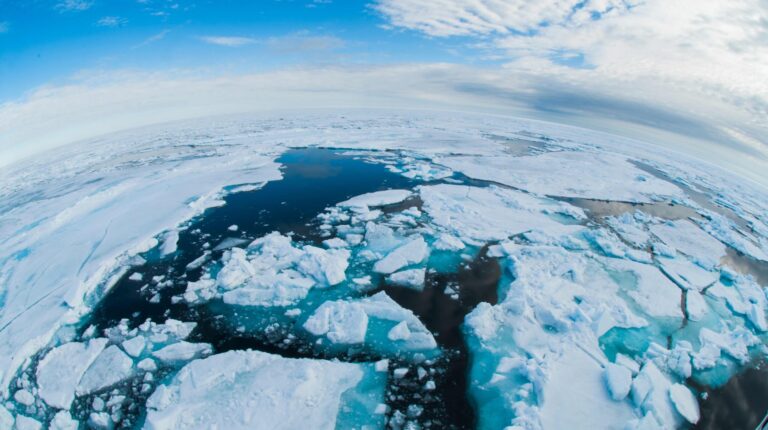
Cryosphere indicators also show continued decline. Arctic sea ice extent was at or near a record low, Antarctic sea ice was the third lowest on record and glacier mass loss remained among the most severe observed. Melting ice, combined with ocean warming, is contributing to long-term sea-level rise, which has accelerated since satellite records began in 1993.
The report notes that greenhouse gas concentrations – carbon dioxide, methane and nitrous oxide – are now at their highest levels in at least 800,000 years. Carbon dioxide concentrations in 2024 reached their highest level in two million years.
Extreme weather events are increasingly affecting food security, displacement and public health. The report highlights rising risks from heat stress and vector-borne diseases such as dengue, as well as the growing need for integrated climate and health data systems.
Released on World Meteorological Day and its theme ‘Observing Today, Protecting Tomorrow’, the report is based on contributions from national meteorological services, UN agencies and scientific experts.
Related news, WMO retires Hurricane Melissa name after deadly 2025 storm