


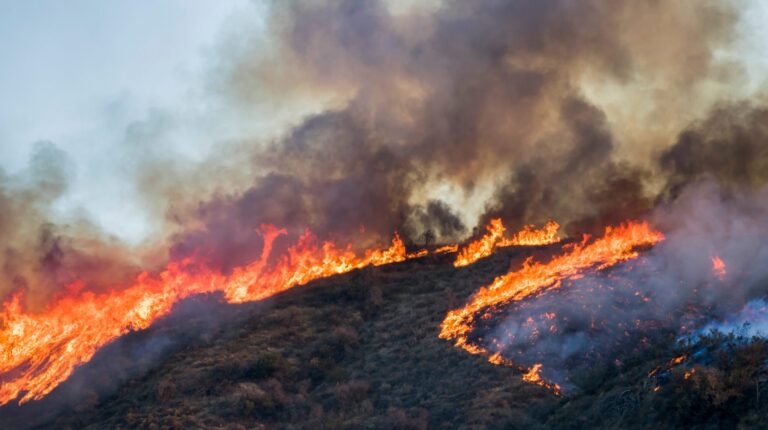
Severe heatwaves and droughts linked to human-driven climate change are making extreme wildfires increasingly frequent and destructive worldwide, according to the State of Wildfires 2024–25 report, co-led by ECMWF, the UK Centre for Ecology & Hydrology (UKCEH), the UK Met Office and the University of East Anglia (UEA).
Published in Earth System Science Data, the annual assessment provides mounting evidence that global warming is amplifying wildfire risk, with advanced satellite observations and modeling revealing that fires are now larger, longer lasting and more polluting than ever.
Between March 2024 and February 2025, wildfires burned 3.7 million km² globally – an area larger than India – emitting over eight billion metric tons of CO₂, around 10% above the average since 2023, driven by unusually intense forest fires regions such as South America, California and Canada.
In Southern California, January’s Los Angeles wildfires were estimated to be twice as likely and 25 times larger in today’s warmer climate than in a pre-industrial world. Fires in the Pantanal–Chiquitano region of South America were 35 times larger than they would have been without human-induced warming.
Creating dangerous conditions
The scientists’ advanced modeling identified the respective roles of weather, vegetation density and ignition sources in determining the most extreme events.
Report co-lead Dr Francesca Di Giuseppe of ECMWF explained, “Climate change is not only creating more dangerous fire-prone weather conditions, but it is also influencing the rates at which vegetation grows and provides fuel for the fires to spread.
“Our analyses detected the critical role of both extreme weather and fuel in the Los Angeles fires, with unusually wet weather in the preceding 30 months contributing to strong vegetation growth and laying the perfect foundations for wildfires to occur when unusually hot and dry conditions arrived in January.”
The amount and dryness of vegetation also played a critical role during the extreme wildfires in Amazonia and Congo, where abnormally dry forests and wetlands allowed fires to spread faster and further.
Future projections
Extreme fires like those in the Pantal-Chiquitano region – which previously might have occurred once in a lifetime – could happen every 15-20 years by the end of the century if global greenhouse gas emissions continue on their current path, the researchers said.
The report warns that without rapid global emissions cuts and improved land and fire management, extreme wildfire seasons like 2024–25 could become routine by century’s end. Land and fire management policies and practices can also help to mitigate damage.
Report co-lead Dr Matt Jones of the University of East Anglia said, “We urge world leaders at COP30 to make bold commitments to cut greenhouse gas emissions rapidly this decade. This is the single most powerful contribution that most developed nations can make to avoiding the worst impacts of extreme wildfires on living and future generations.”
In related news, Study finds climate change may lead to less frequent but more devastating hailstorms in Europe