


Close Menu
Meteorological Technology International
  • News
    • A-E
      • Agriculture
      • Automated Weather Stations
      • Aviation
      • Climate Measurement
      • Data
      • Developing Countries
      • Digital Applications
      • Early Warning Systems
      • Extreme Weather
    • G-P
      • Hydrology
      • Lidar
      • Lightning Detection
      • New Appointments
      • Nowcasting
      • Numerical Weather Prediction
      • Polar Weather
    • R-S
      • Radar
      • Rainfall
      • Remote Sensing
      • Renewable Energy
      • Satellites
      • Solar
      • Space Weather
      • Supercomputers
    • T-Z
      • Training
      • Transport
      • Weather Instruments
      • Wind
      • World Meteorological Organization
      • Meteorological Technology World Expo
  • Features
  • Online Magazines
    • January 2026
    • April 2025
    • January 2025
    • September 2024
    • April 2024
    • Archive Issues
    • Subscribe Free!
  • Opinion
  • Videos
  • Supplier Spotlight
  • Expo
LinkedIn X (Twitter) Facebook
  • Sign-up for Free Weekly E-Newsletter
  • Meet the Editors
  • Contact Us
  • Media Pack
LinkedIn Facebook
Subscribe
Meteorological Technology International
  • News
      • Agriculture
      • Automated Weather Stations
      • Aviation
      • Climate Measurement
      • Data
      • Developing Countries
      • Digital Applications
      • Early Warning Systems
      • Extreme Weather
      • Hydrology
      • Lidar
      • Lightning Detection
      • New Appointments
      • Nowcasting
      • Numerical Weather Prediction
      • Polar Weather
      • Radar
      • Rainfall
      • Remote Sensing
      • Renewable Energy
      • Satellites
      • Solar
      • Space Weather
      • Supercomputers
      • Training
      • Transport
      • Weather Instruments
      • Wind
      • World Meteorological Organization
      • Meteorological Technology World Expo
  • Features
  • Online Magazines
    1. January 2026
    2. September 2025
    3. April 2025
    4. January 2025
    5. September 2024
    6. April 2024
    7. January 2024
    8. September 2023
    9. April 2023
    10. Archive Issues
    11. Subscribe Free!
    Featured
    November 27, 2025

    In this Issue – January 2026

    By Hazel KingNovember 27, 2025
    Recent

    In this Issue – January 2026

    November 27, 2025

    In this Issue – September 2025

    August 11, 2025

    In this Issue – April 2025

    April 15, 2025
  • Opinion
  • Videos
  • Supplier Spotlight
  • Expo
Facebook LinkedIn
Subscribe
Meteorological Technology International
Lightning Detection

NASA awards contracts for GeoXO lightning mapper study

Dan SymondsBy Dan SymondsApril 21, 20222 Mins Read
Share LinkedIn Facebook Twitter Email
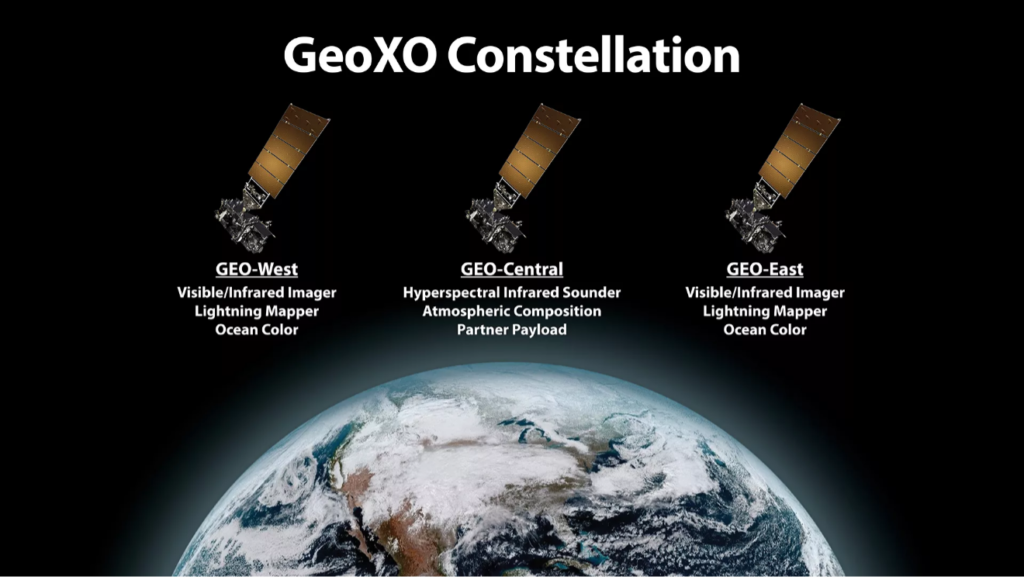
GeoXO constellation - credit: NOAA/NASA
Share
LinkedIn Facebook Twitter Email

US space agency NASA has selected two firms to undertake the Phase A Study for the ‘Lightning Mapper’ instrument used as part of NOAA’s Geostationary Extended Observations (GeoXO) program.

The firms selected for the study are Northrop Grumman and Lockheed Martin, with work being conducted at each of the contractor’s facilities. The total value of each 20-month contract is approximately US$5m.

The principal purpose of the contracts is to provide a definition-phase study of a GeoXO LMX instrument. The LMX instrument will be a single-channel, near-infrared optical detector used to detect, locate and measure the optical pulses associated with lightning. It is planned to fly on the NOAA GeoXO series of geostationary satellites.

NOAA’s GeoXO satellite system will advance Earth observations from geostationary orbit, supplying vital information to address major environmental challenges of the future in support of weather, ocean and climate operations in the USA. The GeoXO mission will continue and expand observations provided by the GOES-R series of satellites, with launches set to take place by the early 2030s, as the GOES-R Series nears the end of its operational lifetime.

The GeoXO mission is a collaborative partnership between NOAA and NASA. NOAA funds, operates, and manages the mission and NASA’s Goddard Space Flight Center in Greenbelt, Maryland, manages the acquisition of the Phase A Formulation contracts.

Previous ArticleESA third generation Meteosat fitted with lightning imager ahead of launch
Next Article British Antarctic Survey model ranks biggest threats to Larsen C ice shelf

Read Similar Stories

Space Weather

Northumbria University secures £4m to study Earth’s radiation belts

April 16, 20262 Mins Read
Extreme Weather

AI model improves real-time prediction of wildfire spread

April 16, 20263 Mins Read
Satellites

AI tool uses weather satellite data to map ocean currents in near real time

April 14, 20263 Mins Read
Latest News

European climate report highlights record heat, glacier loss and rising extremes

April 27, 2026

WMO signals increasing likelihood of El Niño developing in 2026

April 24, 2026

Alabama partners with Climavision to expand weather radar coverage statewide

April 24, 2026

Receive breaking stories and features in your inbox each week, for free


Enter your email address:


Supplier Spotlights
  • Meteomatics AG
Getting in Touch
  • Contact Us / Advertise
  • Meet the Editors
  • Media Pack
  • Free Weekly E-Newsletter
Our Social Channels
  • Facebook
  • LinkedIn
© 2026 UKi Media & Events a division of UKIP Media & Events Ltd
  • Cookie Policy
  • Privacy Policy
  • Terms and Conditions
  • Notice and Takedown Policy

Type above and press Enter to search. Press Esc to cancel.