


Close Menu
Meteorological Technology International
  • News
    • A-E
      • Agriculture
      • Automated Weather Stations
      • Aviation
      • Climate Measurement
      • Data
      • Developing Countries
      • Digital Applications
      • Early Warning Systems
      • Extreme Weather
    • G-P
      • Hydrology
      • Lidar
      • Lightning Detection
      • New Appointments
      • Nowcasting
      • Numerical Weather Prediction
      • Polar Weather
    • R-S
      • Radar
      • Rainfall
      • Remote Sensing
      • Renewable Energy
      • Satellites
      • Solar
      • Space Weather
      • Supercomputers
    • T-Z
      • Training
      • Transport
      • Weather Instruments
      • Wind
      • World Meteorological Organization
      • Meteorological Technology World Expo
  • Features
  • Online Magazines
    • January 2026
    • April 2025
    • January 2025
    • September 2024
    • April 2024
    • Archive Issues
    • Subscribe Free!
  • Opinion
  • Videos
  • Supplier Spotlight
  • Expo
LinkedIn X (Twitter) Facebook
  • Sign-up for Free Weekly E-Newsletter
  • Meet the Editors
  • Contact Us
  • Media Pack
LinkedIn Facebook
Subscribe
Meteorological Technology International
  • News
      • Agriculture
      • Automated Weather Stations
      • Aviation
      • Climate Measurement
      • Data
      • Developing Countries
      • Digital Applications
      • Early Warning Systems
      • Extreme Weather
      • Hydrology
      • Lidar
      • Lightning Detection
      • New Appointments
      • Nowcasting
      • Numerical Weather Prediction
      • Polar Weather
      • Radar
      • Rainfall
      • Remote Sensing
      • Renewable Energy
      • Satellites
      • Solar
      • Space Weather
      • Supercomputers
      • Training
      • Transport
      • Weather Instruments
      • Wind
      • World Meteorological Organization
      • Meteorological Technology World Expo
  • Features
  • Online Magazines
    1. April 2026
    2. January 2026
    3. September 2025
    4. April 2025
    5. January 2025
    6. September 2024
    7. April 2024
    8. January 2024
    9. Archive Issues
    10. Subscribe Free!
    Featured
    May 5, 2026

    In this Issue – April 2026

    By Web TeamMay 5, 2026
    Recent

    In this Issue – April 2026

    May 5, 2026

    In this Issue – January 2026

    November 27, 2025

    In this Issue – September 2025

    August 11, 2025
  • Opinion
  • Videos
  • Supplier Spotlight
  • Expo
Facebook LinkedIn
Subscribe
Meteorological Technology International
News

NASA reveals details of first weather report from Mars Perseverance Rover

Helen NormanBy Helen NormanApril 8, 20212 Mins Read
Share LinkedIn Facebook Twitter Email
Mars weather
Share
LinkedIn Facebook Twitter Email

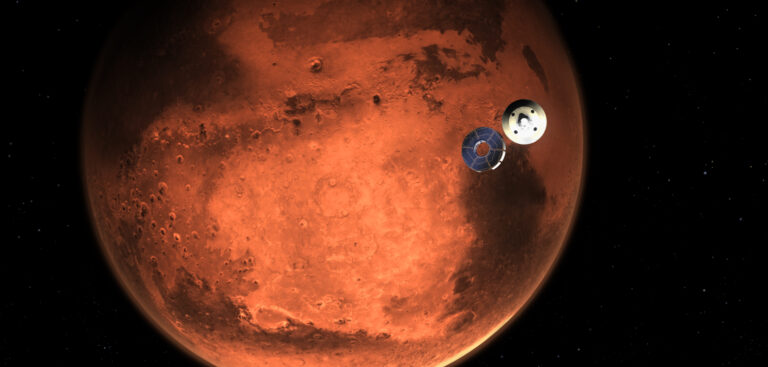
NASA has released details of the first weather report from the Mars Environmental Dynamics Analyzer (MEDA) system aboard NASA’s Perseverance rover on Mars. NASA engineers will use weather data from MEDA to inform their future plans.

MEDA first powered on for 30 minutes on February 19, approximately one day after the rover touched down on Mars. Around 8:25pm PST that same day, engineers received initial data from MEDA.

Engineers have now pieced together the first weather report from the Jezero Crater on Mars. Data shows it was just below -4°F (-20°C) on the surface when the system started recording, and that temperature dropped to -14°F (-25.6°C) within 30 minutes.

Meanwhile, MEDA’s radiation and dust sensor showed Jezero was experiencing a cleaner atmosphere than Gale Crater around the same time, roughly 2,300 miles (3,700km) away, according to reports from the Rover Environmental Monitoring Station (REMS) aboard the Curiosity rover stationed inside Gale. And MEDA’s pressure sensors told engineers the pressure on Mars was 718 Pascals, well within the 705-735 Pascal range predicted by their models for that time on Mars.

MEDA contains a suite of environmental sensors to record dust levels and six atmospheric conditions – wind (both speed and direction), pressure, relative humidity, air temperature, ground temperature, and radiation (from both the Sun and space). The system wakes itself up every hour, and after recording and storing data, it goes to sleep independently of rover operations. The system records data whether the rover is awake or not, both day and night.

Over the next year, MEDA will provide valuable information on temperature cycles, heat fluxes, dust cycles, and how dust particles interact with light, ultimately affecting both the temperature and weather. Just as important will be MEDA’s readings of solar radiation intensity, cloud formations, and local winds that might inform the design of the planned Mars Sample Return mission. Additionally, the measurements will help engineers better understand how to prepare humans and habitats to deal with the conditions on Mars.

“We’re very excited to see MEDA working well,” said Manuel de la Torre Juárez, deputy principal investigator for MEDA at NASA’s Jet Propulsion Laboratory in Southern California. “MEDA’s reports will provide a better picture of the environment near the surface. Data from MEDA and other instrument experiments will reveal more pieces of the puzzles on Mars and help prepare for human exploration. We hope that its data will help make our designs stronger and our missions safer.”

Previous ArticleHow Colorado State University is using weather radar for ecological forecasting
Next Article New program launched to support climate information services in developing nations

Read Similar Stories

Satellites

SMILE mission launches to study Earth’s magnetic shield and space weather

May 20, 20263 Mins Read
Space Weather

Northumbria University secures £4m to study Earth’s radiation belts

April 16, 20262 Mins Read
Solar

Mauna Loa Solar Observatory reopens to support Artemis II mission

April 8, 20262 Mins Read
Latest News

Tropical cyclones threaten energy security in Bangladesh, study finds

May 29, 2026

Fiji launches $15.4m initiative to expand early warning systems to vulnerable communities

May 28, 2026

Record-level global temperatures expected to persist over next five years

May 28, 2026

Receive breaking stories and features in your inbox each week, for free


Enter your email address:


Supplier Spotlights
  • Geolux d.o.o.
Getting in Touch
  • Contact Us / Advertise
  • Meet the Editors
  • Media Pack
  • Free Weekly E-Newsletter
Our Social Channels
  • Facebook
  • LinkedIn
© 2026 UKi Media & Events a division of UKIP Media & Events Ltd
  • Cookie Policy
  • Privacy Policy
  • Terms and Conditions
  • Notice and Takedown Policy

Type above and press Enter to search. Press Esc to cancel.