


Close Menu
Meteorological Technology International
  • News
    • A-E
      • Agriculture
      • Automated Weather Stations
      • Aviation
      • Climate Measurement
      • Data
      • Developing Countries
      • Digital Applications
      • Early Warning Systems
      • Extreme Weather
    • G-P
      • Hydrology
      • Lidar
      • Lightning Detection
      • New Appointments
      • Nowcasting
      • Numerical Weather Prediction
      • Polar Weather
    • R-S
      • Radar
      • Rainfall
      • Remote Sensing
      • Renewable Energy
      • Satellites
      • Solar
      • Space Weather
      • Supercomputers
    • T-Z
      • Training
      • Transport
      • Weather Instruments
      • Wind
      • World Meteorological Organization
      • Meteorological Technology World Expo
  • Features
  • Online Magazines
    • January 2026
    • April 2025
    • January 2025
    • September 2024
    • April 2024
    • Archive Issues
    • Subscribe Free!
  • Opinion
  • Videos
  • Supplier Spotlight
  • Expo
LinkedIn X (Twitter) Facebook
  • Sign-up for Free Weekly E-Newsletter
  • Meet the Editors
  • Contact Us
  • Media Pack
LinkedIn Facebook
Subscribe
Meteorological Technology International
  • News
      • Agriculture
      • Automated Weather Stations
      • Aviation
      • Climate Measurement
      • Data
      • Developing Countries
      • Digital Applications
      • Early Warning Systems
      • Extreme Weather
      • Hydrology
      • Lidar
      • Lightning Detection
      • New Appointments
      • Nowcasting
      • Numerical Weather Prediction
      • Polar Weather
      • Radar
      • Rainfall
      • Remote Sensing
      • Renewable Energy
      • Satellites
      • Solar
      • Space Weather
      • Supercomputers
      • Training
      • Transport
      • Weather Instruments
      • Wind
      • World Meteorological Organization
      • Meteorological Technology World Expo
  • Features
  • Online Magazines
    1. April 2026
    2. January 2026
    3. September 2025
    4. April 2025
    5. January 2025
    6. September 2024
    7. April 2024
    8. January 2024
    9. Archive Issues
    10. Subscribe Free!
    Featured
    May 5, 2026

    In this Issue – April 2026

    By Web TeamMay 5, 2026
    Recent

    In this Issue – April 2026

    May 5, 2026

    In this Issue – January 2026

    November 27, 2025

    In this Issue – September 2025

    August 11, 2025
  • Opinion
  • Videos
  • Supplier Spotlight
  • Expo
Facebook LinkedIn
Subscribe
Meteorological Technology International
Oceans

Seafaring drones to travel Gulf Stream collecting critical Earth system data

Dan SymondsBy Dan SymondsDecember 10, 20213 Mins Read
Share LinkedIn Facebook Twitter Email
Credit: Saildrone
Share
LinkedIn Facebook Twitter Email

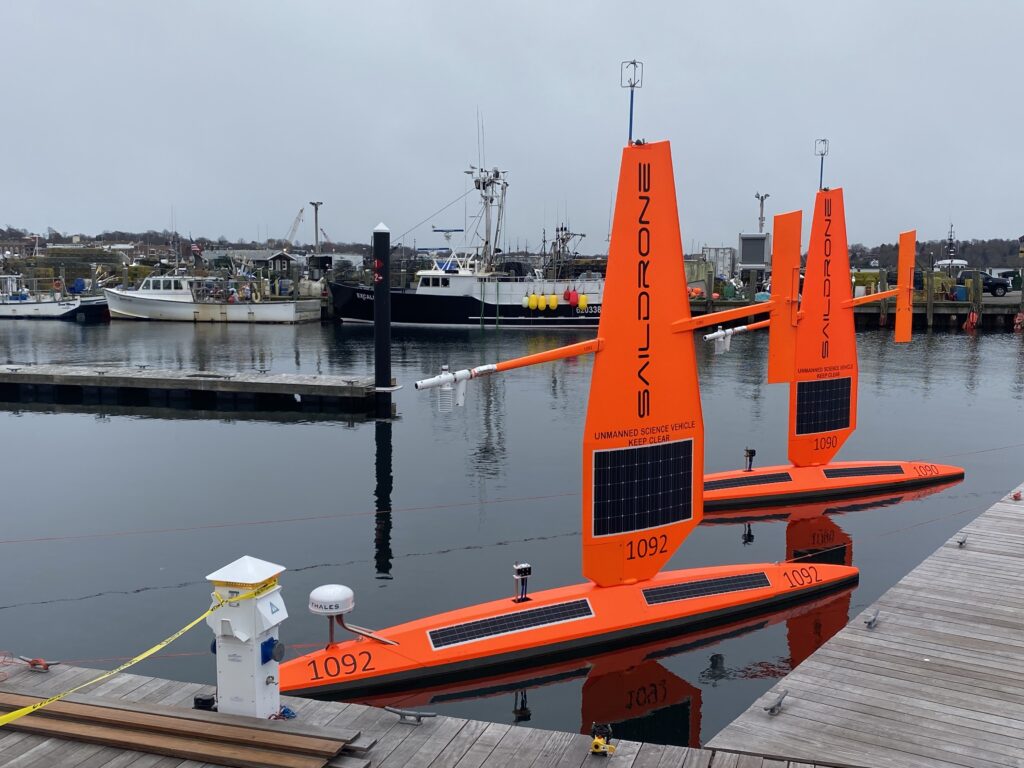
US tech developer Saildrone has launched three uncrewed surface vehicles (USVs) on a six-month mission traversing the Gulf Stream – the North Atlantic’s swiftest current – collecting critical data to help improve weather forecasts and carbon accounting.

The mission is being led by scientists from the University of Rhode Island (URI) and the European Centre for Medium-Range Weather Forecasts (ECMWF). Funded by a grant from the Google.org Impact Challenge on Climate, the ocean drones will brave some of the harshest ocean conditions on Earth, collecting data in areas that traditional crewed ships cannot tolerate.

The Gulf Stream has a significant impact on weather systems and the global carbon budget. However, collecting data can be extremely challenging. The Global Carbon Budget 2021, released at COP26, uses ocean carbon uptake estimates generated by models and sophisticated statistical methods that fill gaps where it has been impossible to collect in-situ data. But the various models and their assumptions yield a wide variety of results.

Jaime Palter is a scientist at the University of Rhode Island and is co-leading the research. She said, “There is a lot of uncertainty in ocean carbon uptake. Nearly four billion tons of CO2  separates the average of the model-based estimates from observation-based estimates. That’s nearly as much CO22  as is emitted by the US [about five billion tons] each year. With more in-situ observations, we can do better.”

Saildrones, powered by the wind and sun, have been designed to collect data in the most remote and harsh areas of the oceans, without risk to human life and with a zero operational carbon footprint.

“The Gulf Stream also has a big impact on weather forecasts and climate predictions,” said Philip Browne, a research scientist at ECMWF. “We are excited to be able to target Saildrones to collect data from this physically and scientifically challenging region to help improve our Earth system approach to forecasting.”

Saildrone Explorers have already sailed across the Atlantic in both directions. Earlier this year, a group of Saildrone USVs equipped with a special ‘hurricane wing’ recently captured the first-ever live video from inside the eye of the Atlantic category 4 Hurricane Sam. Another vehicle also completed the first autonomous circumnavigation of Antarctica, with a different specially modified wing.

Richard Jenkins, the founder and CEO of Saildrone, said, “Since our first science mission in the Arctic in 2015, Saildrone has worked tirelessly to measure climate quality data from Earth’s most remote oceans and deliver that data to scientists all over the world. We believe this data will dramatically improve understanding of critical climate processes and enable more accurate predictions of our future, which will in turn help guide global climate policy and decision making.”

Brigitte Gosselink, Google.org’s director of product impact, said, “Data is a critical enabler of our shared goals for sustainability at scale. As the pace of climate action continues to accelerate, a lack of quality data can often leave researchers, advocates and policymakers without a roadmap. Google.org believes open climate data is a public good, and we’re thrilled to support this work.”

Data from the mission will be sent via satellite in near real time to help scientists at ECMWF improve their Earth system approach to forecasting, and those at the University of Rhode Island working to quantify the Gulf Stream’s role in carbon uptake and predict its stability or vulnerability in the future. The three Saildrone Explorers are expected to be retrieved in Newport, Rhode Island, in mid-2022.

Previous ArticleImpact-based forecasts key to reducing weather-related deaths, says WMO
Next Article ECMWF supercomputing resources to increase five-fold from 2022

Read Similar Stories

Oceans

VIDEO: Sentinel-6 satellite detects El Niño precursor in Pacific

June 4, 20262 Mins Read
Nowcasting

Colorado State University and Nvidia partner to extend severe storm prediction lead times

June 2, 20262 Mins Read
Climate Measurement

WMO warns El Niño is developing with 80% certainty, urges preparation

June 2, 20263 Mins Read
Latest News

VIDEO: Sentinel-6 satellite detects El Niño precursor in Pacific

June 4, 2026

New forecasting framework targets solar-limb flare blind spot

June 4, 2026

Colorado State University and Nvidia partner to extend severe storm prediction lead times

June 2, 2026

Receive breaking stories and features in your inbox each week, for free


Enter your email address:


Supplier Spotlights
  • Senseca
Getting in Touch
  • Contact Us / Advertise
  • Meet the Editors
  • Media Pack
  • Free Weekly E-Newsletter
Our Social Channels
  • Facebook
  • LinkedIn
© 2026 UKi Media & Events a division of UKIP Media & Events Ltd
  • Cookie Policy
  • Privacy Policy
  • Terms and Conditions
  • Notice and Takedown Policy

Type above and press Enter to search. Press Esc to cancel.