


Close Menu
Meteorological Technology International
  • News
    • A-E
      • Agriculture
      • Automated Weather Stations
      • Aviation
      • Climate Measurement
      • Data
      • Developing Countries
      • Digital Applications
      • Early Warning Systems
      • Extreme Weather
    • G-P
      • Hydrology
      • Lidar
      • Lightning Detection
      • New Appointments
      • Nowcasting
      • Numerical Weather Prediction
      • Polar Weather
    • R-S
      • Radar
      • Rainfall
      • Remote Sensing
      • Renewable Energy
      • Satellites
      • Solar
      • Space Weather
      • Supercomputers
    • T-Z
      • Training
      • Transport
      • Weather Instruments
      • Wind
      • World Meteorological Organization
      • Meteorological Technology World Expo
  • Features
  • Online Magazines
    • January 2026
    • April 2025
    • January 2025
    • September 2024
    • April 2024
    • Archive Issues
    • Subscribe Free!
  • Opinion
  • Videos
  • Supplier Spotlight
  • Expo
LinkedIn X (Twitter) Facebook
  • Sign-up for Free Weekly E-Newsletter
  • Meet the Editors
  • Contact Us
  • Media Pack
LinkedIn Facebook
Subscribe
Meteorological Technology International
  • News
      • Agriculture
      • Automated Weather Stations
      • Aviation
      • Climate Measurement
      • Data
      • Developing Countries
      • Digital Applications
      • Early Warning Systems
      • Extreme Weather
      • Hydrology
      • Lidar
      • Lightning Detection
      • New Appointments
      • Nowcasting
      • Numerical Weather Prediction
      • Polar Weather
      • Radar
      • Rainfall
      • Remote Sensing
      • Renewable Energy
      • Satellites
      • Solar
      • Space Weather
      • Supercomputers
      • Training
      • Transport
      • Weather Instruments
      • Wind
      • World Meteorological Organization
      • Meteorological Technology World Expo
  • Features
  • Online Magazines
    1. January 2026
    2. September 2025
    3. April 2025
    4. January 2025
    5. September 2024
    6. April 2024
    7. January 2024
    8. September 2023
    9. April 2023
    10. Archive Issues
    11. Subscribe Free!
    Featured
    November 27, 2025

    In this Issue – January 2026

    By Hazel KingNovember 27, 2025
    Recent

    In this Issue – January 2026

    November 27, 2025

    In this Issue – September 2025

    August 11, 2025

    In this Issue – April 2025

    April 15, 2025
  • Opinion
  • Videos
  • Supplier Spotlight
  • Expo
Facebook LinkedIn
Subscribe
Meteorological Technology International
Climate Measurement

New study reveals Antarctica wasn’t as cold during the last ice age as previously thought

Helen NormanBy Helen NormanJune 9, 20214 Mins Read
Share LinkedIn Facebook Twitter Email
Antarctica warming
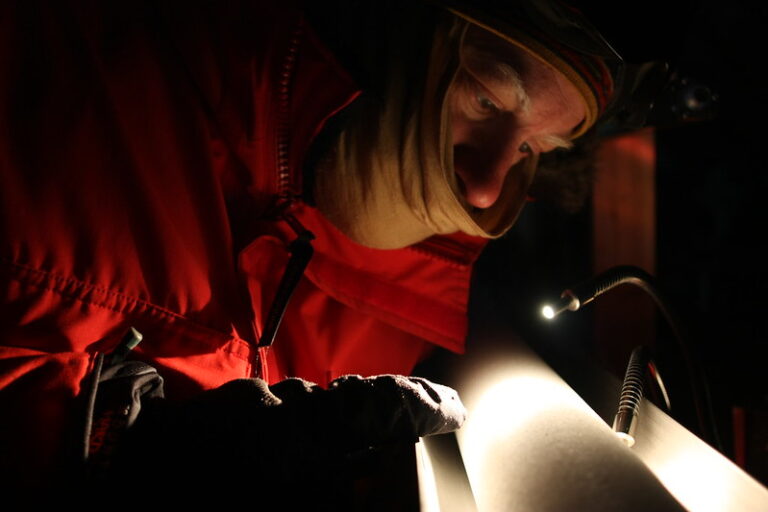
Ice core researcher Don Voigt examines an ice core at the West Antarctic Ice Sheet Divide (WAIS Divide) project. Image: Gifford Wong
Share
LinkedIn Facebook Twitter Email

A study of two methods for reconstructing ancient temperatures has given climate researchers a better understanding of just how cold it was in Antarctica during the last ice age, around 20,000 years ago.

For decades, science suggested ice age temperatures in Antarctica were on average about 9°C cooler than at present. An international team of scientists, led by Oregon State University’s (OSU) Christo Buizert, has found, however, that while parts of Antarctica were as cold as 10°C below current temperatures, temperatures over central East Antarctica were only 4-5°C cooler.

“This is the first conclusive and consistent answer we have for all of Antarctica,” said Buizert, an OSU climate change specialist. “The surprising finding is that the amount of cooling is very different depending on where you are in Antarctica. This pattern of cooling is likely due to changes in the ice sheet elevation that happened between the ice age and today.”

The study’s co-authors included an international team of researchers from the USA, Japan, the UK, France, Switzerland, Denmark, Italy, Korea and Russia. The study was supported in part by the National Science Foundation.

Co-author T J Fudge, an assistant professor in earth and space sciences at the University of Washington, said, “Ice cores that were recently drilled with support from the National Science Foundation allowed us to gain new insights from previously drilled cores, as well.”

The last ice age represents a natural experiment for understanding the planet’s sensitivity to changes in greenhouse gases such as carbon dioxide, the researchers said. Core samples taken from ice that has built up over hundreds of thousands of years help tell that story.

Researchers in the past have used water isotopes contained in the layers of ice, which essentially act like a thermometer, to reconstruct temperatures from the last ice age. In Greenland, those isotope changes can be calibrated against other methods to ensure their accuracy. But for most of Antarctica, researchers have not been able to calibrate the water isotope thermometer against other methods.

“It is as if we had a thermometer, but we could not read the scale,” said Buizert, an assistant professor in OSU’s College of Earth, Ocean and Atmospheric Sciences. “One of the places where we had no calibration is East Antarctica, where the oldest continuous records of ice cores have been drilled, making it a critical location for understanding climate history.”

In the new study, the researchers used two methods for reconstructing ancient temperatures, using ice cores from seven locations across Antarctica – five from East Antarctica and two from West Antarctica.
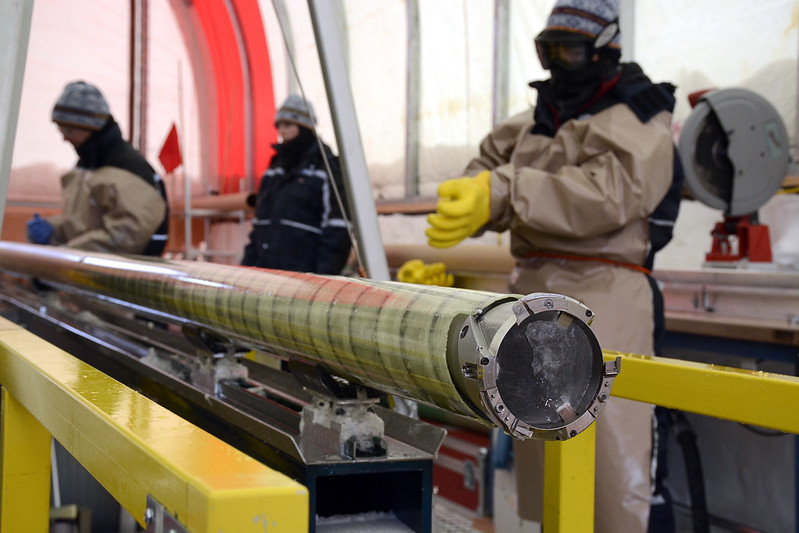
Ice drillers with a freshly drilled ice core at the South Pole Ice Core (SPICEcore) project. Image: Peter Rejcek, National Science Foundation

The borehole thermometry method measures temperatures throughout the thickness of an ice sheet. The Antarctic ice sheet is so thick that it keeps a memory of earlier, colder ice age temperatures that can be measured and reconstructed, according to Fudge.

The second method examines the properties of the snowpack as it builds up and transforms into ice over time. In East Antarctica, that snowpack can range from 50-120m thick and has compacted over thousands of years in a process that is very sensitive to temperature changes.

The researchers found that both methods produced similar temperature reconstructions, giving them confidence in the results.

They also found that the amount of ice age cooling is related to the shape of the ice sheet. During the last ice age, some part of the Antarctic ice sheet became thinner as the amount of snowfall declined, Buizert noted. That lowers the surface elevation and cooling in those areas was 4-5°C. In places where the ice sheet was much thicker during the ice age, temperatures cooled by more than 10°C.

Previous ArticleSonardyne sets UK goal to reach net zero by the end of 2025
Next Article WMO reports on second high-level session on the Open Consultative Platform

Read Similar Stories

Climate Measurement

China completes Antarctic meteorological research mission with Xuelong icebreaker

April 21, 20262 Mins Read
Climate Measurement

Study identifies atmospheric trigger behind flash droughts in Puerto Rico

April 15, 20263 Mins Read
Satellites

AI tool uses weather satellite data to map ocean currents in near real time

April 14, 20263 Mins Read
Latest News

Extreme heat posing significant risks to ecosystems and agriculture, FAO-WMO report warns

April 22, 2026

Atmospheric G2 secures Japan weather forecasting license

April 21, 2026

China completes Antarctic meteorological research mission with Xuelong icebreaker

April 21, 2026

Receive breaking stories and features in your inbox each week, for free


Enter your email address:


Supplier Spotlights
  • Senseca
Getting in Touch
  • Contact Us / Advertise
  • Meet the Editors
  • Media Pack
  • Free Weekly E-Newsletter
Our Social Channels
  • Facebook
  • LinkedIn
© 2026 UKi Media & Events a division of UKIP Media & Events Ltd
  • Cookie Policy
  • Privacy Policy
  • Terms and Conditions
  • Notice and Takedown Policy

Type above and press Enter to search. Press Esc to cancel.