


Close Menu
Meteorological Technology International
  • News
    • A-E
      • Agriculture
      • Automated Weather Stations
      • Aviation
      • Climate Measurement
      • Data
      • Developing Countries
      • Digital Applications
      • Early Warning Systems
      • Extreme Weather
    • G-P
      • Hydrology
      • Lidar
      • Lightning Detection
      • New Appointments
      • Nowcasting
      • Numerical Weather Prediction
      • Polar Weather
    • R-S
      • Radar
      • Rainfall
      • Remote Sensing
      • Renewable Energy
      • Satellites
      • Solar
      • Space Weather
      • Supercomputers
    • T-Z
      • Training
      • Transport
      • Weather Instruments
      • Wind
      • World Meteorological Organization
      • Meteorological Technology World Expo
  • Features
  • Online Magazines
    • January 2026
    • April 2025
    • January 2025
    • September 2024
    • April 2024
    • Archive Issues
    • Subscribe Free!
  • Opinion
  • Videos
  • Supplier Spotlight
  • Expo
LinkedIn X (Twitter) Facebook
  • Sign-up for Free Weekly E-Newsletter
  • Meet the Editors
  • Contact Us
  • Media Pack
LinkedIn Facebook
Subscribe
Meteorological Technology International
  • News
      • Agriculture
      • Automated Weather Stations
      • Aviation
      • Climate Measurement
      • Data
      • Developing Countries
      • Digital Applications
      • Early Warning Systems
      • Extreme Weather
      • Hydrology
      • Lidar
      • Lightning Detection
      • New Appointments
      • Nowcasting
      • Numerical Weather Prediction
      • Polar Weather
      • Radar
      • Rainfall
      • Remote Sensing
      • Renewable Energy
      • Satellites
      • Solar
      • Space Weather
      • Supercomputers
      • Training
      • Transport
      • Weather Instruments
      • Wind
      • World Meteorological Organization
      • Meteorological Technology World Expo
  • Features
  • Online Magazines
    1. January 2026
    2. September 2025
    3. April 2025
    4. January 2025
    5. September 2024
    6. April 2024
    7. January 2024
    8. September 2023
    9. April 2023
    10. Archive Issues
    11. Subscribe Free!
    Featured
    November 27, 2025

    In this Issue – January 2026

    By Hazel KingNovember 27, 2025
    Recent

    In this Issue – January 2026

    November 27, 2025

    In this Issue – September 2025

    August 11, 2025

    In this Issue – April 2025

    April 15, 2025
  • Opinion
  • Videos
  • Supplier Spotlight
  • Expo
Facebook LinkedIn
Subscribe
Meteorological Technology International
Polar Weather

University of Miami and NASA study how clouds impact sea ice melt in Greenland

Elizabeth BakerBy Elizabeth BakerJanuary 24, 20254 Mins Read
Share LinkedIn Facebook Twitter Email
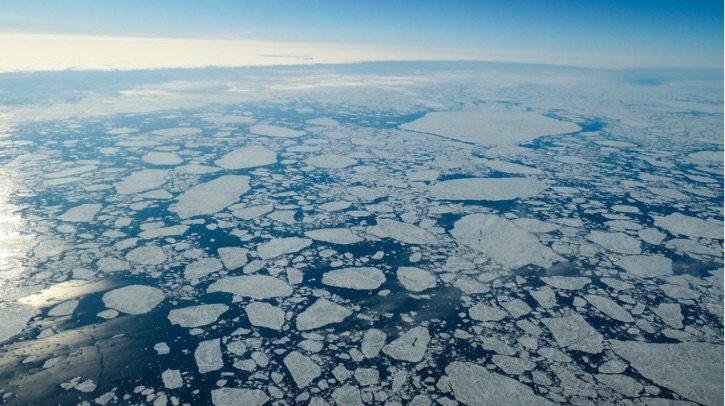
University of Miami atmospheric scientists recently deployed to Greenland for a NASA field campaign are studying the rapid loss of ice in the region and its effect on the world’s climate.
Share
LinkedIn Facebook Twitter Email

University of Miami atmospheric scientists recently deployed to Greenland for a NASA field campaign to study the rapid loss of ice in the region and its effect on the world’s climate.

During two recent deployments, atmospheric scientist Paquita Zuidema flew on a series of eight-hour missions over the Arctic as part of a NASA research expedition to study the processes behind the rapid loss of sea ice in the region.

“Diminished sea ice reduces the Arctic’s cooling effect,” said Zuidema, professor and chair of the Department of Atmospheric Sciences at the Rosenstiel School of Marine, Atmospheric, and Earth Science. “And as we’ve observed the rapid loss of Arctic sea ice, we’ve also seen the Arctic warm incredibly fast over the past few decades – two to four times faster than the rest of our planet.”

The phenomenon, known as Arctic amplification, has reportedly caused a ripple effect, influencing weather patterns around the globe. As part of the NASA field campaign in which Zuidema participated, she and dozens of other scientists collected a trove of data on how clouds, aerosols and even the bumps and dips on the ice itself interact to impact sea ice melt in the Arctic over the summer months.

Operating out of Pituffik Space Base, a US space force located on the northwest coast of Greenland, the researchers flew aboard three aircraft during two separate deployments.

Zuidema, whose research focuses on the relationship of marine shallow clouds to the large-scale environment, looked at how low, thin clouds may influence Arctic surfaces and the rate of sea ice melting. With her G-band vapor radiometer (GVR) positioned on the tail section of the Lockheed P-3 Orion aircraft on which she flew and served as the mission scientist, Zuidema and Rosenstiel School PhD student Michael Perez measured the amount of radiation emitted from water vapor and liquid water in the atmosphere.

“We were able to conduct a very detailed closure study on how clouds impact the surface, and that’s just impossible to do without the kinds of instruments we deployed. Satellites can only tell us so much,” Zuidema said.

Researchers from the University of Colorado Boulder, the University of Michigan, Washington University in Saint Louis, the University of Arizona and Colorado State University also participated in the campaign. Sebastian Schmidt, an associate professor at the University of Colorado Boulder, spearheads the project.

“We’ve gotten a really good look at these clouds for the first time, and it’s possible they may have a much stronger influence on Arctic surfaces and sea ice cover than we realized,” said Patrick Taylor, deputy science lead for the  ARCSIX (Arctic Radiation-Cloud-Aerosol-Surface Interaction eXperiment) campaign and a research scientist at NASA’s Langley Research Center.
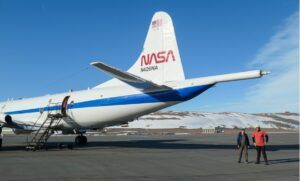
Rosenstiel School researchers Paquita Zuidema and Michael Perez stand near the tail section of the NASA aircraft on which they flew to conduct experiments on ice melt in the Arctic

Zuidema, Perez and other ARCSIX researchers are now poring over the data. Zuidema’s first deployed to the Arctic in early 2024, deploying to Kiruna, Sweden, as the lead investigator of a field campaign that investigated to what extent clouds generated by marine cold-air outbreaks reflect and potentially contribute to the rapid warming of the Arctic.

“Continuous long-term monitoring of the Arctic is crucial at this point in time,” Zuidema said. “Like the field campaign out of Sweden, ARCSIX was important for helping the international research community to monitor and observe Earth from space. For a highly detailed picture of the Arctic, we really must go there. It’s like going to another planet without leaving this one.”

For Perez, who monitored the GVR instrument during ARCSIX flights, the deployment provided an opportunity to observe hard science up close. “It helped give a greater perspective on the things we’re studying,” he said. “Many times, we get caught up in either images or the numbers generated by the science we’re conducting. Physically being there really made a difference.”

In related news, UNESCO and the World Meteorological Organization (WMO) recently officially launched the International Year of Glaciers’ Preservation, in an effort to protect the water towers that provide fresh water to over two billion people worldwide. Click here to read the full story.

Previous ArticleUKRI and Defra to invest £15m in research to prepare UK for extreme weather
Next Article US invests US$15m in fire weather observing systems

Read Similar Stories

Climate Measurement

Windracers ULTRA drones to be deployed in Greenland on glacier surveying mission

March 12, 20263 Mins Read
Climate Measurement

Unmanned Antarctica atmospheric observation experiment advances in China

February 10, 20262 Mins Read
Climate Measurement

Robotic Argo float sends back first ocean transect beneath East Antarctic ice shelf

December 11, 20252 Mins Read
Latest News

Extreme heat posing significant risks to ecosystems and agriculture, FAO-WMO report warns

April 22, 2026

Atmospheric G2 secures Japan weather forecasting license

April 21, 2026

China completes Antarctic meteorological research mission with Xuelong icebreaker

April 21, 2026

Receive breaking stories and features in your inbox each week, for free


Enter your email address:


Supplier Spotlights
  • ZOGLAB Microsystem Co., Ltd
Getting in Touch
  • Contact Us / Advertise
  • Meet the Editors
  • Media Pack
  • Free Weekly E-Newsletter
Our Social Channels
  • Facebook
  • LinkedIn
© 2026 UKi Media & Events a division of UKIP Media & Events Ltd
  • Cookie Policy
  • Privacy Policy
  • Terms and Conditions
  • Notice and Takedown Policy

Type above and press Enter to search. Press Esc to cancel.