


Close Menu
Meteorological Technology International
  • News
    • A-E
      • Agriculture
      • Automated Weather Stations
      • Aviation
      • Climate Measurement
      • Data
      • Developing Countries
      • Digital Applications
      • Early Warning Systems
      • Extreme Weather
    • G-P
      • Hydrology
      • Lidar
      • Lightning Detection
      • New Appointments
      • Nowcasting
      • Numerical Weather Prediction
      • Polar Weather
    • R-S
      • Radar
      • Rainfall
      • Remote Sensing
      • Renewable Energy
      • Satellites
      • Solar
      • Space Weather
      • Supercomputers
    • T-Z
      • Training
      • Transport
      • Weather Instruments
      • Wind
      • World Meteorological Organization
      • Meteorological Technology World Expo
  • Features
  • Online Magazines
    • January 2026
    • April 2025
    • January 2025
    • September 2024
    • April 2024
    • Archive Issues
    • Subscribe Free!
  • Opinion
  • Videos
  • Supplier Spotlight
  • Expo
LinkedIn X (Twitter) Facebook
  • Sign-up for Free Weekly E-Newsletter
  • Meet the Editors
  • Contact Us
  • Media Pack
LinkedIn Facebook
Subscribe
Meteorological Technology International
  • News
      • Agriculture
      • Automated Weather Stations
      • Aviation
      • Climate Measurement
      • Data
      • Developing Countries
      • Digital Applications
      • Early Warning Systems
      • Extreme Weather
      • Hydrology
      • Lidar
      • Lightning Detection
      • New Appointments
      • Nowcasting
      • Numerical Weather Prediction
      • Polar Weather
      • Radar
      • Rainfall
      • Remote Sensing
      • Renewable Energy
      • Satellites
      • Solar
      • Space Weather
      • Supercomputers
      • Training
      • Transport
      • Weather Instruments
      • Wind
      • World Meteorological Organization
      • Meteorological Technology World Expo
  • Features
  • Online Magazines
    1. January 2026
    2. September 2025
    3. April 2025
    4. January 2025
    5. September 2024
    6. April 2024
    7. January 2024
    8. September 2023
    9. April 2023
    10. Archive Issues
    11. Subscribe Free!
    Featured
    November 27, 2025

    In this Issue – January 2026

    By Hazel KingNovember 27, 2025
    Recent

    In this Issue – January 2026

    November 27, 2025

    In this Issue – September 2025

    August 11, 2025

    In this Issue – April 2025

    April 15, 2025
  • Opinion
  • Videos
  • Supplier Spotlight
  • Expo
Facebook LinkedIn
Subscribe
Meteorological Technology International
Satellites

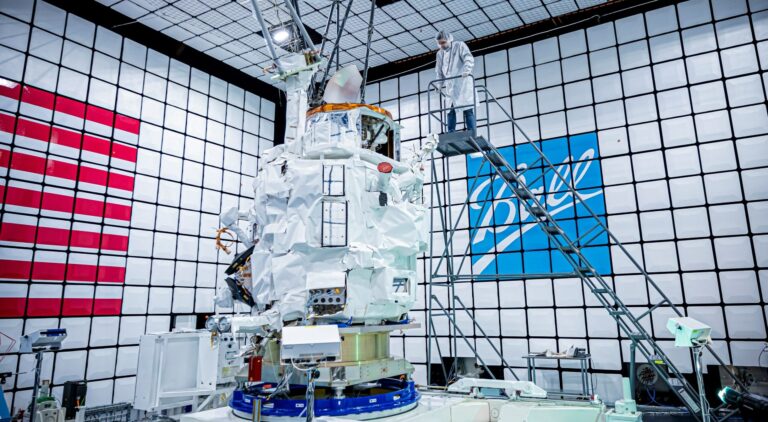
Ball Aerospace completes testing on Space Systems Command operational weather satellite

Dan SymondsBy Dan SymondsSeptember 18, 20232 Mins Read
Share LinkedIn Facebook Twitter Email
Credit: Ball Aerospace
Share
LinkedIn Facebook Twitter Email

Ball Aerospace has concluded testing on the Weather System Follow-on – Microwave (WSF-M) satellite, representing the completion of the first of two satellites being delivered for the US Space Force’s Space Systems Command next-generation operational environmental satellite system.

WSF-M will provide the US Department of Defense with critical data meant to fill gaps in existing space-based environmental monitoring, such as the speed and direction of ocean winds, tropical cyclone intensity, ice thickness, snow depth and soil moisture. The satellite is scheduled to launch early next year from Vandenberg Space Force Base in California.

Hope Damphousse, vice president, Strategic Operations, Ball Aerospace, said, “The completion of the WSF-M satellite is an important milestone in Ball Aerospace’s ongoing mission to protect what matters most. The data this satellite gathers will be invaluable in ensuring our nation’s warfighters across all domains have the environmental intelligence they need to properly plan and execute their vital missions.”

As the prime contractor on the project, Ball Aerospace designed, built and integrated the spacecraft bus, ground data processing software and the microwave imager (MWI) – the primary instrument on the satellite that uses passive radiometric measurements at multiple microwave frequencies to collect environmental data. The satellite will also host a government-built energetic charged particle (ECP) sensor that will provide space weather measurements in low-Earth orbit.

Last year, Ball Aerospace was awarded a follow-on contract to build and deliver a second WSF-M satellite, which is expected to be completed in early 2026.

Previous ArticleUCAR renews agreement to continue managing NCAR
Next Article Record-breaking wildfires throughout the 2023 boreal wildfire season

Read Similar Stories

Space Weather

Northumbria University secures £4m to study Earth’s radiation belts

April 16, 20262 Mins Read
Extreme Weather

AI model improves real-time prediction of wildfire spread

April 16, 20263 Mins Read
Satellites

AI tool uses weather satellite data to map ocean currents in near real time

April 14, 20263 Mins Read
Latest News

Atmospheric G2 secures Japan weather forecasting license

April 21, 2026

China completes Antarctic meteorological research mission with Xuelong icebreaker

April 21, 2026

EWR Radar Systems wins US Air Force contract for portable Doppler radar support

April 20, 2026

Receive breaking stories and features in your inbox each week, for free


Enter your email address:


Supplier Spotlights
  • Synoptic Data PBC
Getting in Touch
  • Contact Us / Advertise
  • Meet the Editors
  • Media Pack
  • Free Weekly E-Newsletter
Our Social Channels
  • Facebook
  • LinkedIn
© 2026 UKi Media & Events a division of UKIP Media & Events Ltd
  • Cookie Policy
  • Privacy Policy
  • Terms and Conditions
  • Notice and Takedown Policy

Type above and press Enter to search. Press Esc to cancel.