


Close Menu
Meteorological Technology International
  • News
    • A-E
      • Agriculture
      • Automated Weather Stations
      • Aviation
      • Climate Measurement
      • Data
      • Developing Countries
      • Digital Applications
      • Early Warning Systems
      • Extreme Weather
    • G-P
      • Hydrology
      • Lidar
      • Lightning Detection
      • New Appointments
      • Nowcasting
      • Numerical Weather Prediction
      • Polar Weather
    • R-S
      • Radar
      • Rainfall
      • Remote Sensing
      • Renewable Energy
      • Satellites
      • Solar
      • Space Weather
      • Supercomputers
    • T-Z
      • Training
      • Transport
      • Weather Instruments
      • Wind
      • World Meteorological Organization
      • Meteorological Technology World Expo
  • Features
  • Online Magazines
    • January 2026
    • April 2025
    • January 2025
    • September 2024
    • April 2024
    • Archive Issues
    • Subscribe Free!
  • Opinion
  • Videos
  • Supplier Spotlight
  • Expo
LinkedIn X (Twitter) Facebook
  • Sign-up for Free Weekly E-Newsletter
  • Meet the Editors
  • Contact Us
  • Media Pack
LinkedIn Facebook
Subscribe
Meteorological Technology International
  • News
      • Agriculture
      • Automated Weather Stations
      • Aviation
      • Climate Measurement
      • Data
      • Developing Countries
      • Digital Applications
      • Early Warning Systems
      • Extreme Weather
      • Hydrology
      • Lidar
      • Lightning Detection
      • New Appointments
      • Nowcasting
      • Numerical Weather Prediction
      • Polar Weather
      • Radar
      • Rainfall
      • Remote Sensing
      • Renewable Energy
      • Satellites
      • Solar
      • Space Weather
      • Supercomputers
      • Training
      • Transport
      • Weather Instruments
      • Wind
      • World Meteorological Organization
      • Meteorological Technology World Expo
  • Features
  • Online Magazines
    1. January 2026
    2. September 2025
    3. April 2025
    4. January 2025
    5. September 2024
    6. April 2024
    7. January 2024
    8. September 2023
    9. April 2023
    10. Archive Issues
    11. Subscribe Free!
    Featured
    November 27, 2025

    In this Issue – January 2026

    By Hazel KingNovember 27, 2025
    Recent

    In this Issue – January 2026

    November 27, 2025

    In this Issue – September 2025

    August 11, 2025

    In this Issue – April 2025

    April 15, 2025
  • Opinion
  • Videos
  • Supplier Spotlight
  • Expo
Facebook LinkedIn
Subscribe
Meteorological Technology International
Satellites

COSMIC-2 weather satellites ready for launch

Helen NormanBy Helen NormanJune 18, 20193 Mins Read
Share LinkedIn Facebook Twitter Email
Share
LinkedIn Facebook Twitter Email

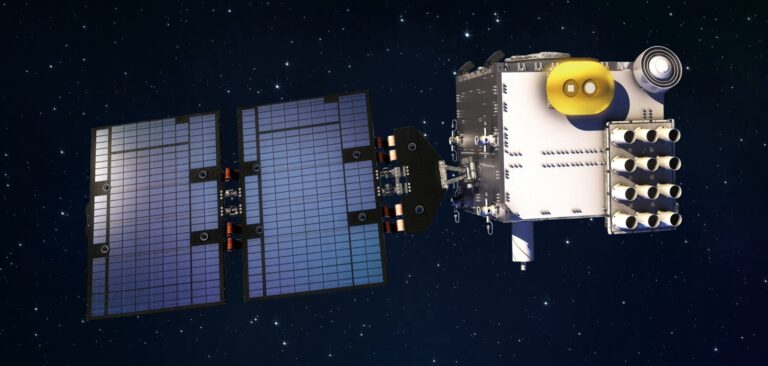
A SpaceX Falcon Heavy rocket is ready to send six weather satellites into space on June 24, as part of the second generation, US-Taiwanese, COSMIC weather satellite program. Designed to improve weather forecasts and space weather monitoring, COSMIC-2 (Constellation Observing System for Meteorology, Ionosphere and Climate) is a partnership between the American Institute in Taiwan (AIT) and the Taipei Economic and Cultural Representative Office in the USA (TECRO), with NOAA and the Taiwan National Space Organization (NSPO) acting as designated representatives. “This latest generation of COSMIC satellites will continue to build on the successes of the program,” said Wilbur Ross, US secretary of commerce. “The COSMIC satellites keep scientists and forecasters informed of minute changes in the atmosphere and in space, with this latest batch of satellites ensuring that this critical data is collected from the poles to the tropics.” Once launched from Cape Canaveral, Florida, the COSMIC-2 satellites, known as FORMOSAT-7 in Taiwan, will undergo early check-out, calibration and validation process for approximately seven months before the data is declared operational. The satellites will officially be owned and operated by authorities in Taiwan. “COSMIC-2, in concert with the infrared and microwave sounding instruments carried on polar-orbiting satellites operated by NOAA and its US and international partners, will help provide a complete set of global data for use in NOAA’s operational weather prediction models,” said Neil Jacobs, acting NOAA administrator. Each COSMIC-2 satellite, roughly the size of a kitchen oven, carries three instruments that detect electron density and other space weather information in the ionosphere, as well as atmospheric density, temperature, pressure and moisture. The collected data will be fed into NOAA’s computer models used by forecasters to predict weather and climate and to monitor dynamic changes in Earth’s ionosphere, leading to improved weather and solar forecasts. “COSMIC-2 will gather information about the vertical temperature and humidity of the atmosphere in the tropics, which holds most of the moisture that drives global weather patterns,” said Louis W Uccellini, director, NOAA’s National Weather Service. “The high quality and large number of observations from the COSMIC-2 data stream will improve the accuracy of our weather forecast model outputs for our national and global areas of responsibility.” Unlike the first COSMIC mission, launched in 2006 with its satellites orbiting the Earth in nearly polar orbits, the COSMIC-2 satellites will orbit Earth near the equator, taking measurements of the tropics and subtropics, and monitoring the ionosphere for the effects of solar storms. Watch here
Previous ArticleVaisala adds advanced x-band weather radar to portfolio
Next Article Congress approves WMO governance reforms

Read Similar Stories

Early Warning Systems

China expands MAZU early warning system for developing countries

April 30, 20262 Mins Read
Space Weather

Northumbria University secures £4m to study Earth’s radiation belts

April 16, 20262 Mins Read
Extreme Weather

AI model improves real-time prediction of wildfire spread

April 16, 20263 Mins Read
Latest News

Researchers investigate links between air pollution, extreme weather and climate

May 1, 2026

China expands MAZU early warning system for developing countries

April 30, 2026

Météo-France begins construction of France’s tallest weather radar tower in Sembadel

April 29, 2026

Receive breaking stories and features in your inbox each week, for free


Enter your email address:


Supplier Spotlights
  • LCJ Capteurs
Getting in Touch
  • Contact Us / Advertise
  • Meet the Editors
  • Media Pack
  • Free Weekly E-Newsletter
Our Social Channels
  • Facebook
  • LinkedIn
© 2026 UKi Media & Events a division of UKIP Media & Events Ltd
  • Cookie Policy
  • Privacy Policy
  • Terms and Conditions
  • Notice and Takedown Policy

Type above and press Enter to search. Press Esc to cancel.