

Close Menu
Meteorological Technology International
  • News
    • A-E
      • Agriculture
      • Automated Weather Stations
      • Aviation
      • Climate Measurement
      • Data
      • Developing Countries
      • Digital Applications
      • Early Warning Systems
      • Extreme Weather
    • G-P
      • Hydrology
      • Lidar
      • Lightning Detection
      • New Appointments
      • Nowcasting
      • Numerical Weather Prediction
      • Polar Weather
    • R-S
      • Radar
      • Rainfall
      • Remote Sensing
      • Renewable Energy
      • Satellites
      • Solar
      • Space Weather
      • Supercomputers
    • T-Z
      • Training
      • Transport
      • Weather Instruments
      • Wind
      • World Meteorological Organization
      • Meteorological Technology World Expo
  • Features
  • Online Magazines
    • January 2026
    • April 2025
    • January 2025
    • September 2024
    • April 2024
    • Archive Issues
    • Subscribe Free!
  • Opinion
  • Videos
  • Supplier Spotlight
  • Expo
LinkedIn X (Twitter) Facebook
  • Sign-up for Free Weekly E-Newsletter
  • Meet the Editors
  • Contact Us
  • Media Pack
LinkedIn Facebook
Subscribe
Meteorological Technology International
  • News
      • Agriculture
      • Automated Weather Stations
      • Aviation
      • Climate Measurement
      • Data
      • Developing Countries
      • Digital Applications
      • Early Warning Systems
      • Extreme Weather
      • Hydrology
      • Lidar
      • Lightning Detection
      • New Appointments
      • Nowcasting
      • Numerical Weather Prediction
      • Polar Weather
      • Radar
      • Rainfall
      • Remote Sensing
      • Renewable Energy
      • Satellites
      • Solar
      • Space Weather
      • Supercomputers
      • Training
      • Transport
      • Weather Instruments
      • Wind
      • World Meteorological Organization
      • Meteorological Technology World Expo
  • Features
  • Online Magazines
    1. April 2026
    2. January 2026
    3. September 2025
    4. April 2025
    5. January 2025
    6. September 2024
    7. April 2024
    8. January 2024
    9. Archive Issues
    10. Subscribe Free!
    Featured
    May 5, 2026

    In this Issue – April 2026

    By Web TeamMay 5, 2026
    Recent

    In this Issue – April 2026

    May 5, 2026

    In this Issue – January 2026

    November 27, 2025

    In this Issue – September 2025

    August 11, 2025
  • Opinion
  • Videos
  • Supplier Spotlight
  • Expo
Facebook LinkedIn
Subscribe
Meteorological Technology International
Satellites

COSMIC/FORMOSAT-3 retires after 14 years

James MuirBy James MuirMay 7, 20202 Mins Read
Share LinkedIn Facebook Twitter Email
Share
LinkedIn Facebook Twitter Email

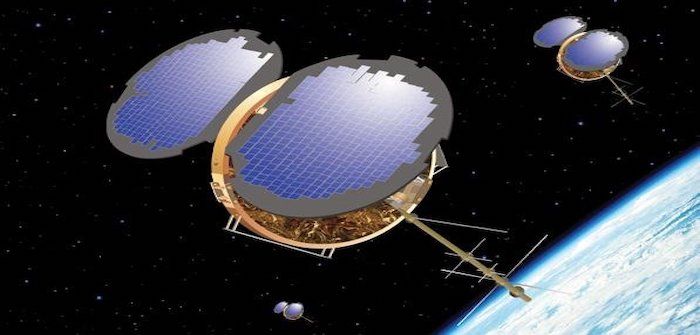
The COSMIC/FORMOSAT-3 partnership satellite has been decommissioned after 14 years of operations.

Launched in 2006, COSMIC/FORMOSAT-3 was important for its mission and breakthrough technology, improving NOAA’s weather prediction, climate monitoring and space-weather forecasting.

Its fleet of six small, low-orbiting satellites was the first constellation to provide real-time atmospheric data over thousands of points across the planet for research and operational forecasts.

It measures the bending of radio signals from the US GPS as the satellites pass through Earth’s atmosphere.

Called COSMIC (Constellation Observing System for Meteorology, Ionosphere and Climate) in the USA and FORMOSAT-3 in Taiwan, the mission resulted from an agreement between the American Institute in Taiwan and the Taipei Economic and Cultural Representative Office in the USA.

The satellite array was based on a system design provided by the University Corporation for Atmospheric Research (UCAR) based in Boulder, Colorado.

NOAA, NASA, the National Science Foundation, the US Air Force and the US Navy funded UCAR to process the science data and perform ground station downlink operations.

Since April 2008, NOAA has provided uplink and downlink services at Fairbanks Command and Data Acquisition Station and Wallops Command Data Acquisition Station.

Downlink only has come via the Kongsberg Satellite Services Tromso station through NOAA agreements with the Norwegian Space Agency.

Steve Volz PhD, assistant NOAA administrator for its Satellite and Information Service, said, “COSMIC opened the door for smart uses of radio occultation data, where today, this type of information is a mainstream source flowing into NOAA’s weather prediction models.”

Previous ArticleESA and EGU launch Earth observation award
Next Article WMO: COVID-19 is affecting weather observations

Read Similar Stories

Oceans

VIDEO: Sentinel-6 satellite detects El Niño precursor in Pacific

June 4, 20262 Mins Read
Solar

New forecasting framework targets solar-limb flare blind spot

June 4, 20262 Mins Read
Satellites

SMILE mission launches to study Earth’s magnetic shield and space weather

May 20, 20263 Mins Read
Latest News

VIDEO: Sentinel-6 satellite detects El Niño precursor in Pacific

June 4, 2026

New forecasting framework targets solar-limb flare blind spot

June 4, 2026

Colorado State University and Nvidia partner to extend severe storm prediction lead times

June 2, 2026

Receive breaking stories and features in your inbox each week, for free


Enter your email address:


Supplier Spotlights
  • MicroStep-MIS
Getting in Touch
  • Contact Us / Advertise
  • Meet the Editors
  • Media Pack
  • Free Weekly E-Newsletter
Our Social Channels
  • Facebook
  • LinkedIn
© 2026 UKi Media & Events a division of UKIP Media & Events Ltd
  • Cookie Policy
  • Privacy Policy
  • Terms and Conditions
  • Notice and Takedown Policy

Type above and press Enter to search. Press Esc to cancel.