

Close Menu
Meteorological Technology International
  • News
    • A-E
      • Agriculture
      • Automated Weather Stations
      • Aviation
      • Climate Measurement
      • Data
      • Developing Countries
      • Digital Applications
      • Early Warning Systems
      • Extreme Weather
    • G-P
      • Hydrology
      • Lidar
      • Lightning Detection
      • New Appointments
      • Nowcasting
      • Numerical Weather Prediction
      • Polar Weather
    • R-S
      • Radar
      • Rainfall
      • Remote Sensing
      • Renewable Energy
      • Satellites
      • Solar
      • Space Weather
      • Supercomputers
    • T-Z
      • Training
      • Transport
      • Weather Instruments
      • Wind
      • World Meteorological Organization
      • Meteorological Technology World Expo
  • Features
  • Online Magazines
    • January 2026
    • April 2025
    • January 2025
    • September 2024
    • April 2024
    • Archive Issues
    • Subscribe Free!
  • Opinion
  • Videos
  • Supplier Spotlight
  • Expo
LinkedIn X (Twitter) Facebook
  • Sign-up for Free Weekly E-Newsletter
  • Meet the Editors
  • Contact Us
  • Media Pack
LinkedIn Facebook
Subscribe
Meteorological Technology International
  • News
      • Agriculture
      • Automated Weather Stations
      • Aviation
      • Climate Measurement
      • Data
      • Developing Countries
      • Digital Applications
      • Early Warning Systems
      • Extreme Weather
      • Hydrology
      • Lidar
      • Lightning Detection
      • New Appointments
      • Nowcasting
      • Numerical Weather Prediction
      • Polar Weather
      • Radar
      • Rainfall
      • Remote Sensing
      • Renewable Energy
      • Satellites
      • Solar
      • Space Weather
      • Supercomputers
      • Training
      • Transport
      • Weather Instruments
      • Wind
      • World Meteorological Organization
      • Meteorological Technology World Expo
  • Features
  • Online Magazines
    1. April 2026
    2. January 2026
    3. September 2025
    4. April 2025
    5. January 2025
    6. September 2024
    7. April 2024
    8. January 2024
    9. Archive Issues
    10. Subscribe Free!
    Featured
    May 5, 2026

    In this Issue – April 2026

    By Web TeamMay 5, 2026
    Recent

    In this Issue – April 2026

    May 5, 2026

    In this Issue – January 2026

    November 27, 2025

    In this Issue – September 2025

    August 11, 2025
  • Opinion
  • Videos
  • Supplier Spotlight
  • Expo
Facebook LinkedIn
Subscribe
Meteorological Technology International
Satellites

Weather satellite startup Spire raises US$40m for Asia expansion

Paul WillisBy Paul WillisOctober 1, 20192 Mins Read
Share LinkedIn Facebook Twitter Email
Share
LinkedIn Facebook Twitter Email

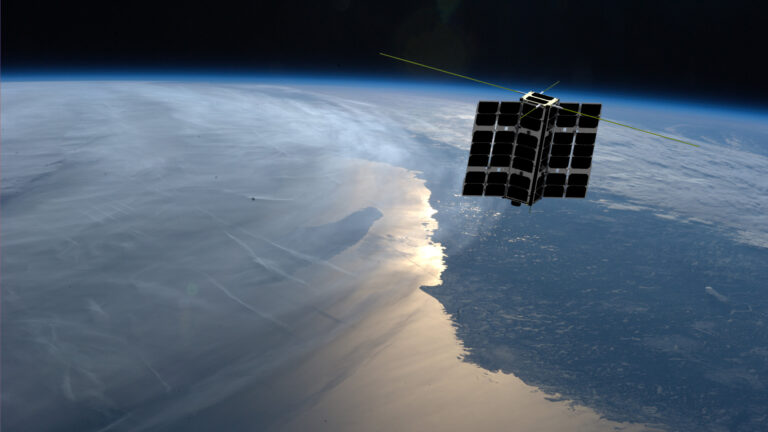
Weather satellite startup Spire has raised US$40m in venture funding as part of a planned expansion in to the Asia-Pacific region.

The San Francisco-based company currently has a constellation of more than 100 small satellites, sometimes known as CubeSats, orbiting Earth. The satellites track maritime and aviation activity as well as weather data. 

The availability of this kind of data is “significantly more scarce” in Asia, Spire CEO and co-founder Peter Platzer told Forbes. “This will allow us to start penetrating more of that market,” he added. 

Spires’ satellites track weather using GPS radio waves beamed down to Earth by other satellites. As the radio waves enter Earth’s atmosphere, climatic conditions such as temperature and humidity cause them to diffract. By measuring the rate of diffraction of these waves, Spire’s satellites can determine the climatic conditions in the atmosphere, using that data to make weather forecasts.

According to Forbes, this latest funding round brings the company’s total venture financing to about US$190m. The funding was led by the GPO Fund, Perennial Management and Bessemer Ventures. A portion of it also came from the Japanese corporations Itochu and Mitsui. 

The funding will be used to boost Spire’s marketing and sales operations in the Asia-Pacific region. It will also be used to build weather analytics products specific to the region.

“There are specific extreme weather events that are more prevalent in the Asia-Pacific region,” said Platzer. “And with this funding and these partners, we’re able to focus more on delivering products and solutions for those events.”

Previous ArticleVolcanologists turn to weather forecasting techniques for volcano prediction
Next Article Technique for tracking humidity through aircraft signals wins top European award

Read Similar Stories

Climate Measurement

Cambridge AI tool converts satellite archives into accessible Earth intelligence

June 10, 20262 Mins Read
Oceans

VIDEO: Sentinel-6 satellite detects El Niño precursor in Pacific

June 4, 20262 Mins Read
Solar

New forecasting framework targets solar-limb flare blind spot

June 4, 20262 Mins Read
Latest News

Global warming reached 1.37°C in 2025 as heat accumulation hits record rate

June 12, 2026

NSF NCAR researchers develop advanced model for neighborhood-scale low-altitude wind prediction

June 11, 2026

Cambridge AI tool converts satellite archives into accessible Earth intelligence

June 10, 2026

Receive breaking stories and features in your inbox each week, for free


Enter your email address:


Supplier Spotlights
  • Senseca
Getting in Touch
  • Contact Us / Advertise
  • Meet the Editors
  • Media Pack
  • Free Weekly E-Newsletter
Our Social Channels
  • Facebook
  • LinkedIn
© 2026 UKi Media & Events a division of UKIP Media & Events Ltd
  • Cookie Policy
  • Privacy Policy
  • Terms and Conditions
  • Notice and Takedown Policy

Type above and press Enter to search. Press Esc to cancel.