


Close Menu
Meteorological Technology International
  • News
    • A-E
      • Agriculture
      • Automated Weather Stations
      • Aviation
      • Climate Measurement
      • Data
      • Developing Countries
      • Digital Applications
      • Early Warning Systems
      • Extreme Weather
    • G-P
      • Hydrology
      • Lidar
      • Lightning Detection
      • New Appointments
      • Nowcasting
      • Numerical Weather Prediction
      • Polar Weather
    • R-S
      • Radar
      • Rainfall
      • Remote Sensing
      • Renewable Energy
      • Satellites
      • Solar
      • Space Weather
      • Supercomputers
    • T-Z
      • Training
      • Transport
      • Weather Instruments
      • Wind
      • World Meteorological Organization
      • Meteorological Technology World Expo
  • Features
  • Online Magazines
    • January 2026
    • April 2025
    • January 2025
    • September 2024
    • April 2024
    • Archive Issues
    • Subscribe Free!
  • Opinion
  • Videos
  • Supplier Spotlight
  • Expo
LinkedIn X (Twitter) Facebook
  • Sign-up for Free Weekly E-Newsletter
  • Meet the Editors
  • Contact Us
  • Media Pack
LinkedIn Facebook
Subscribe
Meteorological Technology International
  • News
      • Agriculture
      • Automated Weather Stations
      • Aviation
      • Climate Measurement
      • Data
      • Developing Countries
      • Digital Applications
      • Early Warning Systems
      • Extreme Weather
      • Hydrology
      • Lidar
      • Lightning Detection
      • New Appointments
      • Nowcasting
      • Numerical Weather Prediction
      • Polar Weather
      • Radar
      • Rainfall
      • Remote Sensing
      • Renewable Energy
      • Satellites
      • Solar
      • Space Weather
      • Supercomputers
      • Training
      • Transport
      • Weather Instruments
      • Wind
      • World Meteorological Organization
      • Meteorological Technology World Expo
  • Features
  • Online Magazines
    1. April 2026
    2. January 2026
    3. September 2025
    4. April 2025
    5. January 2025
    6. September 2024
    7. April 2024
    8. January 2024
    9. Archive Issues
    10. Subscribe Free!
    Featured
    May 5, 2026

    In this Issue – April 2026

    By Web TeamMay 5, 2026
    Recent

    In this Issue – April 2026

    May 5, 2026

    In this Issue – January 2026

    November 27, 2025

    In this Issue – September 2025

    August 11, 2025
  • Opinion
  • Videos
  • Supplier Spotlight
  • Expo
Facebook LinkedIn
Subscribe
Meteorological Technology International
Space Weather

First evidence of space hurricanes in Earth’s upper atmosphere

Lawrence ButcherBy Lawrence ButcherMarch 2, 20213 Mins Read
Share LinkedIn Facebook Twitter Email
Share
LinkedIn Facebook Twitter Email

Retrospective analysis of satellite observations by scientists at the University of Reading have revealed the first evidence of a space hurricane in Earth’s upper atmosphere, confirming the existence of such events and shedding new light on the relationship between planets and space.

The unprecedented observations, made by satellites in August 2014, were uncovered during retrospective analysis by Reading researchers as part of a team led by Shandong University in China. They confirmed the hurricane and offered clues about its formation.

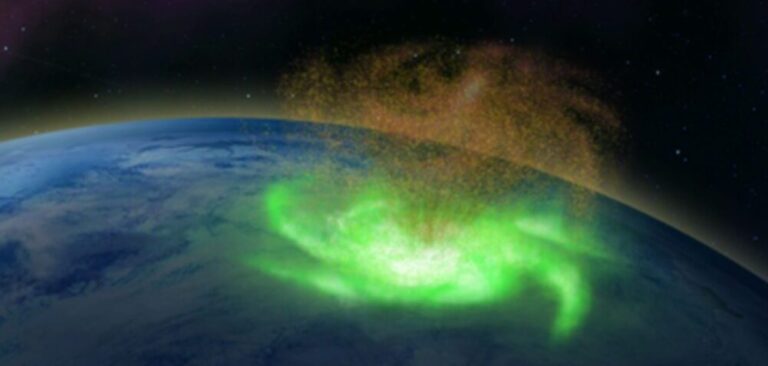
This analysis has enabled the creation of a 3D image of the 1,000km-wide swirling mass of plasma several hundred kilometers above the North Pole, raining electrons instead of water, and in many ways resembling the hurricanes we are familiar with in the Earth’s lower atmosphere.

Professor Mike Lockwood, space scientist at the University of Reading, said, “Until now, it was uncertain that space plasma hurricanes even existed, so to prove this with such a striking observation is incredible. Tropical storms are associated with huge amounts of energy, and these space hurricanes must be created by unusually large and rapid transfer of solar wind energy and charged particles into the Earth’s upper atmosphere. Plasma and magnetic fields in the atmosphere of planets exist throughout the universe, so the findings suggest space hurricanes should be a widespread phenomenon.”

Hurricanes occur in Earth’s lower atmosphere over warm bodies of water. When warm, moist air rises, it creates an area of low pressure near the surface that sucks in the surrounding air, causing extremely strong winds and creating clouds that lead to heavy rain.

Hurricanes have also been observed in the lower atmospheres of Mars, Jupiter and Saturn, and enormous solar tornadoes have been seen in the atmosphere of the sun. However, the existence of space hurricanes in the upper atmosphere of planets has not been detected before.

The space hurricane in Earth’s ionosphere that was analyzed by the team was spinning in an anticlockwise direction, had multiple spiral arms and lasted almost eight hours before gradually breaking down.

The team of scientists from China, the USA, Norway and the UK used observations made by four DMSP (Defense Meteorological Satellite Program) satellites and 3D magnetosphere modeling to produce the image. Their findings were published in Nature Communications.

The analysis involved checking data from the satellites, radars and other sources for consistency, and to build up a full picture of what had happened and ensure that the mechanisms involved were understood.

The fact that the hurricane occurred during a period of low geomagnetic activity suggests such events could be relatively common within our solar system and beyond. This highlights the importance of improved monitoring of space weather, which can disrupt GPS systems.

Previous ArticleClimate change could triple the number of thunderstorms in Alaska
Next Article Meteorological Technology World Expo Conference for Aviation Meteorology – five must-see presentations!

Read Similar Stories

Space Weather

Northumbria University secures £4m to study Earth’s radiation belts

April 16, 20262 Mins Read
Solar

Mauna Loa Solar Observatory reopens to support Artemis II mission

April 8, 20262 Mins Read
Satellites

NCAR researchers create breakthrough tool to enhance space weather prediction

February 24, 20262 Mins Read
Latest News

In this Issue – April 2026

May 5, 2026

AI models lag behind traditional systems in predicting extreme weather

May 5, 2026

Researchers investigate links between air pollution, extreme weather and climate

May 1, 2026

Receive breaking stories and features in your inbox each week, for free


Enter your email address:


Supplier Spotlights
  • MicroStep-MIS
Getting in Touch
  • Contact Us / Advertise
  • Meet the Editors
  • Media Pack
  • Free Weekly E-Newsletter
Our Social Channels
  • Facebook
  • LinkedIn
© 2026 UKi Media & Events a division of UKIP Media & Events Ltd
  • Cookie Policy
  • Privacy Policy
  • Terms and Conditions
  • Notice and Takedown Policy

Type above and press Enter to search. Press Esc to cancel.