

Close Menu
Meteorological Technology International
  • News
    • A-E
      • Agriculture
      • Automated Weather Stations
      • Aviation
      • Climate Measurement
      • Data
      • Developing Countries
      • Digital Applications
      • Early Warning Systems
      • Extreme Weather
    • G-P
      • Hydrology
      • Lidar
      • Lightning Detection
      • New Appointments
      • Nowcasting
      • Numerical Weather Prediction
      • Polar Weather
    • R-S
      • Radar
      • Rainfall
      • Remote Sensing
      • Renewable Energy
      • Satellites
      • Solar
      • Space Weather
      • Supercomputers
    • T-Z
      • Training
      • Transport
      • Weather Instruments
      • Wind
      • World Meteorological Organization
      • Meteorological Technology World Expo
  • Features
  • Online Magazines
    • January 2026
    • April 2025
    • January 2025
    • September 2024
    • April 2024
    • Archive Issues
    • Subscribe Free!
  • Opinion
  • Videos
  • Supplier Spotlight
  • Expo
LinkedIn X (Twitter) Facebook
  • Sign-up for Free Weekly E-Newsletter
  • Meet the Editors
  • Contact Us
  • Media Pack
LinkedIn Facebook
Subscribe
Meteorological Technology International
  • News
      • Agriculture
      • Automated Weather Stations
      • Aviation
      • Climate Measurement
      • Data
      • Developing Countries
      • Digital Applications
      • Early Warning Systems
      • Extreme Weather
      • Hydrology
      • Lidar
      • Lightning Detection
      • New Appointments
      • Nowcasting
      • Numerical Weather Prediction
      • Polar Weather
      • Radar
      • Rainfall
      • Remote Sensing
      • Renewable Energy
      • Satellites
      • Solar
      • Space Weather
      • Supercomputers
      • Training
      • Transport
      • Weather Instruments
      • Wind
      • World Meteorological Organization
      • Meteorological Technology World Expo
  • Features
  • Online Magazines
    1. April 2026
    2. January 2026
    3. September 2025
    4. April 2025
    5. January 2025
    6. September 2024
    7. April 2024
    8. January 2024
    9. Archive Issues
    10. Subscribe Free!
    Featured
    May 5, 2026

    In this Issue – April 2026

    By Web TeamMay 5, 2026
    Recent

    In this Issue – April 2026

    May 5, 2026

    In this Issue – January 2026

    November 27, 2025

    In this Issue – September 2025

    August 11, 2025
  • Opinion
  • Videos
  • Supplier Spotlight
  • Expo
Facebook LinkedIn
Subscribe
Meteorological Technology International
World Meteorological Organization

WMO to hold symposium on role of climate in relation to Covid-19

Lawrence ButcherBy Lawrence ButcherJuly 31, 20203 Mins Read
Share LinkedIn Facebook Twitter Email
Share
LinkedIn Facebook Twitter Email

The World Meteorological Organization has announced that it will be hosting a virtual global symposium from August 4 to 6 to review the relationship between weather, climate and environmental factors and the spread of Covid-19.

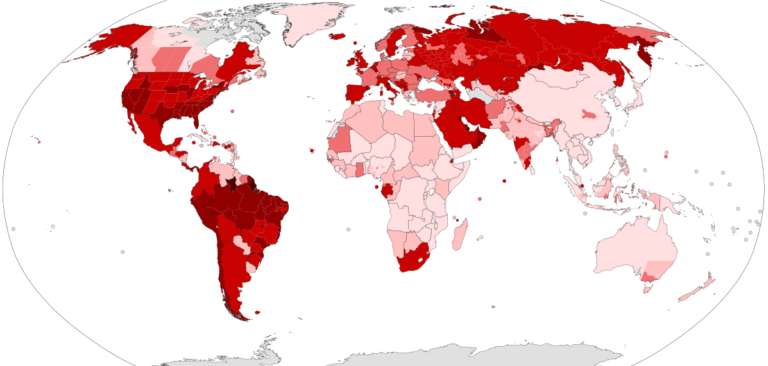
Environmental conditions do not appear to be principal drivers of the first wave of the pandemic. Nonetheless, the WMO notes that questions remain as to whether factors such as temperature, humidity, air quality and ultraviolet light influence the spread of the SARS-CoV-2 virus and the disease (Covid-19) that it causes.

“It is critical to understand whether meteorological, climatological and environmental factors promote the spread of the disease either outdoors or indoors. This is a pertinent scientific question that is the subject of numerous studies,” said Professor Jürg Luterbacher, WMO chief scientist and director of science and innovation.

“Covid-19 is likely to be prevalent beyond the initial pandemic phase for several years. Better understanding of whether it will be influenced by seasonal environmental and weather conditions, as is the case with many other respiratory viruses and diseases, will help inform public health policy and management of the disease in the coming months and years,” added Dr Joy Shumake-Guillemot of the WMO/World Health Organization Joint Climate and Health Office.

The disease originally manifested in the northern hemisphere in early to mid-winter, in places with temperate climates, and spread east and west in an initially quite narrow climate band. This could reflect a climate sensitivity, but could just as plausibly reflect trade and human movement patterns.

Some countries currently facing the highest Covid-19 burdens are located in the tropics and subtropics. But there are also increasing case counts in some southern hemisphere countries as they move into winter. Whether this is a meteorologically driven phenomenon is yet to be determined.

Similarly, there are concerns about a resurgence in the next northern hemisphere winter, but these speculations are based largely on experience with other respiratory diseases that peak in winter and not on firm knowledge of Covid-19 climate sensitivities.

The WMO says its e-symposium aims to create a forum to review and discuss existing studies in order to inform the state of knowledge that already exists and provide guidance for future research. More than 450 participants will consider some 100 contributions on the topic from researchers based in 20 countries. There will be several keynote presentations, as well as panels and breakout sessions on understanding dynamics, forecasts and projections, and actionable information.

Previous ArticleUK Met Office claims breakthrough on European winter predictions
Next Article Heatwave fuels Arctic wildfires and sea ice retreat

Read Similar Stories

Climate Measurement

WMO warns El Niño is developing with 80% certainty, urges preparation

June 2, 20263 Mins Read
Climate Measurement

Record-level global temperatures expected to persist over next five years

May 28, 20263 Mins Read
Early Warning Systems

G7 countries pledge additional funding for CREWS early warning initiative

May 7, 20263 Mins Read
Latest News

NOAA’s SOLAR-1 satellite becomes operational, boosting space weather forecasting capability

June 16, 2026

Global warming reached 1.37°C in 2025 as heat accumulation hits record rate

June 12, 2026

NSF NCAR researchers develop advanced model for neighborhood-scale low-altitude wind prediction

June 11, 2026

Receive breaking stories and features in your inbox each week, for free


Enter your email address:


Supplier Spotlights
  • ELDES S.r.l.
Getting in Touch
  • Contact Us / Advertise
  • Meet the Editors
  • Media Pack
  • Free Weekly E-Newsletter
Our Social Channels
  • Facebook
  • LinkedIn
© 2026 UKi Media & Events a division of UKIP Media & Events Ltd
  • Cookie Policy
  • Privacy Policy
  • Terms and Conditions
  • Notice and Takedown Policy

Type above and press Enter to search. Press Esc to cancel.