


Close Menu
Meteorological Technology International
  • News
    • A-E
      • Agriculture
      • Automated Weather Stations
      • Aviation
      • Climate Measurement
      • Data
      • Developing Countries
      • Digital Applications
      • Early Warning Systems
      • Extreme Weather
    • G-P
      • Hydrology
      • Lidar
      • Lightning Detection
      • New Appointments
      • Nowcasting
      • Numerical Weather Prediction
      • Polar Weather
    • R-S
      • Radar
      • Rainfall
      • Remote Sensing
      • Renewable Energy
      • Satellites
      • Solar
      • Space Weather
      • Supercomputers
    • T-Z
      • Training
      • Transport
      • Weather Instruments
      • Wind
      • World Meteorological Organization
      • Meteorological Technology World Expo
  • Features
  • Online Magazines
    • January 2026
    • April 2025
    • January 2025
    • September 2024
    • April 2024
    • Archive Issues
    • Subscribe Free!
  • Opinion
  • Videos
  • Supplier Spotlight
  • Expo
LinkedIn X (Twitter) Facebook
  • Sign-up for Free Weekly E-Newsletter
  • Meet the Editors
  • Contact Us
  • Media Pack
LinkedIn Facebook
Subscribe
Meteorological Technology International
  • News
      • Agriculture
      • Automated Weather Stations
      • Aviation
      • Climate Measurement
      • Data
      • Developing Countries
      • Digital Applications
      • Early Warning Systems
      • Extreme Weather
      • Hydrology
      • Lidar
      • Lightning Detection
      • New Appointments
      • Nowcasting
      • Numerical Weather Prediction
      • Polar Weather
      • Radar
      • Rainfall
      • Remote Sensing
      • Renewable Energy
      • Satellites
      • Solar
      • Space Weather
      • Supercomputers
      • Training
      • Transport
      • Weather Instruments
      • Wind
      • World Meteorological Organization
      • Meteorological Technology World Expo
  • Features
  • Online Magazines
    1. January 2026
    2. September 2025
    3. April 2025
    4. January 2025
    5. September 2024
    6. April 2024
    7. January 2024
    8. September 2023
    9. April 2023
    10. Archive Issues
    11. Subscribe Free!
    Featured
    November 27, 2025

    In this Issue – January 2026

    By Hazel KingNovember 27, 2025
    Recent

    In this Issue – January 2026

    November 27, 2025

    In this Issue – September 2025

    August 11, 2025

    In this Issue – April 2025

    April 15, 2025
  • Opinion
  • Videos
  • Supplier Spotlight
  • Expo
Facebook LinkedIn
Subscribe
Meteorological Technology International
Data

Autonomous submarine reveals how warm water is melting Thwaites Glacier

Helen NormanBy Helen NormanApril 26, 20213 Mins Read
Share LinkedIn Facebook Twitter Email
Thwaites Glacier
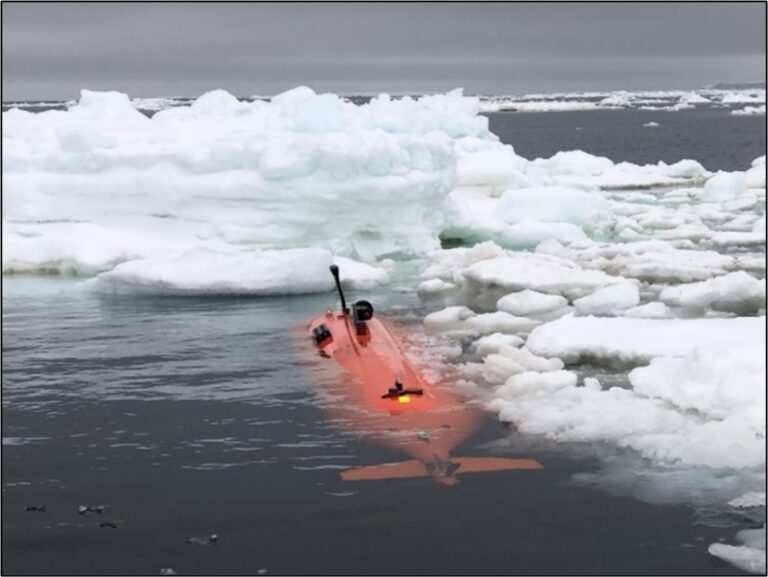
Ran navigates its way under the ice front of Thwaites Glacier. Image: Filip Stedt
Share
LinkedIn Facebook Twitter Email

An autonomous submarine has successfully been used to collect data from underneath the remote Thwaites glacier in West Antarctica. The data has revealed that the supply of warm water to the glacier is larger than previously thought. This has triggered concerns of faster melting and accelerating ice flow.

The submarine deployment was undertaken as part of the International Thwaites Glacier Collaboration’s (ITGC) TARSAN and THOR projects, which are studying how atmospheric and oceanic processes are influencing the behavior of the Thwaites and Dotson ice shelves.

The autonomous submarine, called Ran, was deployed under Thwaites glacier in 2019. The submersible measured the strength, temperature, salinity and oxygen content of the ocean currents that penetrate under the glacier.

“These were the first measurements ever performed beneath the ice front of Thwaites glacier. Global sea level is affected by how much ice there is on land, and the biggest uncertainty in the forecasts is the future evolution of the West Antarctic Ice Sheet,” said Anna Wåhlin, professor of oceanography at the University of Gothenburg.

Professor Karen Heywood of the University of East Anglia, a principal investigator on the TARSAN project, added, “This was Ran’s first venture to polar regions and her exploration of the waters under the ice shelf was much more successful than we had dared to hope. We plan to build on these exciting findings with further missions under the ice next year.”

The results have been used to map the ocean currents underneath the floating part of the glacier. The team discovered that there is a deep connection to the east through which deep water flows from Pine Island Bay, a connection that was previously thought to be blocked by an underwater ridge. The team also measured the heat transport in one of the three channels that lead warm water toward Thwaites Glacier from the north.

“The channels for warm water to access and attack Thwaites weren’t known to us before the research. Using sonars on the ship, nested with very high-resolution ocean mapping from Ran, we were able to find that there are distinct paths that water takes in and out of the ice shelf cavity, influenced by the geometry of the ocean floor,” said Dr Alastair Graham, from the University of Southern Florida.

The researchers also noted that large amounts of meltwater flowed north away from the front of the glacier. Variations in salinity, temperature and oxygen content indicate that the area under the glacier is a previously unknown active area where different water masses meet and mix with each other, which is important for understanding the melting processes at the base of the ice.

The observations show warm water approaching from all sides on pinning points, critical locations where the ice is connected to the seabed and give stability to the ice shelf. Melting around these pinning points may lead to instability and retreat of the ice shelf and, subsequently, the upstream glacier flowing off the land.

The findings of this research have been published in the journal Science Advances.

Previous ArticleForecasting rainfall using commercial microwave links from cellular communication networks
Next Article Bureau of Meteorology installs new anemometer to make waterways safer

Read Similar Stories

Extreme Weather

Researchers investigate links between air pollution, extreme weather and climate

May 1, 20262 Mins Read
Digital Applications

ForecastWatch expands with launch of new independent platform for weather forecast verification

April 28, 20262 Mins Read
Data

Atmospheric G2 secures Japan weather forecasting license

April 21, 20262 Mins Read
Latest News

Researchers investigate links between air pollution, extreme weather and climate

May 1, 2026

China expands MAZU early warning system for developing countries

April 30, 2026

Météo-France begins construction of France’s tallest weather radar tower in Sembadel

April 29, 2026

Receive breaking stories and features in your inbox each week, for free


Enter your email address:


Supplier Spotlights
  • Raymetrics
Getting in Touch
  • Contact Us / Advertise
  • Meet the Editors
  • Media Pack
  • Free Weekly E-Newsletter
Our Social Channels
  • Facebook
  • LinkedIn
© 2026 UKi Media & Events a division of UKIP Media & Events Ltd
  • Cookie Policy
  • Privacy Policy
  • Terms and Conditions
  • Notice and Takedown Policy

Type above and press Enter to search. Press Esc to cancel.