


Close Menu
Meteorological Technology International
  • News
    • A-E
      • Agriculture
      • Automated Weather Stations
      • Aviation
      • Climate Measurement
      • Data
      • Developing Countries
      • Digital Applications
      • Early Warning Systems
      • Extreme Weather
    • G-P
      • Hydrology
      • Lidar
      • Lightning Detection
      • New Appointments
      • Nowcasting
      • Numerical Weather Prediction
      • Polar Weather
    • R-S
      • Radar
      • Rainfall
      • Remote Sensing
      • Renewable Energy
      • Satellites
      • Solar
      • Space Weather
      • Supercomputers
    • T-Z
      • Training
      • Transport
      • Weather Instruments
      • Wind
      • World Meteorological Organization
      • Meteorological Technology World Expo
  • Features
  • Online Magazines
    • January 2026
    • April 2025
    • January 2025
    • September 2024
    • April 2024
    • Archive Issues
    • Subscribe Free!
  • Opinion
  • Videos
  • Supplier Spotlight
  • Expo
LinkedIn X (Twitter) Facebook
  • Sign-up for Free Weekly E-Newsletter
  • Meet the Editors
  • Contact Us
  • Media Pack
LinkedIn Facebook
Subscribe
Meteorological Technology International
  • News
      • Agriculture
      • Automated Weather Stations
      • Aviation
      • Climate Measurement
      • Data
      • Developing Countries
      • Digital Applications
      • Early Warning Systems
      • Extreme Weather
      • Hydrology
      • Lidar
      • Lightning Detection
      • New Appointments
      • Nowcasting
      • Numerical Weather Prediction
      • Polar Weather
      • Radar
      • Rainfall
      • Remote Sensing
      • Renewable Energy
      • Satellites
      • Solar
      • Space Weather
      • Supercomputers
      • Training
      • Transport
      • Weather Instruments
      • Wind
      • World Meteorological Organization
      • Meteorological Technology World Expo
  • Features
  • Online Magazines
    1. April 2026
    2. January 2026
    3. September 2025
    4. April 2025
    5. January 2025
    6. September 2024
    7. April 2024
    8. January 2024
    9. Archive Issues
    10. Subscribe Free!
    Featured
    May 5, 2026

    In this Issue – April 2026

    By Web TeamMay 5, 2026
    Recent

    In this Issue – April 2026

    May 5, 2026

    In this Issue – January 2026

    November 27, 2025

    In this Issue – September 2025

    August 11, 2025
  • Opinion
  • Videos
  • Supplier Spotlight
  • Expo
Facebook LinkedIn
Subscribe
Meteorological Technology International
Climate Measurement

Australian wildfires widened ozone hole by 10% in 2020

Dan SymondsBy Dan SymondsMarch 13, 20232 Mins Read
Share LinkedIn Facebook Twitter Email
Credit - Pixabay
Share
LinkedIn Facebook Twitter Email

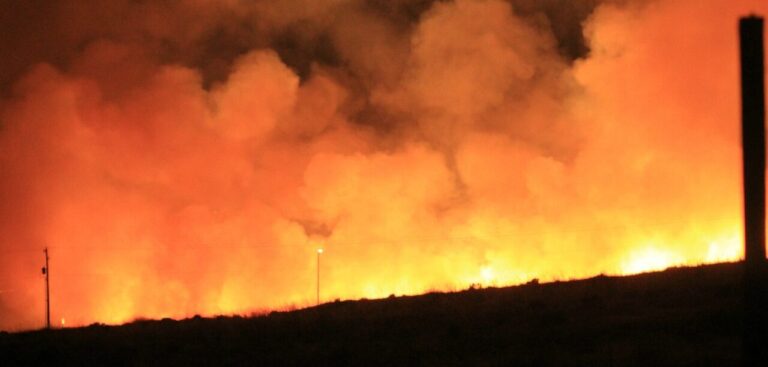
A new study led by the Massachusetts Institute of Technology (MIT) has discovered that wildfire smoke in the stratosphere can trigger chemical reactions that erode the Earth’s protective ozone layer.

Focusing on the Australian fires that raged from December 2019 into January 2020, the country’s most devastating on record, the research team identified a new chemical reaction by which smoke particles from the wildfires made ozone depletion worse. By triggering this reaction, the fires likely contributed to a 3-5% depletion of total ozone at mid-latitudes in the Southern Hemisphere, in regions overlying Australia, New Zealand, and parts of Africa and South America.

The researchers’ model also indicated the fires had an effect in the polar regions, eating away at the edges of the ozone hole over Antarctica. By late 2020, smoke particles from the Australian wildfires widened the Antarctic ozone hole by 2,500,000km2  – 10% of its area compared to the previous year.

Despite the findings, it is unclear what long-term effect wildfires will have on ozone recovery. The United Nations recently reported that the ozone hole, and ozone depletion around the world, is on a recovery track, thanks to a sustained international effort to phase out ozone-depleting chemicals. But the new research suggests that as long as these chemicals persist in the atmosphere, large fires could spark a reaction that temporarily depletes ozone.

Doug Kinnison, study co-author and scientist at the US National Center for Atmospheric Research (NCAR), said, “As this research demonstrates, wildfire smoke can have a profound influence on stratospheric chemistry. Clearly more research is needed to fully understand the impact associated with pyrocumulonimbus smoke, especially if wildfires become increasingly more frequent and intense due to climate change.”

To view the complete study published in the journal Nature, click here.

Previous ArticleIntensity ranking for atmospheric rivers ready for global use, claims study
Next Article Control efforts see decline in US sulfur hexafluoride emissions

Read Similar Stories

Weather Instruments

R.M. Young Company reengineers SNOdar snow-depth sensor

May 21, 20262 Mins Read
Climate Measurement

Cloud measurement campaign targets improved climate model accuracy

May 20, 20263 Mins Read
Videos

VIDEO: Meteosat-12 imagery over Europe and Africa made available via YouTube streams

May 19, 20262 Mins Read
Latest News

R.M. Young Company reengineers SNOdar snow-depth sensor

May 21, 2026

SMILE mission launches to study Earth’s magnetic shield and space weather

May 20, 2026

Cloud measurement campaign targets improved climate model accuracy

May 20, 2026

Receive breaking stories and features in your inbox each week, for free


Enter your email address:


Supplier Spotlights
  • Synoptic Data PBC
Getting in Touch
  • Contact Us / Advertise
  • Meet the Editors
  • Media Pack
  • Free Weekly E-Newsletter
Our Social Channels
  • Facebook
  • LinkedIn
© 2026 UKi Media & Events a division of UKIP Media & Events Ltd
  • Cookie Policy
  • Privacy Policy
  • Terms and Conditions
  • Notice and Takedown Policy

Type above and press Enter to search. Press Esc to cancel.