


Close Menu
Meteorological Technology International
  • News
    • A-E
      • Agriculture
      • Automated Weather Stations
      • Aviation
      • Climate Measurement
      • Data
      • Developing Countries
      • Digital Applications
      • Early Warning Systems
      • Extreme Weather
    • G-P
      • Hydrology
      • Lidar
      • Lightning Detection
      • New Appointments
      • Nowcasting
      • Numerical Weather Prediction
      • Polar Weather
    • R-S
      • Radar
      • Rainfall
      • Remote Sensing
      • Renewable Energy
      • Satellites
      • Solar
      • Space Weather
      • Supercomputers
    • T-Z
      • Training
      • Transport
      • Weather Instruments
      • Wind
      • World Meteorological Organization
      • Meteorological Technology World Expo
  • Features
  • Online Magazines
    • January 2026
    • April 2025
    • January 2025
    • September 2024
    • April 2024
    • Archive Issues
    • Subscribe Free!
  • Opinion
  • Videos
  • Supplier Spotlight
  • Expo
LinkedIn X (Twitter) Facebook
  • Sign-up for Free Weekly E-Newsletter
  • Meet the Editors
  • Contact Us
  • Media Pack
LinkedIn Facebook
Subscribe
Meteorological Technology International
  • News
      • Agriculture
      • Automated Weather Stations
      • Aviation
      • Climate Measurement
      • Data
      • Developing Countries
      • Digital Applications
      • Early Warning Systems
      • Extreme Weather
      • Hydrology
      • Lidar
      • Lightning Detection
      • New Appointments
      • Nowcasting
      • Numerical Weather Prediction
      • Polar Weather
      • Radar
      • Rainfall
      • Remote Sensing
      • Renewable Energy
      • Satellites
      • Solar
      • Space Weather
      • Supercomputers
      • Training
      • Transport
      • Weather Instruments
      • Wind
      • World Meteorological Organization
      • Meteorological Technology World Expo
  • Features
  • Online Magazines
    1. April 2026
    2. January 2026
    3. September 2025
    4. April 2025
    5. January 2025
    6. September 2024
    7. April 2024
    8. January 2024
    9. Archive Issues
    10. Subscribe Free!
    Featured
    May 5, 2026

    In this Issue – April 2026

    By Web TeamMay 5, 2026
    Recent

    In this Issue – April 2026

    May 5, 2026

    In this Issue – January 2026

    November 27, 2025

    In this Issue – September 2025

    August 11, 2025
  • Opinion
  • Videos
  • Supplier Spotlight
  • Expo
Facebook LinkedIn
Subscribe
Meteorological Technology International
Climate Measurement

Carbon dioxide levels 50% higher than pre-industrial era

Dan SymondsBy Dan SymondsJune 6, 20223 Mins Read
Share LinkedIn Facebook Twitter Email
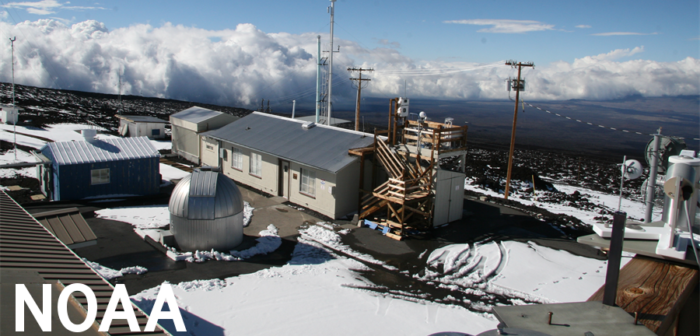
The Mauna Loa Observatory in Hawaii is a benchmark site for measuring carbon dioxide - credit: NOAA
Share
LinkedIn Facebook Twitter Email

Carbon dioxide (CO2 ) measured at NOAA’s Mauna Loa Atmospheric Baseline Observatory peaked at 420.99 parts per million in May, set against a monthly average of 420.78ppm for 2022. The May figure is an increase of 1.8ppm over 2021.

CO2 concentrations are currently peaking at levels not seen for millions of years according to scientists from NOAA and Scripps Institution of Oceanography at the University of California San Diego.

Rick Spinrad, NOAA administrator, said, “The science is irrefutable: humans are altering our climate in ways that our economy and our infrastructure must adapt to. We can see the impacts of climate change around us every day. The relentless increase of carbon dioxide measured at Mauna Loa is a stark reminder that we need to take urgent, serious steps to become a more climate ready nation.”

Prior to the Industrial Revolution, CO2 levels were consistently around 280ppm for almost 6,000 years of human civilization. Since then, humans have generated an estimated 1.5 trillion tons of CO2 pollution.

Carbon dioxide levels are now comparable to the Pliocene Climatic Optimum, between 4.1 and 4.5 million years ago, when they were close to, or above 400ppm. During that time, sea levels were between 5-25m higher than today. Temperatures then averaged 3.9°C higher than in pre-industrial times, and studies indicate that large forests occupied today’s Arctic tundra.

NOAA’s observatory, situated high on the slopes of the Mauna Loa volcano, is the global benchmark location for monitoring atmospheric CO2. At an elevation of 3,396m above sea level, the observatory samples air undisturbed by the influence of local pollution or vegetation, and produces measurements that represent the average state of the atmosphere in the northern hemisphere.

Charles David Keeling, who was a scientist with the Scripps Institution of Oceanography, initiated on-site measurements of CO2 at NOAA’s weather station on Mauna Loa in 1958. Keeling was the first to recognize that CO2 levels in the northern hemisphere fell during the growing season, and rose as plants died back in the autumn, and he documented these CO2 fluctuations in a record that came to be known as the Keeling Curve. He was also the first to recognize that, despite the seasonal fluctuation, CO2 levels were rising every year.

NOAA began measurements in 1974, and the two research institutions have made complementary, independent observations ever since. Keeling’s son, geochemist Ralph Keeling, runs the Scripps program at Mauna Loa.

“It’s depressing that we’ve lacked the collective willpower to slow the relentless rise in CO2,” said Ralph Keeling. “Fossil-fuel use may no longer be accelerating, but we are still racing at top speed toward a global catastrophe.”

The Mauna Loa data, together with measurements from sampling stations around the world, are incorporated by NOAA’s Global Monitoring Laboratory into the Global Greenhouse Gas Reference Network, a foundational research data set for international climate scientists and a benchmark for policymakers attempting to address the causes and impacts of climate change.

Despite decades of negotiation, the global community has been unable to significantly slow, let alone reverse, annual increases in atmospheric CO2 levels.

Pieter Tans, senior scientist with the Global Monitoring Laboratory, said, “Carbon dioxide is at levels our species has never experienced before. This is not new. We have known about this for half a century and have failed to do anything meaningful about it. What’s it going to take for us to wake up?”

Previous ArticleAI-updated vegetation maps result in improved wildfire forecasts
Next Article ESA contracts Open Cosmos to help develop space weather satellite constellation

Read Similar Stories

Weather Instruments

R.M. Young Company reengineers SNOdar snow-depth sensor

May 21, 20262 Mins Read
Climate Measurement

Cloud measurement campaign targets improved climate model accuracy

May 20, 20263 Mins Read
Videos

VIDEO: Meteosat-12 imagery over Europe and Africa made available via YouTube streams

May 19, 20262 Mins Read
Latest News

FEATURE: Turning contrail science into flight plans

May 27, 2026

Vaisala launches AWS810 Airport Edition automatic weather station

May 26, 2026

R.M. Young Company reengineers SNOdar snow-depth sensor

May 21, 2026

Receive breaking stories and features in your inbox each week, for free


Enter your email address:


Supplier Spotlights
  • EUMETSAT
Getting in Touch
  • Contact Us / Advertise
  • Meet the Editors
  • Media Pack
  • Free Weekly E-Newsletter
Our Social Channels
  • Facebook
  • LinkedIn
© 2026 UKi Media & Events a division of UKIP Media & Events Ltd
  • Cookie Policy
  • Privacy Policy
  • Terms and Conditions
  • Notice and Takedown Policy

Type above and press Enter to search. Press Esc to cancel.