

Close Menu
Meteorological Technology International
  • News
    • A-E
      • Agriculture
      • Automated Weather Stations
      • Aviation
      • Climate Measurement
      • Data
      • Developing Countries
      • Digital Applications
      • Early Warning Systems
      • Extreme Weather
    • G-P
      • Hydrology
      • Lidar
      • Lightning Detection
      • New Appointments
      • Nowcasting
      • Numerical Weather Prediction
      • Polar Weather
    • R-S
      • Radar
      • Rainfall
      • Remote Sensing
      • Renewable Energy
      • Satellites
      • Solar
      • Space Weather
      • Supercomputers
    • T-Z
      • Training
      • Transport
      • Weather Instruments
      • Wind
      • World Meteorological Organization
      • Meteorological Technology World Expo
  • Features
  • Online Magazines
    • January 2026
    • April 2025
    • January 2025
    • September 2024
    • April 2024
    • Archive Issues
    • Subscribe Free!
  • Opinion
  • Videos
  • Supplier Spotlight
  • Expo
LinkedIn X (Twitter) Facebook
  • Sign-up for Free Weekly E-Newsletter
  • Meet the Editors
  • Contact Us
  • Media Pack
LinkedIn Facebook
Subscribe
Meteorological Technology International
  • News
      • Agriculture
      • Automated Weather Stations
      • Aviation
      • Climate Measurement
      • Data
      • Developing Countries
      • Digital Applications
      • Early Warning Systems
      • Extreme Weather
      • Hydrology
      • Lidar
      • Lightning Detection
      • New Appointments
      • Nowcasting
      • Numerical Weather Prediction
      • Polar Weather
      • Radar
      • Rainfall
      • Remote Sensing
      • Renewable Energy
      • Satellites
      • Solar
      • Space Weather
      • Supercomputers
      • Training
      • Transport
      • Weather Instruments
      • Wind
      • World Meteorological Organization
      • Meteorological Technology World Expo
  • Features
  • Online Magazines
    1. January 2026
    2. September 2025
    3. April 2025
    4. January 2025
    5. September 2024
    6. April 2024
    7. January 2024
    8. September 2023
    9. April 2023
    10. Archive Issues
    11. Subscribe Free!
    Featured
    November 27, 2025

    In this Issue – January 2026

    By Hazel KingNovember 27, 2025
    Recent

    In this Issue – January 2026

    November 27, 2025

    In this Issue – September 2025

    August 11, 2025

    In this Issue – April 2025

    April 15, 2025
  • Opinion
  • Videos
  • Supplier Spotlight
  • Expo
Facebook LinkedIn
Subscribe
Meteorological Technology International
Climate Measurement

Met Office highlights report warning of significant climate change

Henry WillisBy Henry WillisAugust 14, 20202 Mins Read
Share LinkedIn Facebook Twitter Email
Met Office BAMS (Bulletin of the American Meteorological Society) report
Share
LinkedIn Facebook Twitter Email

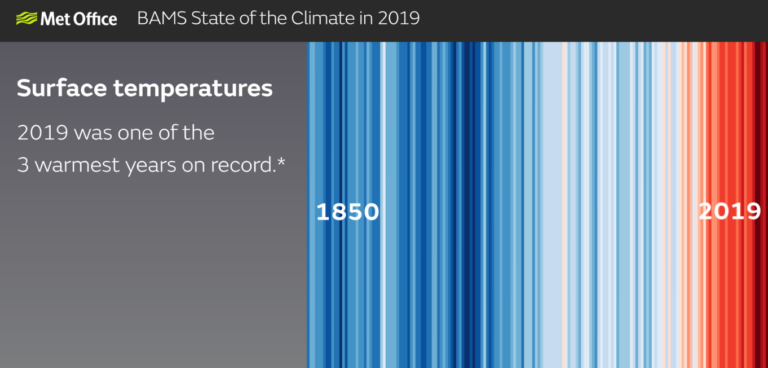
The Met Office has circulated the latest BAMS (Bulletin of the American Meteorological Society) report that warns of significant climate change recorded in 2019. The 30th edition BAMS report is peer-reviewed, with contributions from climate scientists around the world, including from the Met Office.

The most significant findings from the latest update signal that each decade since 1980 has been successively warmer than the preceding decade, with the most recent (2010-19) rising by around 0.2°C compared with the previous decade. Last year was one of the warmest years since records began in the 1800s, with only 2015 and 2016 (in some data sets) marked as warmer. All years after 2013 have been warmer than all others on record since the mid 1800s.

For the 32nd consecutive year, 2019 recorded the loss of mass from mountain glaciers around the world, and lake temperatures were above long-term average and permafrost temperatures continued to rise. In addition, the northern hemisphere growing season was eight days longer than average.

The atmospheric concentration of greenhouse gases increased by the following amounts: carbon-dioxide (2.5 parts per million); nitrous-oxide (1 part per billion); and methane (9.2 parts per billion).

The report also flagged exceptional wildfire events in Australia, Amazonia, Indonesia and parts of Siberia.

The Met Office’s Robert Dunn, who leads the editor team for the Global Climate chapter in the BAMS State of the Climate report, said, “The BAMS report aims to provide an authoritative and observationally driven view of the weather and the climate each year. The view for 2019 is that climate indicators and observations show that the global climate is continuing to change rapidly.

“Global average temperature is perhaps the simplest climate indicator through which to view the changes taking place in our climate. 2019 was one of the top three warmest years in the historical record dating back to 1850. It also marks the end of a decade in which the average global temperature had risen by 0.2 °C when compared with the previous decade. And this millennium has been warmer than any comparable period since the Industrial Revolution.

“A number of extreme events, such as wildfires, heatwaves and droughts, have at least part of their root linked to the rise in global temperature. And of course the rise in global temperature is linked to another climate indicator: the ongoing rise in emissions of greenhouse gases, notably carbon-dioxide, nitrous oxide and methane.”

Previous ArticleNOAA warns an ‘extremely active’ Atlantic Basin hurricane season is possible
Next Article India Meteorological Department to predict extreme weather with AI

Read Similar Stories

Climate Measurement

WMO signals increasing likelihood of El Niño developing in 2026

April 24, 20263 Mins Read
Radar

Alabama partners with Climavision to expand weather radar coverage statewide

April 24, 20262 Mins Read
Agriculture

Extreme heat posing significant risks to ecosystems and agriculture, FAO-WMO report warns

April 22, 20263 Mins Read
Latest News

WMO signals increasing likelihood of El Niño developing in 2026

April 24, 2026

Alabama partners with Climavision to expand weather radar coverage statewide

April 24, 2026

Extreme heat posing significant risks to ecosystems and agriculture, FAO-WMO report warns

April 22, 2026

Receive breaking stories and features in your inbox each week, for free


Enter your email address:


Supplier Spotlights
  • Synoptic Data PBC
Getting in Touch
  • Contact Us / Advertise
  • Meet the Editors
  • Media Pack
  • Free Weekly E-Newsletter
Our Social Channels
  • Facebook
  • LinkedIn
© 2026 UKi Media & Events a division of UKIP Media & Events Ltd
  • Cookie Policy
  • Privacy Policy
  • Terms and Conditions
  • Notice and Takedown Policy

Type above and press Enter to search. Press Esc to cancel.