

Close Menu
Meteorological Technology International
  • News
    • A-E
      • Agriculture
      • Automated Weather Stations
      • Aviation
      • Climate Measurement
      • Data
      • Developing Countries
      • Digital Applications
      • Early Warning Systems
      • Extreme Weather
    • G-P
      • Hydrology
      • Lidar
      • Lightning Detection
      • New Appointments
      • Nowcasting
      • Numerical Weather Prediction
      • Polar Weather
    • R-S
      • Radar
      • Rainfall
      • Remote Sensing
      • Renewable Energy
      • Satellites
      • Solar
      • Space Weather
      • Supercomputers
    • T-Z
      • Training
      • Transport
      • Weather Instruments
      • Wind
      • World Meteorological Organization
      • Meteorological Technology World Expo
  • Features
  • Online Magazines
    • January 2026
    • April 2025
    • January 2025
    • September 2024
    • April 2024
    • Archive Issues
    • Subscribe Free!
  • Opinion
  • Videos
  • Supplier Spotlight
  • Expo
LinkedIn X (Twitter) Facebook
  • Sign-up for Free Weekly E-Newsletter
  • Meet the Editors
  • Contact Us
  • Media Pack
LinkedIn Facebook
Subscribe
Meteorological Technology International
  • News
      • Agriculture
      • Automated Weather Stations
      • Aviation
      • Climate Measurement
      • Data
      • Developing Countries
      • Digital Applications
      • Early Warning Systems
      • Extreme Weather
      • Hydrology
      • Lidar
      • Lightning Detection
      • New Appointments
      • Nowcasting
      • Numerical Weather Prediction
      • Polar Weather
      • Radar
      • Rainfall
      • Remote Sensing
      • Renewable Energy
      • Satellites
      • Solar
      • Space Weather
      • Supercomputers
      • Training
      • Transport
      • Weather Instruments
      • Wind
      • World Meteorological Organization
      • Meteorological Technology World Expo
  • Features
  • Online Magazines
    1. April 2026
    2. January 2026
    3. September 2025
    4. April 2025
    5. January 2025
    6. September 2024
    7. April 2024
    8. January 2024
    9. Archive Issues
    10. Subscribe Free!
    Featured
    May 5, 2026

    In this Issue – April 2026

    By Web TeamMay 5, 2026
    Recent

    In this Issue – April 2026

    May 5, 2026

    In this Issue – January 2026

    November 27, 2025

    In this Issue – September 2025

    August 11, 2025
  • Opinion
  • Videos
  • Supplier Spotlight
  • Expo
Facebook LinkedIn
Subscribe
Meteorological Technology International
Climate Measurement

NRL tracks dust storms across the Atlantic

James MuirBy James MuirFebruary 26, 20202 Mins Read
Share LinkedIn Facebook Twitter Email
Share
LinkedIn Facebook Twitter Email

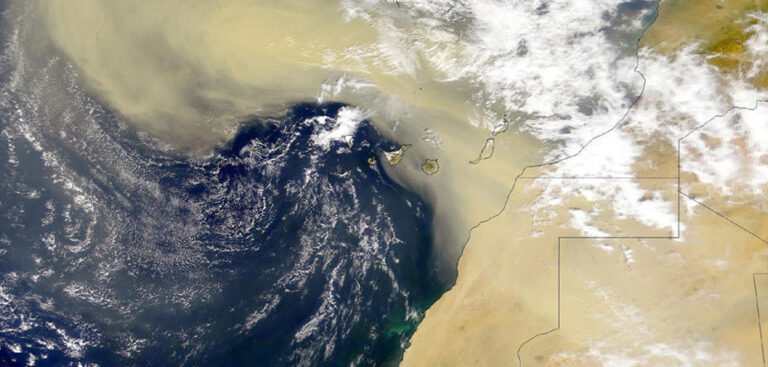
The US Naval Research Laboratory is teaming up with NASA, NOAA and Caribbean organizations to create regional weather forecast alerts for dust storms.

Every year, 14 million metric tons of dust travels across the Atlantic Ocean from the Sahara Desert, ending up in the Greater Caribbean, South America, the Gulf of Mexico and southeastern USA.

Arunas Kuciauskas, a US Naval Research Laboratory meteorologist, tracks the Saharan Air Layer (SAL) and works with researchers at NASA, NOAA and Caribbean organizations to model Saharan dust storms and provide prediction tools for weather forecasters and healthcare professionals.

Kuciauskas uses NOAA’s Unique Combined Atmospheric Processing System (NUCAPS) software tool that processes radiance data from satellites collected by NOAA’s Joint Polar-orbiting Satellite System (JPSS) into thermodynamic parameters that describe SAL.

Kuciauskas has teamed up with NOAA science and operations officer Ernesto Rodriguez to track and measure the size and power of regional dust storms.

Rodriguez works at the National Weather Service in San Juan, Puerto Rico, and research with Kuciauskas will lead to regional weather forecast alerts indicating severity days before the dust arrives.

They will establish a baseline expectation using 17 years of climatology over the Caribbean and statistical averaging.

The San Juan National Weather Service aims to develop a traffic light prediction approach where green indicates low impact, yellow is average and red means a dust storm is dangerous.

The traffic lights will alert the public of upcoming hazards, so residents can decide to stay inside, and cover machinery, and local flights can adjust courses or schedules.

Small aircraft are most affected by SAL events. Rodriguez commented, “They usually fly at low altitudes, around 3-5km, where the Saharan dust is transported. An accurate forecast of a SAL event will provide enough lead time to the aviation and maritime community to plan the operations, taking into account the visibility reduction and the poor air quality.”

Previous ArticleOffshore wind farms could power China’s coast
Next Article Korean weather satellite among payload on latest Ariane space mission

Read Similar Stories

Oceans

VIDEO: Sentinel-6 satellite detects El Niño precursor in Pacific

June 4, 20262 Mins Read
Nowcasting

Colorado State University and Nvidia partner to extend severe storm prediction lead times

June 2, 20262 Mins Read
Climate Measurement

WMO warns El Niño is developing with 80% certainty, urges preparation

June 2, 20263 Mins Read
Latest News

VIDEO: Sentinel-6 satellite detects El Niño precursor in Pacific

June 4, 2026

New forecasting framework targets solar-limb flare blind spot

June 4, 2026

Colorado State University and Nvidia partner to extend severe storm prediction lead times

June 2, 2026

Receive breaking stories and features in your inbox each week, for free


Enter your email address:


Supplier Spotlights
  • Geolux d.o.o.
Getting in Touch
  • Contact Us / Advertise
  • Meet the Editors
  • Media Pack
  • Free Weekly E-Newsletter
Our Social Channels
  • Facebook
  • LinkedIn
© 2026 UKi Media & Events a division of UKIP Media & Events Ltd
  • Cookie Policy
  • Privacy Policy
  • Terms and Conditions
  • Notice and Takedown Policy

Type above and press Enter to search. Press Esc to cancel.