

Close Menu
Meteorological Technology International
  • News
    • A-E
      • Agriculture
      • Automated Weather Stations
      • Aviation
      • Climate Measurement
      • Data
      • Developing Countries
      • Digital Applications
      • Early Warning Systems
      • Extreme Weather
    • G-P
      • Hydrology
      • Lidar
      • Lightning Detection
      • New Appointments
      • Nowcasting
      • Numerical Weather Prediction
      • Polar Weather
    • R-S
      • Radar
      • Rainfall
      • Remote Sensing
      • Renewable Energy
      • Satellites
      • Solar
      • Space Weather
      • Supercomputers
    • T-Z
      • Training
      • Transport
      • Weather Instruments
      • Wind
      • World Meteorological Organization
      • Meteorological Technology World Expo
  • Features
  • Online Magazines
    • January 2026
    • April 2025
    • January 2025
    • September 2024
    • April 2024
    • Archive Issues
    • Subscribe Free!
  • Opinion
  • Videos
  • Supplier Spotlight
  • Expo
LinkedIn X (Twitter) Facebook
  • Sign-up for Free Weekly E-Newsletter
  • Meet the Editors
  • Contact Us
  • Media Pack
LinkedIn Facebook
Subscribe
Meteorological Technology International
  • News
      • Agriculture
      • Automated Weather Stations
      • Aviation
      • Climate Measurement
      • Data
      • Developing Countries
      • Digital Applications
      • Early Warning Systems
      • Extreme Weather
      • Hydrology
      • Lidar
      • Lightning Detection
      • New Appointments
      • Nowcasting
      • Numerical Weather Prediction
      • Polar Weather
      • Radar
      • Rainfall
      • Remote Sensing
      • Renewable Energy
      • Satellites
      • Solar
      • Space Weather
      • Supercomputers
      • Training
      • Transport
      • Weather Instruments
      • Wind
      • World Meteorological Organization
      • Meteorological Technology World Expo
  • Features
  • Online Magazines
    1. April 2026
    2. January 2026
    3. September 2025
    4. April 2025
    5. January 2025
    6. September 2024
    7. April 2024
    8. January 2024
    9. Archive Issues
    10. Subscribe Free!
    Featured
    May 5, 2026

    In this Issue – April 2026

    By Web TeamMay 5, 2026
    Recent

    In this Issue – April 2026

    May 5, 2026

    In this Issue – January 2026

    November 27, 2025

    In this Issue – September 2025

    August 11, 2025
  • Opinion
  • Videos
  • Supplier Spotlight
  • Expo
Facebook LinkedIn
Subscribe
Meteorological Technology International
Climate Measurement

Oceans absorbing CO2 at much higher rates than previously thought

Paul WillisBy Paul WillisOctober 15, 20192 Mins Read
Share LinkedIn Facebook Twitter Email
carbon dioxide
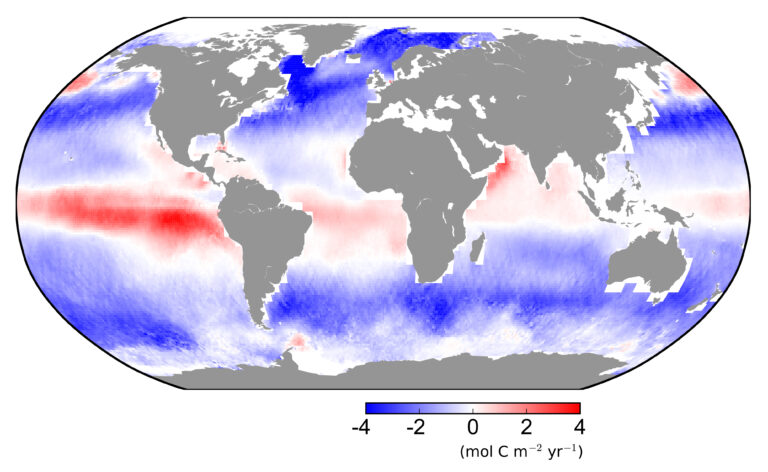
Carbon dioxide flow between atmosphere and ocean. Image: University of Exeter College of Life and Environmental Sciences
Share
LinkedIn Facebook Twitter Email

A new study has revealed that the world’s oceans are absorbing far more of the carbon dioxide released in to the atmosphere by human activity than was previously believed.

Covering two-thirds of Earth’s surface, it has long been known that oceans play a key role in sequestering atmospheric carbon dioxide. It was previously estimated that around a quarter of the carbon dioxide we release into the atmosphere is absorbed into the oceans.

However, according to a new study published in Global Biogeochemical Cycles the true figure is closer to a third. Dr David Woolf, of Edinburgh’s Heriot-Watt University and the study’s lead author, said, “Our research shows that three gigatonnes of carbon a year are being drawn down into the ocean, which is about a third of the emissions caused by human activity.

“Importantly, we now know this with unprecedented accuracy – to within 0.6 gigatonnes of carbon per year – and conclude that the earlier figure of around a quarter underestimated the role of the ocean in its ability to sequester carbon.”

The research team reached their findings helped in part by data from the Surface Ocean Carbon Dioxide Atlas, an ongoing international collaborative effort to collect and compile carbon dioxide measurements in the upper ocean. They also used satellite data to measure various ocean properties such as salinity, surface wind speeds and sea-surface temperature.

The discovery that oceans absorb more carbon dioxide than previously thoughts appears – at least on the surface – a positive development in efforts to counteract climate change.

But marine scientists point out that higher carbon dioxide levels in the sea brings with it a host of other environmental problems including rising sea levels through thermal expansion and continental ice melt and increased ocean acidification, a major problem that would make the seas unsustainable living environments for much marine life.

Previous ArticleNatural disasters costing US$1bn each, says NOAA
Next Article New study reveals widespread influence of oceans on Earth’s climate

Read Similar Stories

Oceans

VIDEO: Sentinel-6 satellite detects El Niño precursor in Pacific

June 4, 20262 Mins Read
Nowcasting

Colorado State University and Nvidia partner to extend severe storm prediction lead times

June 2, 20262 Mins Read
Climate Measurement

WMO warns El Niño is developing with 80% certainty, urges preparation

June 2, 20263 Mins Read
Latest News

VIDEO: Sentinel-6 satellite detects El Niño precursor in Pacific

June 4, 2026

New forecasting framework targets solar-limb flare blind spot

June 4, 2026

Colorado State University and Nvidia partner to extend severe storm prediction lead times

June 2, 2026

Receive breaking stories and features in your inbox each week, for free


Enter your email address:


Supplier Spotlights
  • GAMIC GmbH
Getting in Touch
  • Contact Us / Advertise
  • Meet the Editors
  • Media Pack
  • Free Weekly E-Newsletter
Our Social Channels
  • Facebook
  • LinkedIn
© 2026 UKi Media & Events a division of UKIP Media & Events Ltd
  • Cookie Policy
  • Privacy Policy
  • Terms and Conditions
  • Notice and Takedown Policy

Type above and press Enter to search. Press Esc to cancel.