


Close Menu
Meteorological Technology International
  • News
    • A-E
      • Agriculture
      • Automated Weather Stations
      • Aviation
      • Climate Measurement
      • Data
      • Developing Countries
      • Digital Applications
      • Early Warning Systems
      • Extreme Weather
    • G-P
      • Hydrology
      • Lidar
      • Lightning Detection
      • New Appointments
      • Nowcasting
      • Numerical Weather Prediction
      • Polar Weather
    • R-S
      • Radar
      • Rainfall
      • Remote Sensing
      • Renewable Energy
      • Satellites
      • Solar
      • Space Weather
      • Supercomputers
    • T-Z
      • Training
      • Transport
      • Weather Instruments
      • Wind
      • World Meteorological Organization
      • Meteorological Technology World Expo
  • Features
  • Online Magazines
    • January 2026
    • April 2025
    • January 2025
    • September 2024
    • April 2024
    • Archive Issues
    • Subscribe Free!
  • Opinion
  • Videos
  • Supplier Spotlight
  • Expo
LinkedIn X (Twitter) Facebook
  • Sign-up for Free Weekly E-Newsletter
  • Meet the Editors
  • Contact Us
  • Media Pack
LinkedIn Facebook
Subscribe
Meteorological Technology International
  • News
      • Agriculture
      • Automated Weather Stations
      • Aviation
      • Climate Measurement
      • Data
      • Developing Countries
      • Digital Applications
      • Early Warning Systems
      • Extreme Weather
      • Hydrology
      • Lidar
      • Lightning Detection
      • New Appointments
      • Nowcasting
      • Numerical Weather Prediction
      • Polar Weather
      • Radar
      • Rainfall
      • Remote Sensing
      • Renewable Energy
      • Satellites
      • Solar
      • Space Weather
      • Supercomputers
      • Training
      • Transport
      • Weather Instruments
      • Wind
      • World Meteorological Organization
      • Meteorological Technology World Expo
  • Features
  • Online Magazines
    1. April 2026
    2. January 2026
    3. September 2025
    4. April 2025
    5. January 2025
    6. September 2024
    7. April 2024
    8. January 2024
    9. Archive Issues
    10. Subscribe Free!
    Featured
    May 5, 2026

    In this Issue – April 2026

    By Web TeamMay 5, 2026
    Recent

    In this Issue – April 2026

    May 5, 2026

    In this Issue – January 2026

    November 27, 2025

    In this Issue – September 2025

    August 11, 2025
  • Opinion
  • Videos
  • Supplier Spotlight
  • Expo
Facebook LinkedIn
Subscribe
Meteorological Technology International
Satellites

Thales Alenia Space to provide satellites for Italian Earth observation constellation

Dan SymondsBy Dan SymondsApril 13, 20233 Mins Read
Share LinkedIn Facebook Twitter Email
Share
LinkedIn Facebook Twitter Email

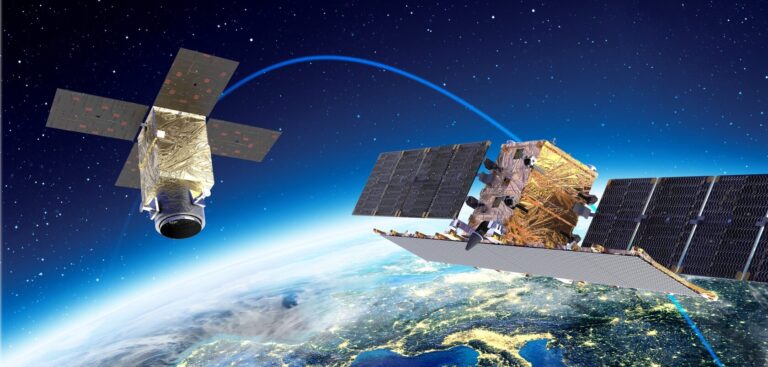
Thales Alenia Space, a joint venture between Thales and Leonardo, has won contracts from the European Space Agency (ESA) to supply a first batch of six small satellites with synthetic aperture radars (SAR) and one satellite based on optical technology for the Italian Earth observation constellation IRIDE.

Leveraging several different sensing instruments and technologies, the new Earth observation constellation will range from microwave radar imaging to optical sensors at various spatial resolutions and in different frequency ranges.

The contract for the six SAR satellites is worth €112m (US$124m) and includes an option on a second group of four satellites, worth €75m (US$83m). The optical satellite contract is worth €30m (US$33m), and includes an option on an additional satellite for €19m (US$21m).

The satellites will provide data on the environmental conditions of Italy as well as helping public administrations to counter hydrogeological instability and fires, protect coasts and monitor critical infrastructures, air quality and weather conditions.

Both the radar and optical satellites are built on the modular NIMBUS (New Italian Micro Bus) platform, weighing around 170kg. Built by Thales Alenia Space, the high-performance NIMBUS can be produced rapidly and is designed for high-revisit and high-capacity constellations. The optical payload is being developed by the Italian companies Media Lario and TSD-space, specialized in the creation of instruments and electronics for space.

IRIDE is a government project funded by Italy’s National Recovery and Resilience Plan (PNRR), managed by ESA in conjunction with the Italian space agency ASI. Scheduled for completion by 2026, IRIDE features a hybrid constellation of different satellites with dedicated Earth observation sensors. This end-to-end system comprises a series of low-Earth-orbit (LEO) satellite sub-constellations, ground infrastructures (downstream) and services dedicated to Italian public administration.

Massimo Comparini, senior executive vice president, observation, exploration and navigation at Thales Alenia Space, said, “Building on our contributions to major Earth observation programs, we are now a key player in this ambitious new project, which entails the creation of a unique, innovative and entirely Italian constellation. We are delighted to be tackling a new challenge that paves the way for the development of new capabilities, especially the design and production of small and medium-sized satellites, which are key to the ‘new space’ economy.”

Simonetta Cheli, director of Earth observation programs at ESA and head of the ESRIN center in Frascati, said, “ESA is delighted for the signature of this contract. The Italian government has entrusted us with the task of implementing this particularly challenging and innovative program, and with the signature of this contract, in addition to those signed in the past weeks, we are close to the full definition of the IRIDE constellation and in line with the roadmap that will allow ESA to reach the first milestone of the program, scheduled for the end of March.

“This is a very important milestone, given that the program is largely financed by PNRR funds. Congratulations to the Thales Alenia Space team for this important contribution to the IRIDE system. We firmly believe that, by integrating national and European assets, the IRIDE system will make Italy more competitive than ever in the Earth observation sector.”

These innovative satellites also feature sophisticated operating modes to support high revisit rates, providing data that can be integrated with that from other existing or future programs and infrastructures, including COSMO-SkyMed Second Generation and Prisma, as well as Europe’s vast Copernicus Earth observation program.

Previous ArticleNASA launches air quality instrument to transform space-based monitoring
Next Article Gill unveils compact weather station for marine environments

Read Similar Stories

Climate Measurement

ECMWF prepares release of new ORAS6 ocean reanalysis system

June 10, 20263 Mins Read
Solar

IKEA uses 20 years of solar data to identify Sweden’s sunniest square meter

June 8, 20262 Mins Read
Oceans

VIDEO: Sentinel-6 satellite detects El Niño precursor in Pacific

June 4, 20262 Mins Read
Latest News

ECMWF prepares release of new ORAS6 ocean reanalysis system

June 10, 2026

Stephen Ettinger named UCAR CFO

June 8, 2026

IKEA uses 20 years of solar data to identify Sweden’s sunniest square meter

June 8, 2026

Receive breaking stories and features in your inbox each week, for free


Enter your email address:


Supplier Spotlights
  • Geolux d.o.o.
Getting in Touch
  • Contact Us / Advertise
  • Meet the Editors
  • Media Pack
  • Free Weekly E-Newsletter
Our Social Channels
  • Facebook
  • LinkedIn
© 2026 UKi Media & Events a division of UKIP Media & Events Ltd
  • Cookie Policy
  • Privacy Policy
  • Terms and Conditions
  • Notice and Takedown Policy

Type above and press Enter to search. Press Esc to cancel.