


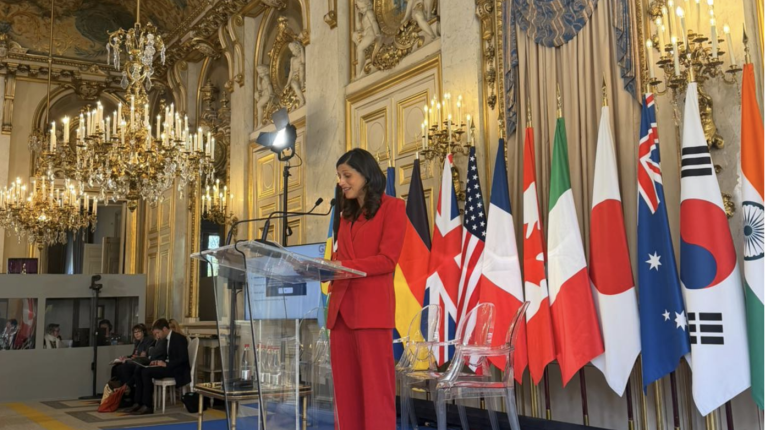
France and the UK have announced new financial contributions to the Climate Risk and Early Warning Systems (CREWS) initiative, aimed at expanding access to early warning systems in low-income countries.
The funding commitments were announced by Éléonore Caroit, France’s minister of state for Francophonie, international partnerships and French nationals abroad, and baroness chapman of Darlington, the UK’s minister for international development and Africa, during a G7 development ministers meeting in Paris on April 30.
France has pledged €3m (US$3.5m) for 2026, with the UK committing a similar amount to the CREWS trust fund. The ministers also called on other G7 nations to increase support for the initiative, which seeks to close the early warning capacity gap in least developed countries and small island developing states by 2030.
Caroit said the initiative has already strengthened resilience in 77 countries, reaching more than 400 million people through early warning systems. “Investing US$800m in these systems prevents up to US$16bn in losses per year, and divides disaster-related mortality by six,” she said.
CREWS works to improve weather and climate forecasting and warning systems through technical assistance, drawing on expertise from organizations including the World Meteorological Organization (WMO), the UN Office for Disaster Risk Reduction, the International Telecommunication Union, and development banks.
According to the initiative, it has helped leverage US$2.8bn in funding from the World Bank and other financial institutions, while supporting access to climate finance in participating countries.
Ko Barrett, deputy secretary-general of the WMO, said, “CREWS is one of WMO’s most important partners in turning science into action. WMO has implemented CREWS projects worth US$67m since 2017, supporting national meteorological and hydrological services in more than 70 countries to deliver life-saving early warning systems.”
The G7 meeting highlighted the growing impact of weather-related hazards, with increasing economic and social losses worldwide. Early warning systems are seen as a key tool in reducing disaster risks, with estimates suggesting they can reduce mortality by up to six times and deliver up to $10 in benefits for every dollar invested. A 24-hour warning ahead of a storm can also reduce damage by up to 30%, according to figures presented at the meeting.
However, many vulnerable countries still lack the infrastructure needed to deliver timely warnings and enable early action.
Jagan Chapagain, secretary-general and CEO of the International Federation of Red Cross and Red Crescent Societies, urged continued support from G7 countries: “It’s early action that makes early warning work. And that saves lives.”
Related news, China expands MAZU early warning system for developing countries