


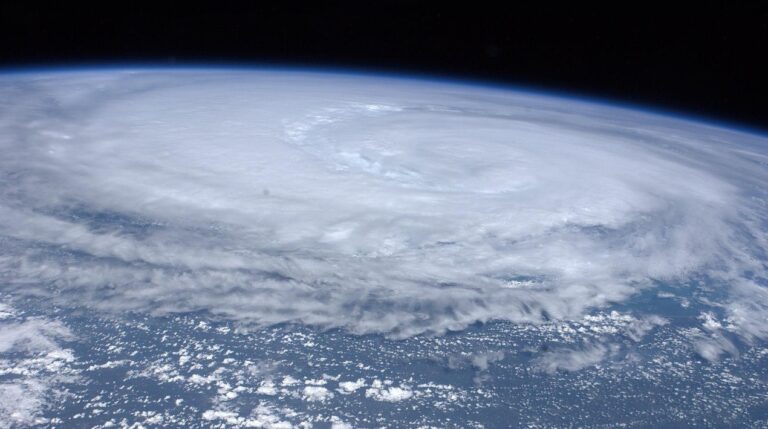
A new artificial intelligence tool has been developed by a research team at the University of Miami that can track the early signs of hurricane formation, and has the potential to be used to improve prediction and early warning systems.
The AI tool can identify tropic easterly waves (TEWs) – “clusters of cloud and wind that often develop into hurricanes”, explains the University of Miami – and separate them from two major tropical wind patterns: the Intertropical Convergence Zone (ITCZ) and the monsoon trough (MT).
“With this wave tracking tool, we have a new way to detect different patterns, and the types of systems that can grow into hurricanes,” said Will Downs, a PhD student in the Department of Atmospheric Sciences at the Rosenstiel School who led the development of the system. “It’s one important step toward improving forecasts and giving communities more time to prepare.”
Downs used 40 years of weather data, from 1981 to 2023, to train a convolutional neural network to detect and differentiate these TEWs in real time.
“It has captured the waves where they seem to be going, with remarkable accuracy so far,” said Sharan Majumdar, a professor of atmospheric sciences at the Rosenstiel School and Downs’ advisor, of the TEW tracker.
“The robust dataset it produces will help researchers more effectively study the behavior of these waves — from weak clusters of clouds to developing tropical cyclones.”
The AI system has already been used at the National Hurricane Center during the 2025 hurricane season.
In related news, researchers at Arizona State University have used satellite-borne lightning detectors to measure a record-setting lightning megaflash that streaked across the Great Plains for 515 miles during a major thunderstorm in October 2017. Its horizontal reach surpassed the previous record-holder by 38 miles yet went unnoticed until this re-examination of satellite observations of the storm. Read the full story