


The WMO’s Executive Council has approved two major strategic proposals to ensure that early warning services reach everyone across the globe in the next five years and to establish a greenhouse gas monitoring system.
The decisions are part of a series of measures agreed by the Executive Council at its June 20-24 session to strengthen weather, climate, water and environmental services.
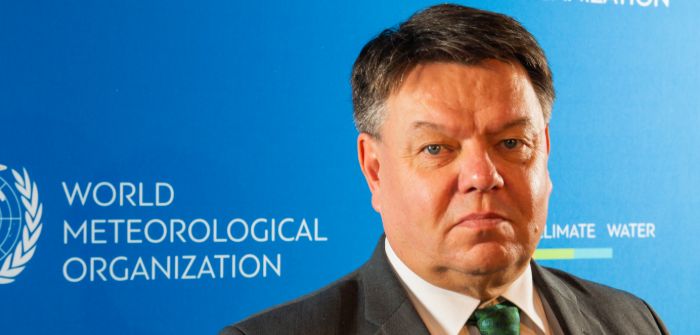
Prof. Petteri Taalas, WMO secretary-general, said, “These flagship initiatives will strengthen WMO’s commitment to the international agenda on climate action and disaster risk reduction and will play a pivotal role in informing climate change mitigation and adaptation to increasingly extreme weather.
“Record greenhouse gas concentrations are driving the increase in temperatures and more extreme weather. Early warning services are a vital, cost-effective and proven way of protecting lives and livelihoods. They are thus the ‘low-hanging fruit’ of climate change adaptation.
“There is a real and proven need for a coordinated global greenhouse gas monitoring infrastructure that will provide a solid, authoritative basis for governments to monitor the effectiveness of their action to reduce greenhouse gas emissions to meet the targets of the Paris Agreement. Mitigation action – curbing emissions due to human activities – is urgently needed, but these decisions will need to be supported by solid data,” he said.
The UN Global Early Warning/Adaptation resolution supports the request by António Guterres, United Nations secretary-general, for the WMO to spearhead new action to ensure that “every person on Earth is protected by early warning systems in the next five years”. WMO will submit an action plan to achieve this goal at the UN Climate Change Conference in Egypt in November 2022.
The resolution emphasizes the fundamental role of national meteorological and hydrological services (NMHSs) as the official and authoritative providers of early warnings and the unique coordination role played by WMO in this regard in the context of the United Nations system.
However, many NMHSs cannot provide adequate early warning services and expert support to first responders, emergency management authorities and communities both ahead of and during hazardous events, and in post-event response, recovery and rebuilding phases.
Only 40% of WMO members have multi-hazard early warning systems in place, including only 30% of African members and 23% in least developed countries.
Executive Council members recognized the UN Global Warming Initiative as essential to the mission of NMHSs, with a clear role for WMO to coordinate and strengthen collective action in three focus areas:
- Earth system observations and monitoring
- Predictive and warning capabilities
- Coordinated communication for anticipatory action
The early warning initiative seeks to leverage and increase financing of the WMO community’s priorities, such as the Systematic Observations Financing Facility (SOFF), Climate Risk Early Warning System (CREWS), Water and Climate Coalition and the Global Multi-Hazard Alert System (GMAS) framework.
A US$1.5bn package is envisaged to scale up these key underpinning elements and alignment with planned or future early warning investments from multilateral funds from the World Bank and the Green Climate Fund.
WMO members and constituent bodies will be asked to contribute to the technical underpinning of this initiative.
Integrated monitoring
The proposed Global Greenhouse Gas/Carbon Budget Monitoring System would establish an internationally coordinated approach to network design, operation and use of observations. It would expand and consolidate WMO’s long-standing activities in greenhouse gas monitoring under the auspices of the Global Atmosphere Watch and the Integrated Global Greenhouse Gas Information System.
Several countries and international organizations are already investing in carbon monitoring activities. The integrated structure would incorporate existing monitoring and data assimilation capabilities from space-based and surface-based observing systems and allow them to complement and leverage each other for maximum overall impact
It would also improve understanding of the carbon cycle and help reduce uncertainties in estimates of the strength of natural sources and sinks, such as the biosphere, the ocean and the permafrost areas. Understanding the full carbon cycle is vitally important for the planning of mitigation activities, since climate change is driven by the total amount of greenhouse gas content of the atmosphere, irrespective of its origin (natural or anthropogenic)
The data provided by this system will thus provide a solid underpinning for mitigation steps taken by the parties to the Paris Agreement and enable them to monitor and understand the effectiveness of their action.
A study group consisting of experts from WMO and the climate research and greenhouse gas monitoring communities will draw up a more detailed proposal on the concept for the architecture of the system and submit it to the World Meteorological Congress in 2023.
Long-term goals
The Executive Council session was the first in-person meeting since 2019.
Prof. Gerhard Adrian, WMO president, said, “Although heavily impacted by the global Covid-19 pandemic, this period saw considerable progress in many areas that underpin WMO work to guide global efforts to advance research, improve observations and data exchange, as well as to enhance the delivery of services to global citizens.”
Executive Council members discussed how to further develop the Global Framework for Climate Services, as well as the research and scientific vision for WMO. They also endorsed the establishment of a Consortium of WMO Education and Training Collaboration Partners (CONET) intended to broaden the engagement of education and training institutions in WMO education and training activities.
Progress in achieving WMO’s strategic plan was outlined in a performance assessment report, which included long-term goals to:
- Better serve societal needs: delivering authoritative, accessible, user-oriented and fit-for-purpose information and services
- Enhance Earth system observations and predictions: strengthening the technical foundation for the future
- Advance targeted research: leveraging leadership in science to improve understanding of the Earth system for enhanced services
- Enhance service delivery capacity of developing countries to ensure availability of essential information and services needed by governments, economic sectors and citizens