

Close Menu
Meteorological Technology International
  • News
    • A-E
      • Agriculture
      • Automated Weather Stations
      • Aviation
      • Climate Measurement
      • Data
      • Developing Countries
      • Digital Applications
      • Early Warning Systems
      • Extreme Weather
    • G-P
      • Hydrology
      • Lidar
      • Lightning Detection
      • New Appointments
      • Nowcasting
      • Numerical Weather Prediction
      • Polar Weather
    • R-S
      • Radar
      • Rainfall
      • Remote Sensing
      • Renewable Energy
      • Satellites
      • Solar
      • Space Weather
      • Supercomputers
    • T-Z
      • Training
      • Transport
      • Weather Instruments
      • Wind
      • World Meteorological Organization
      • Meteorological Technology World Expo
  • Features
  • Online Magazines
    • January 2026
    • April 2025
    • January 2025
    • September 2024
    • April 2024
    • Archive Issues
    • Subscribe Free!
  • Opinion
  • Videos
  • Supplier Spotlight
  • Expo
LinkedIn X (Twitter) Facebook
  • Sign-up for Free Weekly E-Newsletter
  • Meet the Editors
  • Contact Us
  • Media Pack
LinkedIn Facebook
Subscribe
Meteorological Technology International
  • News
      • Agriculture
      • Automated Weather Stations
      • Aviation
      • Climate Measurement
      • Data
      • Developing Countries
      • Digital Applications
      • Early Warning Systems
      • Extreme Weather
      • Hydrology
      • Lidar
      • Lightning Detection
      • New Appointments
      • Nowcasting
      • Numerical Weather Prediction
      • Polar Weather
      • Radar
      • Rainfall
      • Remote Sensing
      • Renewable Energy
      • Satellites
      • Solar
      • Space Weather
      • Supercomputers
      • Training
      • Transport
      • Weather Instruments
      • Wind
      • World Meteorological Organization
      • Meteorological Technology World Expo
  • Features
  • Online Magazines
    1. January 2026
    2. September 2025
    3. April 2025
    4. January 2025
    5. September 2024
    6. April 2024
    7. January 2024
    8. September 2023
    9. April 2023
    10. Archive Issues
    11. Subscribe Free!
    Featured
    November 27, 2025

    In this Issue – January 2026

    By Hazel KingNovember 27, 2025
    Recent

    In this Issue – January 2026

    November 27, 2025

    In this Issue – September 2025

    August 11, 2025

    In this Issue – April 2025

    April 15, 2025
  • Opinion
  • Videos
  • Supplier Spotlight
  • Expo
Facebook LinkedIn
Subscribe
Meteorological Technology International
Extreme Weather

Busy hurricane season exhausts name list

Lawrence ButcherBy Lawrence ButcherSeptember 18, 20203 Mins Read
Share LinkedIn Facebook Twitter Email
Share
LinkedIn Facebook Twitter Email

According to the World Meteorological Organization (WMO) the 2020 Atlantic hurricane season is so active that it has nearly exhausted the regular list of storm names. If this happens, the Greek alphabet will be used to name storms for only the second time on record.

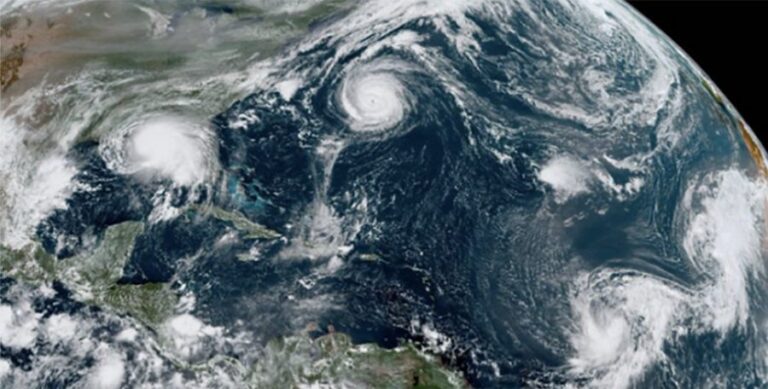
On 14 September, the US National Hurricane Center issued advisories on five tropical cyclones over the Atlantic basin (Paulette, Rene, Sally, Teddy and Vicky). This announcement tied with the record for the greatest number of tropical cyclones in that basin at one time, which had been set in September 1971.

The WMO maintains a rotating list of names in alphabetical order for tropical cyclones. Male and female names are alternated, and the lists are used every six years. If a hurricane is particularly devastating or deadly, its name will be retired and a new one selected.

As predicted by the US National Oceanic and Atmospheric Administration (NOAA), the 2020 season has seen an exceptionally high number of named storms, reaching the letter V (Vicky) as of Monday, September 14. Vicky is the earliest ‘20th Atlantic named storm’ on record.  The old record was set by Vince on October 9, 2005. The season lasts until 30 November.

The hurricane name lists include only 21 letters out of 26, because it is not easy to find six appropriate names (for the six rotating lists) starting with Q, U, X, Y and Z. In the interests of safety, names must be easily recognizable. In addition, they have to reflect a balance between French, Spanish and English names due to the geographical coverage of the storms throughout the Atlantic and Caribbean, and respect societal sensitivities. Only the name Wilfred remains for the 2020 season.

The use of the Greek alphabet (Alpha, Beta, Gamma, Delta, Epsilon, Zeta, Eta, Theta, etc) has only happened once before, in 2005, when six names from the Greek Alphabet were used. This was a record-breaking year with devastating hurricanes including Katrina, Rita and Wilma, whose names were all retired.

The name of a tropical cyclone may be retired or withdrawn from the active list at the request of any member state if that tropical cyclone acquires special notoriety because of the human casualties and damage incurred. The name would be withdrawn from the active list through consensus opinion of the members (or the majority, if required) during the session of the WMO Regional Association IV Hurricane Committee immediately following that season.

The Hurricane Committee annual session in 2006 discussed the use of the Greek alphabet for hurricane naming, and whether a Greek alphabet name should be retired as is done for a regular name when it meets the criteria for retirement.

The Committee felt that the use of the Greek alphabet was not expected to be frequent enough to warrant any change in the existing naming procedure for the foreseeable future and therefore decided that the naming system would remain unchanged and that the Greek alphabet would continue to be used.

In this connection, the committee also agreed that it was not practical to “retire into hurricane history” a letter in the Greek alphabet. It therefore decided that if a significant storm designated by a letter of the Greek alphabet, in either the Atlantic or eastern North Pacific Basin, was considered worthy of being “retired”, it would be included in the list of retired names with the year of occurrence and other details, but that the particular letter would continue to be available for use in the future”.

Previous ArticlePhased array radars provide new storm insights
Next Article US wildfires above average intensity

Read Similar Stories

Agriculture

Extreme heat posing significant risks to ecosystems and agriculture, FAO-WMO report warns

April 22, 20263 Mins Read
Extreme Weather

AI model improves real-time prediction of wildfire spread

April 16, 20263 Mins Read
Climate Measurement

Study identifies atmospheric trigger behind flash droughts in Puerto Rico

April 15, 20263 Mins Read
Latest News

Extreme heat posing significant risks to ecosystems and agriculture, FAO-WMO report warns

April 22, 2026

Atmospheric G2 secures Japan weather forecasting license

April 21, 2026

China completes Antarctic meteorological research mission with Xuelong icebreaker

April 21, 2026

Receive breaking stories and features in your inbox each week, for free


Enter your email address:


Supplier Spotlights
  • EWR Radar Systems
Getting in Touch
  • Contact Us / Advertise
  • Meet the Editors
  • Media Pack
  • Free Weekly E-Newsletter
Our Social Channels
  • Facebook
  • LinkedIn
© 2026 UKi Media & Events a division of UKIP Media & Events Ltd
  • Cookie Policy
  • Privacy Policy
  • Terms and Conditions
  • Notice and Takedown Policy

Type above and press Enter to search. Press Esc to cancel.