


Close Menu
Meteorological Technology International
  • News
    • A-E
      • Agriculture
      • Automated Weather Stations
      • Aviation
      • Climate Measurement
      • Data
      • Developing Countries
      • Digital Applications
      • Early Warning Systems
      • Extreme Weather
    • G-P
      • Hydrology
      • Lidar
      • Lightning Detection
      • New Appointments
      • Nowcasting
      • Numerical Weather Prediction
      • Polar Weather
    • R-S
      • Radar
      • Rainfall
      • Remote Sensing
      • Renewable Energy
      • Satellites
      • Solar
      • Space Weather
      • Supercomputers
    • T-Z
      • Training
      • Transport
      • Weather Instruments
      • Wind
      • World Meteorological Organization
      • Meteorological Technology World Expo
  • Features
  • Online Magazines
    • January 2026
    • April 2025
    • January 2025
    • September 2024
    • April 2024
    • Archive Issues
    • Subscribe Free!
  • Opinion
  • Videos
  • Supplier Spotlight
  • Expo
LinkedIn X (Twitter) Facebook
  • Sign-up for Free Weekly E-Newsletter
  • Meet the Editors
  • Contact Us
  • Media Pack
LinkedIn Facebook
Subscribe
Meteorological Technology International
  • News
      • Agriculture
      • Automated Weather Stations
      • Aviation
      • Climate Measurement
      • Data
      • Developing Countries
      • Digital Applications
      • Early Warning Systems
      • Extreme Weather
      • Hydrology
      • Lidar
      • Lightning Detection
      • New Appointments
      • Nowcasting
      • Numerical Weather Prediction
      • Polar Weather
      • Radar
      • Rainfall
      • Remote Sensing
      • Renewable Energy
      • Satellites
      • Solar
      • Space Weather
      • Supercomputers
      • Training
      • Transport
      • Weather Instruments
      • Wind
      • World Meteorological Organization
      • Meteorological Technology World Expo
  • Features
  • Online Magazines
    1. April 2026
    2. January 2026
    3. September 2025
    4. April 2025
    5. January 2025
    6. September 2024
    7. April 2024
    8. January 2024
    9. Archive Issues
    10. Subscribe Free!
    Featured
    May 5, 2026

    In this Issue – April 2026

    By Web TeamMay 5, 2026
    Recent

    In this Issue – April 2026

    May 5, 2026

    In this Issue – January 2026

    November 27, 2025

    In this Issue – September 2025

    August 11, 2025
  • Opinion
  • Videos
  • Supplier Spotlight
  • Expo
Facebook LinkedIn
Subscribe
Meteorological Technology International
Extreme Weather

Météo-France deploys second buoy near Corsica to support extreme weather forecasting

Elizabeth BakerBy Elizabeth BakerJune 25, 20243 Mins Read
Share LinkedIn Facebook Twitter Email
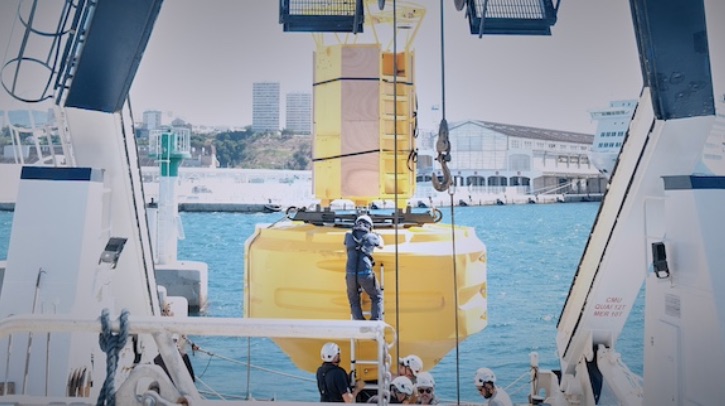
One year after launching its first meteorological buoy off the coast of Ajaccio, Météo-France is strengthening its observation system at sea by deploying a second buoy anchored off the coast of Porto-Vecchio in Corsica.
Credit: Météo-France
Share
LinkedIn Facebook Twitter Email

One year after launching its first meteorological buoy off the coast of Ajaccio, Météo-France is strengthening its observation system at sea by deploying a second buoy anchored off the coast of Porto-Vecchio in Corsica. In total, five buoys will be installed in Corsican waters by the end of 2024.

The launch of the meteorological buoys was entrusted to the Interregional Directorate of the Mediterranean Sea (DIRM MED), as well as to the Lighthouse and Beacon Armament. Météo-France will lead the design, assembly, operation and maintenance of the buoys.

Meteorological parameters
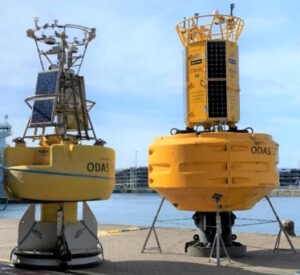
The old model on the left is to be replaced with the new model on the right. Credit: Météo-France

The anchored buoys will be equipped with two independent weather stations, powered by solar panels. Their framework is formed by a yellow float, a steel keel and a mast on which sensors are attached. Each buoy is up to 7m high (half of which is submerged), and their anchor lines can reach 6km deep in the sea.

The anchored buoys measure and transmit in real time wind speed, air temperature, atmospheric pressure and air humidity, as well as oceanographic parameters (such as wave height or frequency, temperature, and salinity of the sea). These measurements are recorded by sensors. The data is transmitted live and feeds the various digital models used by Météo-France forecasters.

These five buoys feature a closed cabin at the top of the buoy to protect the electronic heart of the station and facilitate its maintenance, either on a boat or directly at sea. The anchored buoy can also be transported inside a standard container, and eco-responsible materials, such as an empty float, food-grade plastic, ultra-resistant and recyclable elements, have been used in its design.

Mediterranean weather phenomena

The deployment of five buoys in the Mediterranean is intended to improve the ability to anticipate bad weather hitting the region by improving the coverage of sea surface observations. They also collect more information on dangerous phenomena, such as intense rain or storms before they threaten the coasts of Corsica and the Mediterranean arc.

During dangerous weather events, such as a storm or even a Mediterranean episode, the data transmitted by the buoys is expected to be particularly valuable. The data, which is transmitted in real time, will make it possible to confirm or rule out a scenario and to realign the monitoring of the episode on the basis of proven observations.

For example, the buoy deployed in June 2023 made it possible to provide important information during violent storms on August 27 and 28 last year in the Mediterranean. The scenario retained by forecasters had the storm passing south of Corsica with violent gusts expected on the island. The data transmitted by the buoy during the advance of the storm made it possible to confirm the trajectory and its intensity. An orange warning for thunderstorms had been issued for Corsica.

Météo-France’s deployment timeline
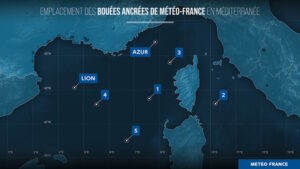
Credit: Météo-France

Five anchored Météo-France buoys will be deployed by the end of this year. The first buoy was launched in June 2023 off the coast of Ajaccio. The second, off the coast of Porto-Vecchio, was deployed on June 19, 2024. The third buoy will be installed in September 2024 off the coast of Calvi and the fourth and fifth buoys will be installed by the end of 2024, in the southwest of Corsica.

For more of the top insights into automated ocean monitoring, read Meteorological Technology International’s exclusive feature, “What do new international regulations mean for automated ocean monitoring?”, here.
Previous ArticleRwanda receives US$3.5m SOFF funding to enhance meteorological capabilities
Next Article Biden-Harris Administration invests US$4.9m in drought monitoring and prediction

Read Similar Stories

Climate Measurement

Cloud measurement campaign targets improved climate model accuracy

May 20, 20263 Mins Read
Extreme Weather

Impacts of extreme weather and rising temperatures intensify across Latin America and Caribbean

May 15, 20263 Mins Read
Automated Weather Stations

UNESCO hands over nine automated weather stations to the Ghana Meteorological Agency

May 12, 20262 Mins Read
Latest News

SMILE mission launches to study Earth’s magnetic shield and space weather

May 20, 2026

Cloud measurement campaign targets improved climate model accuracy

May 20, 2026

VIDEO: Meteosat-12 imagery over Europe and Africa made available via YouTube streams

May 19, 2026

Receive breaking stories and features in your inbox each week, for free


Enter your email address:


Supplier Spotlights
  • Meteomatics AG
Getting in Touch
  • Contact Us / Advertise
  • Meet the Editors
  • Media Pack
  • Free Weekly E-Newsletter
Our Social Channels
  • Facebook
  • LinkedIn
© 2026 UKi Media & Events a division of UKIP Media & Events Ltd
  • Cookie Policy
  • Privacy Policy
  • Terms and Conditions
  • Notice and Takedown Policy

Type above and press Enter to search. Press Esc to cancel.