


Close Menu
Meteorological Technology International
  • News
    • A-E
      • Agriculture
      • Automated Weather Stations
      • Aviation
      • Climate Measurement
      • Data
      • Developing Countries
      • Digital Applications
      • Early Warning Systems
      • Extreme Weather
    • G-P
      • Hydrology
      • Lidar
      • Lightning Detection
      • New Appointments
      • Nowcasting
      • Numerical Weather Prediction
      • Polar Weather
    • R-S
      • Radar
      • Rainfall
      • Remote Sensing
      • Renewable Energy
      • Satellites
      • Solar
      • Space Weather
      • Supercomputers
    • T-Z
      • Training
      • Transport
      • Weather Instruments
      • Wind
      • World Meteorological Organization
      • Meteorological Technology World Expo
  • Features
  • Online Magazines
    • January 2026
    • April 2025
    • January 2025
    • September 2024
    • April 2024
    • Archive Issues
    • Subscribe Free!
  • Opinion
  • Videos
  • Supplier Spotlight
  • Expo
LinkedIn X (Twitter) Facebook
  • Sign-up for Free Weekly E-Newsletter
  • Meet the Editors
  • Contact Us
  • Media Pack
LinkedIn Facebook
Subscribe
Meteorological Technology International
  • News
      • Agriculture
      • Automated Weather Stations
      • Aviation
      • Climate Measurement
      • Data
      • Developing Countries
      • Digital Applications
      • Early Warning Systems
      • Extreme Weather
      • Hydrology
      • Lidar
      • Lightning Detection
      • New Appointments
      • Nowcasting
      • Numerical Weather Prediction
      • Polar Weather
      • Radar
      • Rainfall
      • Remote Sensing
      • Renewable Energy
      • Satellites
      • Solar
      • Space Weather
      • Supercomputers
      • Training
      • Transport
      • Weather Instruments
      • Wind
      • World Meteorological Organization
      • Meteorological Technology World Expo
  • Features
  • Online Magazines
    1. January 2026
    2. September 2025
    3. April 2025
    4. January 2025
    5. September 2024
    6. April 2024
    7. January 2024
    8. September 2023
    9. April 2023
    10. Archive Issues
    11. Subscribe Free!
    Featured
    November 27, 2025

    In this Issue – January 2026

    By Hazel KingNovember 27, 2025
    Recent

    In this Issue – January 2026

    November 27, 2025

    In this Issue – September 2025

    August 11, 2025

    In this Issue – April 2025

    April 15, 2025
  • Opinion
  • Videos
  • Supplier Spotlight
  • Expo
Facebook LinkedIn
Subscribe
Meteorological Technology International
Automated Weather Stations

NOAA’s Okeanos Explorer sets sail for technology demonstration

Helen NormanBy Helen NormanMay 18, 20213 Mins Read
Share LinkedIn Facebook Twitter Email
Okeanos Explorer
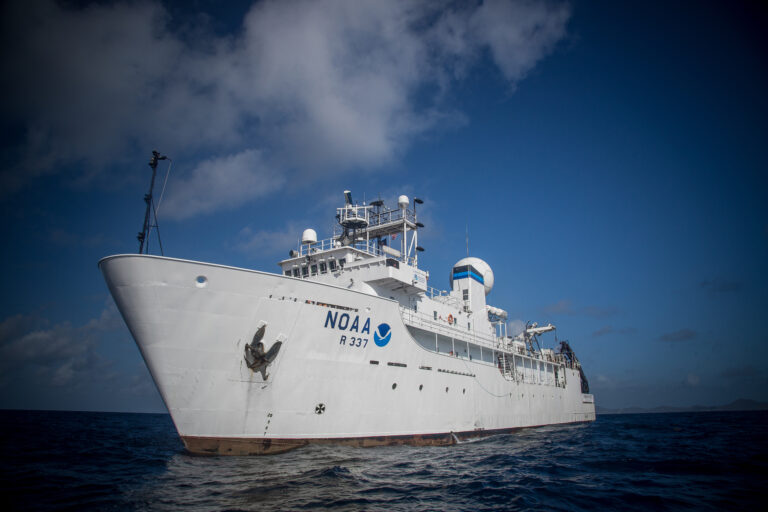
NOAA's Okeanos Explorer. Image: Art Howard/NOAA Ocean Exploration
Share
LinkedIn Facebook Twitter Email

NOAA’s Okeanos Explorer ship set sail from Florida on May 14 to embark on a NOAA Ocean Exploration-led demonstration to test technologies that will allow the ocean exploration community to explore deeper, farther and more comprehensively than previously possible.

The two-week expedition includes the technology demonstration of an autonomous underwater vehicle called Orpheus. Orpheus is a new class of submersible robot and will showcase a system that will help it find its way and identify interesting scientific features on the seafloor.
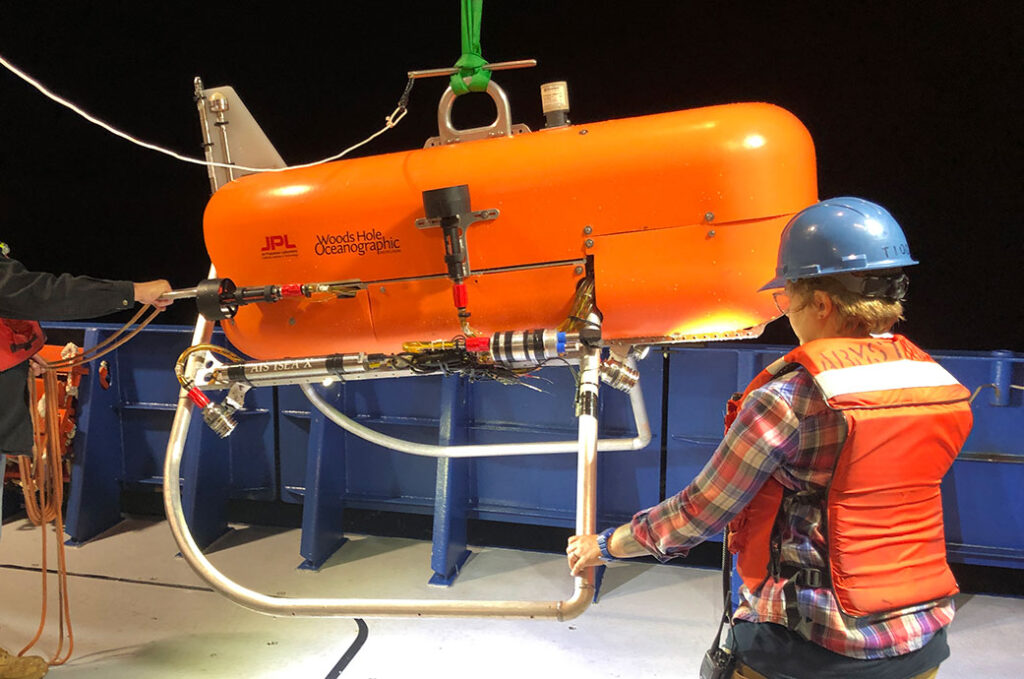
Shown in this photo during a previous expedition, Orpheus is much smaller than other submersibles, making it easier to transport and operate.
Image: NASA/JPL-Caltech

Designed by the Woods Hole Oceanographic Institution and developed by engineers at NASA’s Jet Propulsion Laboratory (JPL) in Southern California, Orpheus is an evolution of the vision-based navigation that has been used on Mars.

It utilizes a low-power system of cameras and lights, along with advanced software, and can work untethered almost anywhere in the ocean, including the most extreme depths. Smaller than a quad bike and weighing about 550 lb (250kg), Orpheus is designed to be nimble, easy to operate and rugged while exploring depths inaccessible to most vehicles.

Ultimately, the project team hopes to see a swarm of these underwater robots work as a team to build 3D maps of the vast regions of unexplored ocean floor in the hadal zone – regions deeper than 20,000ft (6,000m).

“This tech demo will be used to gather data to demonstrate the viability of terrain-relative navigation in the ocean while showing how multiple robots will operate together in extreme environments,” said Russell Smith, robotics mechanical engineer at JPL. “These tests will put us on track to start future dives into the hadal zone and intelligently seek out exciting regions of high biological activity.”

Orpheus’s version of vision-based navigation is called visual-inertial odometry, or xVIO, and it works by using a system of advanced cameras and pattern-matching software along with instruments that can precisely measure its orientation and motion. As Orpheus travels over the seafloor, xVIO identifies features, such as rocks, shells and coral, below the vehicle. xVIO will construct 3D maps using these features as waypoints to help it navigate.

The high-resolution maps xVIO creates are stored to memory so that when Orpheus returns to the area, it will recognize the unique distribution of the features and use them as a starting point to expand its exploration. And when working with robot buddies, maps can be shared, cross-referenced and developed to quickly identify areas of scientific interest.

Previous ArticleAfrican rainforests still slowed climate change despite record heat and drought
Next Article EUMETSAT releases A Year of Weather 2020 video

Read Similar Stories

Climate Measurement

Windracers ULTRA drones to be deployed in Greenland on glacier surveying mission

March 12, 20263 Mins Read
Automated Weather Stations

Study finds temperature differences between Reno airport weather station and nearby reference site

March 11, 20263 Mins Read
Automated Weather Stations

Chongqing expands AI-powered weather services to improve warning times

March 5, 20263 Mins Read
Latest News

Extreme heat posing significant risks to ecosystems and agriculture, FAO-WMO report warns

April 22, 2026

Atmospheric G2 secures Japan weather forecasting license

April 21, 2026

China completes Antarctic meteorological research mission with Xuelong icebreaker

April 21, 2026

Receive breaking stories and features in your inbox each week, for free


Enter your email address:


Supplier Spotlights
  • Nel Hydrogen
Getting in Touch
  • Contact Us / Advertise
  • Meet the Editors
  • Media Pack
  • Free Weekly E-Newsletter
Our Social Channels
  • Facebook
  • LinkedIn
© 2026 UKi Media & Events a division of UKIP Media & Events Ltd
  • Cookie Policy
  • Privacy Policy
  • Terms and Conditions
  • Notice and Takedown Policy

Type above and press Enter to search. Press Esc to cancel.