


Close Menu
Meteorological Technology International
  • News
    • A-E
      • Agriculture
      • Automated Weather Stations
      • Aviation
      • Climate Measurement
      • Data
      • Developing Countries
      • Digital Applications
      • Early Warning Systems
      • Extreme Weather
    • G-P
      • Hydrology
      • Lidar
      • Lightning Detection
      • New Appointments
      • Nowcasting
      • Numerical Weather Prediction
      • Polar Weather
    • R-S
      • Radar
      • Rainfall
      • Remote Sensing
      • Renewable Energy
      • Satellites
      • Solar
      • Space Weather
      • Supercomputers
    • T-Z
      • Training
      • Transport
      • Weather Instruments
      • Wind
      • World Meteorological Organization
      • Meteorological Technology World Expo
  • Features
  • Online Magazines
    • January 2026
    • April 2025
    • January 2025
    • September 2024
    • April 2024
    • Archive Issues
    • Subscribe Free!
  • Opinion
  • Videos
  • Supplier Spotlight
  • Expo
LinkedIn X (Twitter) Facebook
  • Sign-up for Free Weekly E-Newsletter
  • Meet the Editors
  • Contact Us
  • Media Pack
LinkedIn Facebook
Subscribe
Meteorological Technology International
  • News
      • Agriculture
      • Automated Weather Stations
      • Aviation
      • Climate Measurement
      • Data
      • Developing Countries
      • Digital Applications
      • Early Warning Systems
      • Extreme Weather
      • Hydrology
      • Lidar
      • Lightning Detection
      • New Appointments
      • Nowcasting
      • Numerical Weather Prediction
      • Polar Weather
      • Radar
      • Rainfall
      • Remote Sensing
      • Renewable Energy
      • Satellites
      • Solar
      • Space Weather
      • Supercomputers
      • Training
      • Transport
      • Weather Instruments
      • Wind
      • World Meteorological Organization
      • Meteorological Technology World Expo
  • Features
  • Online Magazines
    1. April 2026
    2. January 2026
    3. September 2025
    4. April 2025
    5. January 2025
    6. September 2024
    7. April 2024
    8. January 2024
    9. Archive Issues
    10. Subscribe Free!
    Featured
    May 5, 2026

    In this Issue – April 2026

    By Web TeamMay 5, 2026
    Recent

    In this Issue – April 2026

    May 5, 2026

    In this Issue – January 2026

    November 27, 2025

    In this Issue – September 2025

    August 11, 2025
  • Opinion
  • Videos
  • Supplier Spotlight
  • Expo
Facebook LinkedIn
Subscribe
Meteorological Technology International
Climate Measurement

Polarstern returns after groundbreaking Arctic expedition

Lawrence ButcherBy Lawrence ButcherOctober 16, 20203 Mins Read
Share LinkedIn Facebook Twitter Email
Share
LinkedIn Facebook Twitter Email

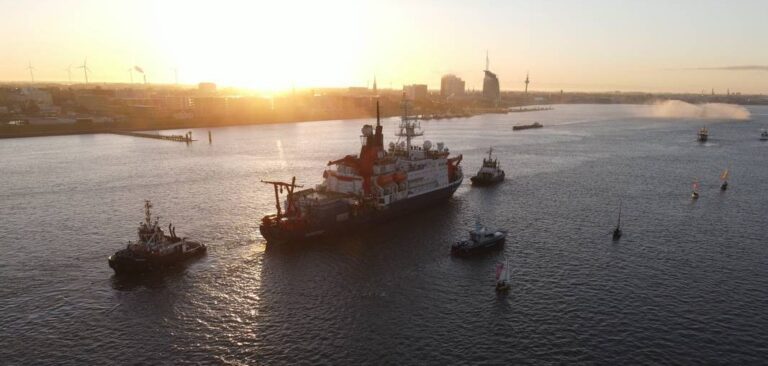
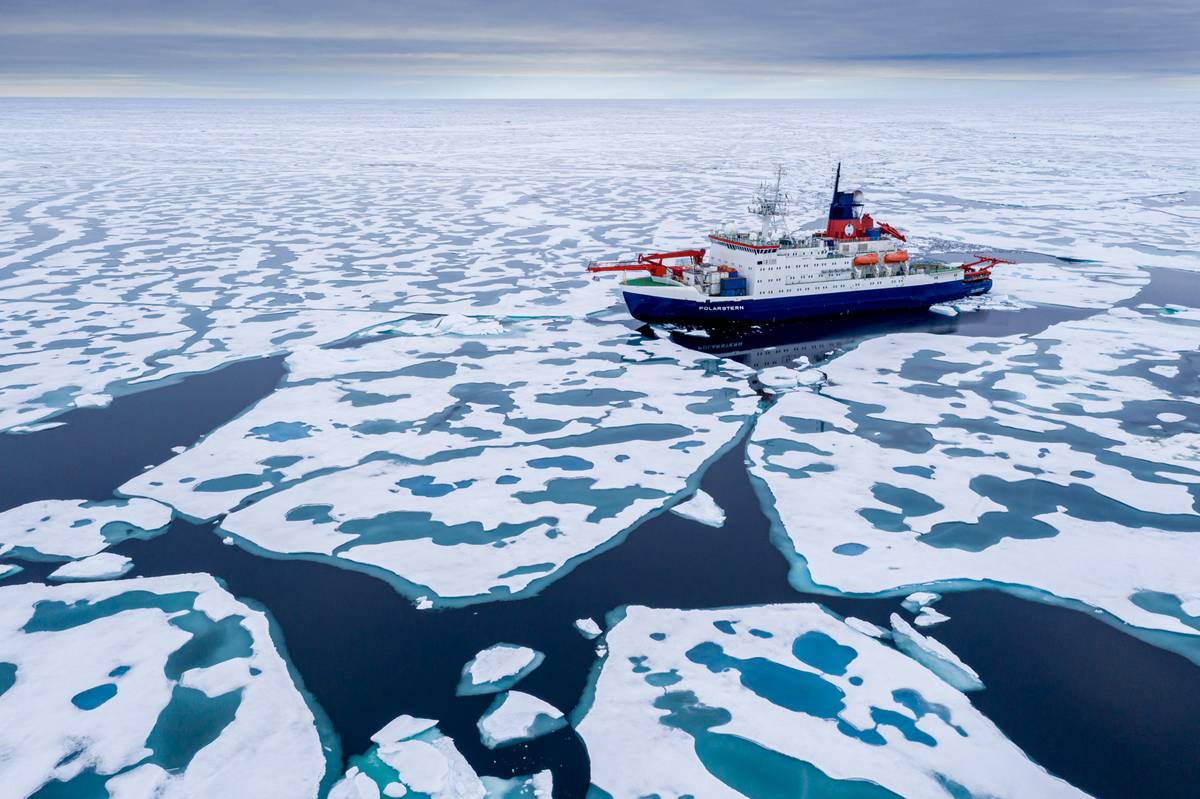
After more than a year in the Central Arctic, the research icebreaker Polarstern has returned to her home port in Bremerhaven, Germany. The ship’s return marked the end of a record-breaking expedition; never before had an icebreaker been near the North Pole in winter, and never before could international researchers comprehensively gather climate data in the region of the world hardest hit by climate change.

On September 20, 2019, Polarstern departed from the Norwegian port of Tromsø, bound for the Central Arctic. Once there, the ship was allowed to become trapped in the ice, and began a one-year-long drift across the North Pole – the route and speed were solely determined by the ice drift, powered by wind and currents.

Over the five legs of the expedition, a total of 442 researchers, Polarstern crew members, young investigators, teachers and members of the press took part, hailing from 37 countries. Seven ships, several aircraft and more than 80 institutions from 20 countries were involved.

The researchers had a common goal to investigate complex interactions in the climate system between the atmosphere, ice and ocean, as well as life in the Central Arctic, so as to better represent them in climate models.

In the early summer, the ship had to briefly leave her floe for a personnel transfer. Four weeks later, a new team commenced fieldwork on the ice, continuing their efforts right up to the last day, when the floe (as predicted) reached the ice edge to the east of Greenland, began breaking up under the influence of the waves, and completed its typical lifecycle. To explore the last piece of the puzzle in the sea ice’s annual cycle – the formation of new ice at summer’s end – the expedition then headed farther north, crossed the North Pole, and moored to a second floe in its vicinity.

Prof. Antje Boetius, director of the Alfred Wegener Institute, Helmholtz Centre for Polar and Marine Research (AWI), commented, “With the MOSAiC expedition, we have followed in the footsteps of the Norwegian polar researcher Fridtjof Nansen, who ventured the first ice drift through the Arctic Ocean more than 125 years ago. Could he have ever imagined how different the Arctic is today?

“And even with the possibilities of modern polar research, the expedition was no less exciting, taking us far beyond the limits of our previous understanding, and demanding a great deal from the participants, especially due to the pandemic. Today the expedition comes to a successful end, and we have a much clearer grasp of the interplay between the ice, ocean and atmosphere than ever before.”

Prof. Markus Rex, expedition leader and head of the MOSAiC project, Alfred Wegener Institute, Helmholtz Centre for Polar and Marine Research (AWI), added, “Through the expedition, we can provide the climate data and observations that humanity so urgently needs in order to make fundamental and pressing political decisions on climate protection.

“Arctic sea ice is not only an important part of the global climate system; it is also a unique ecosystem and the basis of life for many indigenous societies. And it is a realm of fascinating and unmatched beauty. We should do everything within our power to preserve it for future generations.”
Previous ArticleStudy examines impact of prior weather on hurricane intensity
Next Article New head for US Mesoscale & Microscale Meteorology Laboratory

Read Similar Stories

Extreme Weather

Researchers investigate links between air pollution, extreme weather and climate

May 1, 20262 Mins Read
Radar

Météo-France begins construction of France’s tallest weather radar tower in Sembadel

April 29, 20262 Mins Read
Climate Measurement

European climate report highlights record heat, glacier loss and rising extremes

April 27, 20263 Mins Read
Latest News

In this Issue – April 2026

May 5, 2026

AI models lag behind traditional systems in predicting extreme weather

May 5, 2026

Researchers investigate links between air pollution, extreme weather and climate

May 1, 2026

Receive breaking stories and features in your inbox each week, for free


Enter your email address:


Supplier Spotlights
  • REMTECH
Getting in Touch
  • Contact Us / Advertise
  • Meet the Editors
  • Media Pack
  • Free Weekly E-Newsletter
Our Social Channels
  • Facebook
  • LinkedIn
© 2026 UKi Media & Events a division of UKIP Media & Events Ltd
  • Cookie Policy
  • Privacy Policy
  • Terms and Conditions
  • Notice and Takedown Policy

Type above and press Enter to search. Press Esc to cancel.