


Close Menu
Meteorological Technology International
  • News
    • A-E
      • Agriculture
      • Artificial Intelligence
      • Automated Weather Stations
      • Aviation
      • Climate Measurement
      • Data
      • Developing Countries
      • Digital Applications
      • Early Warning Systems
      • Extreme Weather
    • G-P
      • Hydrology
      • Lidar
      • Lightning Detection
      • New Appointments
      • Nowcasting
      • Numerical Weather Prediction
      • Polar Weather
    • R-S
      • Radar
      • Rainfall
      • Remote Sensing
      • Renewable Energy
      • Satellites
      • Solar
      • Space Weather
      • Supercomputers
    • T-Z
      • Training
      • Transport
      • Weather Instruments
      • Wind
      • World Meteorological Organization
      • Meteorological Technology World Expo
  • Features
  • Online Magazines
    • September 2026
    • January 2026
    • April 2025
    • January 2025
    • September 2024
    • April 2024
    • Archive Issues
    • Subscribe Free!
  • Opinion
  • Videos
  • Supplier Spotlight
  • Expo
LinkedIn X (Twitter) Facebook
  • Sign-up for Free Weekly E-Newsletter
  • Meet the Editors
  • Contact Us
  • Media Pack
LinkedIn Facebook
Subscribe
Meteorological Technology International
  • News
      • Agriculture
      • Artificial Intelligence
      • Automated Weather Stations
      • Aviation
      • Climate Measurement
      • Data
      • Developing Countries
      • Digital Applications
      • Early Warning Systems
      • Extreme Weather
      • Hydrology
      • Lidar
      • Lightning Detection
      • New Appointments
      • Nowcasting
      • Numerical Weather Prediction
      • Polar Weather
      • Radar
      • Rainfall
      • Remote Sensing
      • Renewable Energy
      • Satellites
      • Solar
      • Space Weather
      • Supercomputers
      • Training
      • Transport
      • Weather Instruments
      • Wind
      • World Meteorological Organization
      • Meteorological Technology World Expo
  • Features
  • Online Magazines
    1. September 2026
    2. April 2026
    3. January 2026
    4. September 2025
    5. April 2025
    6. January 2025
    7. September 2024
    8. April 2024
    9. January 2024
    10. Archive Issues
    11. Subscribe Free!
    Featured
    August 4, 2026

    In this Issue – September 2026

    By Web TeamAugust 4, 2026
    Recent

    In this Issue – September 2026

    August 4, 2026

    In this Issue – April 2026

    May 5, 2026

    In this Issue – January 2026

    November 27, 2025
  • Opinion
  • Videos
  • Supplier Spotlight
  • Expo
Facebook LinkedIn
Subscribe
Meteorological Technology International
Data

Bureau of Meteorology to install temporary weather radar to restore network coverage in Wyndham, Western Australia

Hazel KingBy Hazel KingMarch 20, 20262 Mins Read
Share LinkedIn Facebook Twitter Email
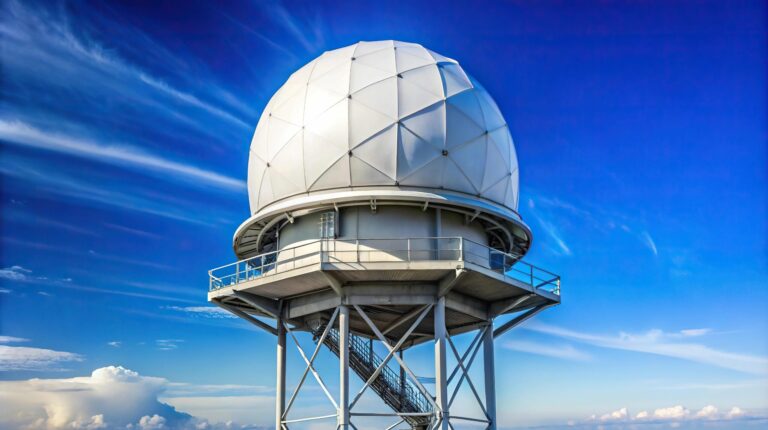
Bureau of Meteorology to install temporary weather radar to restore network coverage in Wyndham, Western Australia.
Share
LinkedIn Facebook Twitter Email

The Australian Bureau of Meteorology is installing a temporary weather radar in Wyndham, Western Australia, that will provide access to radar imagery from October 2026 after the old radar was destroyed by a fire late last year. The self-contained temporary radar will be in place for up to three years until a new radar is procured and installed.

The radar will provide the same weather information as before, plus Doppler and dual‑polarization capability, which were not available on the old radar. Doppler enables it to measure wind speed and dual-polarization gives extra information which helps with image correction.

However, due to the temporary radar’s lower power output, the radar coverage area may be smaller than the permanent radar’s coverage area.  There will be no radar coverage in the northeast Kimberley and northwest Gregory districts until the temporary Wyndham radar is installed. Halls Creek weather radar provides some coverage south of Wyndham.

The Bureau of Meteorology’s Western Australia manager James Ashley said forecasters draw on many different information sources to monitor and predict weather: “While radars are an important part of the Bureau’s observations network, and we understand the value the community places on them, they are one part of a composite observing network that we draw data from for forecasting.

“While the temporary radar is being installed, it will be business-as-usual for the Bureau’s warning services and forecasts for the northeast Kimberley and northwest Gregory districts.

“We work very closely with emergency services and keep them informed of changes to all information sources.”

Related news, EWR delivers mobile weather radar systems to NOAA.

Previous ArticleEXCLUSIVE INTERVIEW: Chris Hyde, energy lead at Meteomatics
Next Article Global climate indicators reach record imbalance, WMO warns

Read Similar Stories

Data

New Atlanta dataset links urban heat to human health impacts

September 17, 20263 Mins Read
Extreme Weather

Cardiff University to use drone technology to strengthen wildfire monitoring and response

September 15, 20263 Mins Read
Satellites

Tomorrow.io reveals five-instrument design for DeepSky weather satellites

September 11, 20263 Mins Read
Latest News

New Atlanta dataset links urban heat to human health impacts

September 17, 2026

Two weeks to go until Meteorological Technology World Expo opens in Amsterdam

September 17, 2026

September’s Antarctic ozone hole grows to larger than average size

September 16, 2026

Receive breaking stories and features in your inbox each week, for free


Enter your email address:


Supplier Spotlights
  • EWR Radar Systems
Getting in Touch
  • Contact Us / Advertise
  • Meet the Editors
  • Media Pack
  • Free Weekly E-Newsletter
Our Social Channels
  • Facebook
  • LinkedIn
© 2026 UKi Media & Events a division of UKIP Media & Events Ltd
  • Cookie Policy
  • Privacy Policy
  • Terms and Conditions
  • Notice and Takedown Policy

Type above and press Enter to search. Press Esc to cancel.