


A new report from the WMO indicates that the water cycle is becoming increasingly erratic and extreme, dramatically swinging between deluge and drought, and highlights the impact on economies and society.
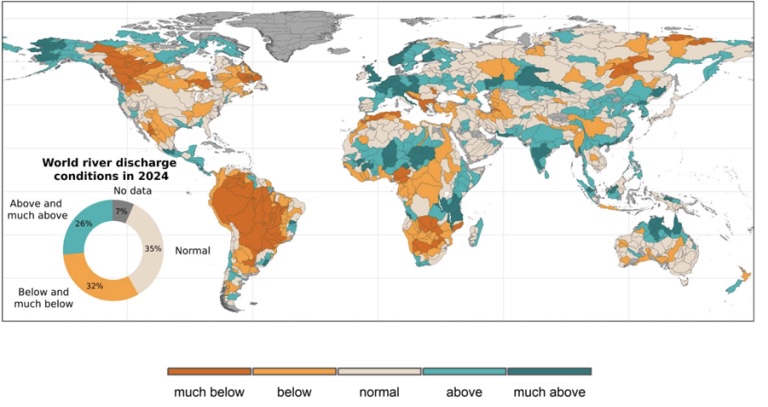
The State of Global Water Resources report shows that only about one-third of the global river basins had ‘normal’ conditions in 2024. The rest were either above or below normal – the sixth consecutive year of clear imbalance.
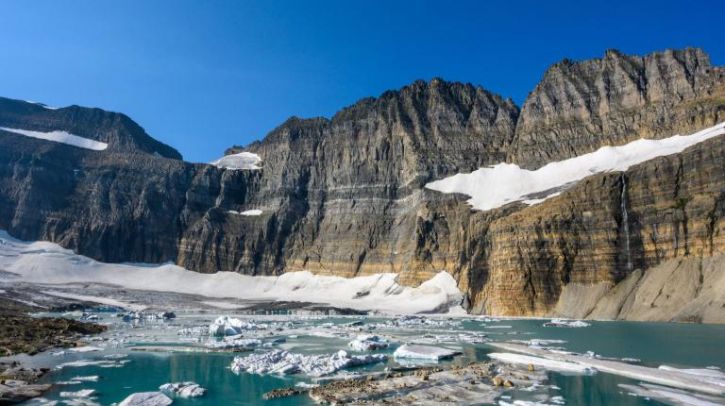
2024 was the third straight year with widespread glacier loss across all regions. Many small-glacier regions have already reached or are about to pass the so-called peak water point, when a glacier’s melting reaches its maximum annual runoff, after which it decreases due to glacier shrinkage.
The Amazon Basin and other parts of South America, as well as southern Africa, were gripped by severe drought in 2024, and there were wetter-than-normal conditions in central, western and eastern Africa, parts of Asia and Central Europe.
WMO secretary-general Celeste Saulo said, “Water sustains our societies, powers our economies and anchors our ecosystems. And yet the world’s water resources are under growing pressure and – at the same time – more extreme water-related hazards are having an increasing impact on lives and livelihoods.
“Reliable, science-based information is more important than ever before because we cannot manage what we do not measure. The WMO’s State of Global Water Resources report 2024 is part of WMO’s commitment to provide that knowledge.”
The annual State of Global Water Resources report is one of a suite of WMO reports that provide intelligence and insights to decision-makers. It is an authoritative assessment of global freshwater availability, including streamflow, reservoirs, lakes, groundwater, soil moisture, snow and ice.
It is based on data contributed by WMO members, as well as information from global hydrological modeling systems and satellite observations from a wide range of partners.
The report highlights the need for improved monitoring and data sharing.
“Continued investment and enhanced collaboration in data sharing are vital to close monitoring gaps. Without data, we risk flying blind,” added Saulo.
An estimated 3.6 billion people face inadequate access to water at least one month per year. This is expected to increase to more than five billion by 2050, according to UN Water, which also reports that the world is falling far short of Sustainable Development Goal 6 on water and sanitation.
In related news, another WMO report highlights the link between air pollution and climate change