


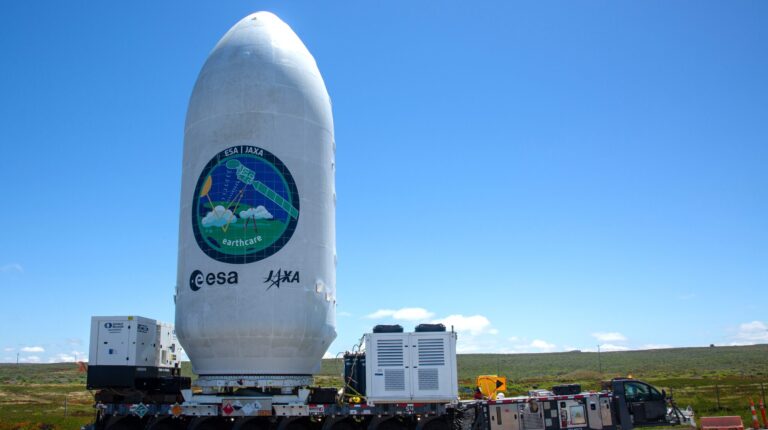
A satellite conceived by a University of Reading professor could remain active for another 10 years after a successful first 16 months in orbit.
EarthCARE (Earth Cloud Aerosol and Radiation Explorer), conceived by Professor Anthony Illingworth more than 30 years ago and the first satellite proposed by Illingworth to have been adopted by the European Space Agency (ESA), was due to complete operations in 2028 – but analysis of the fuel reserves on board predict that it should keep collecting data until at least 2034.
Last month, ESA announced it would launch the WIVERN satellite – another satellite project conceived by Professor Illingworth. He is the only scientist to have two Earth Explorer satellites in space, according to the the university.
Professor Illingworth said, “It’s been deeply rewarding to see EarthCARE exceed our expectations after so many years of working on it. Ten years in orbit would give us the extra long-term data we need to understand unprecedented insights into the complex interactions between clouds, aerosols and Earth’s climate.”
Professor Illingworth began working on EarthCare in 1993. The Earth Cloud Aerosol and Radiation Explorer features a 2.5m-wide antenna and a sophisticated lidar and radar never flown in space before, the university said. A radiometer and a multi-spectral imager are also attached to the satellite, which is powered by an 11m-long solar panel. These four instruments will return data on cloud structure and aerosols in advanced detail.
Achievements to date
Since launching from Vandenberg, California, in May 2024, EarthCARE has achieved the following:
- Improved weather forecasts: meteorologists are using its data to improve forecasts of severe weather by better understanding how clouds form and move.
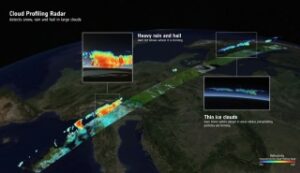
- Seeing inside clouds in sharp detail: The satellite reveals what’s happening inside clouds – measuring how fast snow and rain are falling, and tracking everything from rainbow-colored polar clouds to major thunderstorms.
- Tracking wildfire smoke and measuring ocean life: Beyond its main job of studying clouds, the satellite can follow smoke plumes from forest fires and even detect microscopic sea creatures that form the basis of the ocean food chain.
- Spotting a 500km cloud of insects: EarthCARE is said to have detected a massive swarm of flying insects stretching across northern India, initially mistaken for rain clouds until scientists realised the satellite was picking up millions of tiny creatures riding warm air currents.
- Revealing the hidden life of massive damaging winter storms: EarthCARE captured never-before-seen details inside a winter Atlantic storm system, measuring how fast raindrops and snowflakes fall.