


Close Menu
Meteorological Technology International
  • News
    • A-E
      • Agriculture
      • Automated Weather Stations
      • Aviation
      • Climate Measurement
      • Data
      • Developing Countries
      • Digital Applications
      • Early Warning Systems
      • Extreme Weather
    • G-P
      • Hydrology
      • Lidar
      • Lightning Detection
      • New Appointments
      • Nowcasting
      • Numerical Weather Prediction
      • Polar Weather
    • R-S
      • Radar
      • Rainfall
      • Remote Sensing
      • Renewable Energy
      • Satellites
      • Solar
      • Space Weather
      • Supercomputers
    • T-Z
      • Training
      • Transport
      • Weather Instruments
      • Wind
      • World Meteorological Organization
      • Meteorological Technology World Expo
  • Features
  • Online Magazines
    • January 2026
    • April 2025
    • January 2025
    • September 2024
    • April 2024
    • Archive Issues
    • Subscribe Free!
  • Opinion
  • Videos
  • Supplier Spotlight
  • Expo
LinkedIn X (Twitter) Facebook
  • Sign-up for Free Weekly E-Newsletter
  • Meet the Editors
  • Contact Us
  • Media Pack
LinkedIn Facebook
Subscribe
Meteorological Technology International
  • News
      • Agriculture
      • Automated Weather Stations
      • Aviation
      • Climate Measurement
      • Data
      • Developing Countries
      • Digital Applications
      • Early Warning Systems
      • Extreme Weather
      • Hydrology
      • Lidar
      • Lightning Detection
      • New Appointments
      • Nowcasting
      • Numerical Weather Prediction
      • Polar Weather
      • Radar
      • Rainfall
      • Remote Sensing
      • Renewable Energy
      • Satellites
      • Solar
      • Space Weather
      • Supercomputers
      • Training
      • Transport
      • Weather Instruments
      • Wind
      • World Meteorological Organization
      • Meteorological Technology World Expo
  • Features
  • Online Magazines
    1. January 2026
    2. September 2025
    3. April 2025
    4. January 2025
    5. September 2024
    6. April 2024
    7. January 2024
    8. September 2023
    9. April 2023
    10. Archive Issues
    11. Subscribe Free!
    Featured
    November 27, 2025

    In this Issue – January 2026

    By Hazel KingNovember 27, 2025
    Recent

    In this Issue – January 2026

    November 27, 2025

    In this Issue – September 2025

    August 11, 2025

    In this Issue – April 2025

    April 15, 2025
  • Opinion
  • Videos
  • Supplier Spotlight
  • Expo
Facebook LinkedIn
Subscribe
Meteorological Technology International
Extreme Weather

NASA extends Cyclone Global Navigation Satellite System mission

Helen NormanBy Helen NormanJune 28, 20212 Mins Read
Share LinkedIn Facebook Twitter Email
Share
LinkedIn Facebook Twitter Email

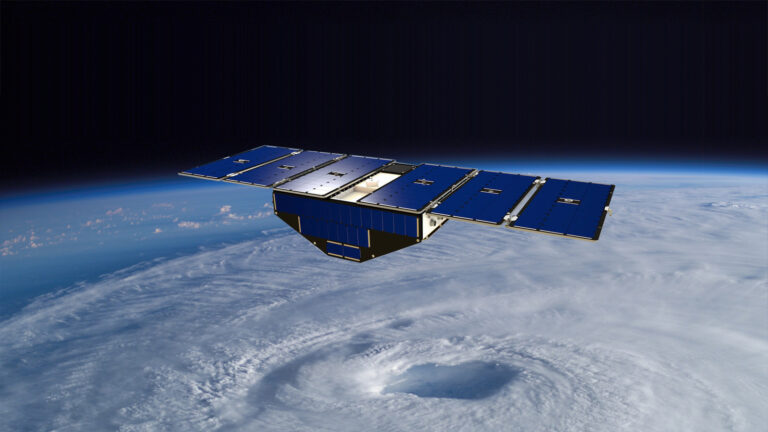
NASA has awarded a US$39m contract to the University of Michigan for the Cyclone Global Navigation Satellite System (CYGNSS) for mission operations and closeout.

CYGNSS is a constellation of eight microsatellites, which can view storms more frequently and in a way that traditional satellites are unable to, increasing scientists’ ability to understand and predict hurricanes.

The CYGNSS Science Operations Center is located at the University of Michigan. CYGNSS uses a remote sensing technique called GPS signal scattering to see through heavy rain to estimate the strength of surface winds in the inner cores of hurricanes.

“CYGNSS has been a pioneering mission that has given us new insight into the dynamics of rapidly intensifying tropical cyclones,” said Karen St Germain, director of NASA’s Earth Science Division. “CYGNSS is also a powerful tool for flood detection on land and ocean microplastic debris detection – that’s the kind of added value we love to see, and it’s paving the way for more science that will have significant societal benefits.”

The measurements from CYGNSS are useful for research in algorithm development, analysis to assist with future modeling efforts, and Earth system process studies. 

Further operations will enable new research looking at long-term climate variability and increase the sample size of extreme events that can assist with modeling and forecasting. CYGNSS satellites continue to take 24/7 measurements of ocean surface winds, both globally and in tropical cyclones, which can be used to study meteorological processes and improve numerical weather forecasts.

On land, the satellites take continuous measurements of flood inundation and soil moisture that are used in hydrological process studies and for disaster monitoring.

Previous ArticleNew study finds climate change is driving plant die-offs in Southern California
Next Article WMO awards IMO prize to In-Sik Kang, professor emeritus at Seoul National University

Read Similar Stories

Extreme Weather

Researchers investigate links between air pollution, extreme weather and climate

May 1, 20262 Mins Read
Early Warning Systems

China expands MAZU early warning system for developing countries

April 30, 20262 Mins Read
Climate Measurement

European climate report highlights record heat, glacier loss and rising extremes

April 27, 20263 Mins Read
Latest News

Researchers investigate links between air pollution, extreme weather and climate

May 1, 2026

China expands MAZU early warning system for developing countries

April 30, 2026

Météo-France begins construction of France’s tallest weather radar tower in Sembadel

April 29, 2026

Receive breaking stories and features in your inbox each week, for free


Enter your email address:


Supplier Spotlights
  • Nel Hydrogen
Getting in Touch
  • Contact Us / Advertise
  • Meet the Editors
  • Media Pack
  • Free Weekly E-Newsletter
Our Social Channels
  • Facebook
  • LinkedIn
© 2026 UKi Media & Events a division of UKIP Media & Events Ltd
  • Cookie Policy
  • Privacy Policy
  • Terms and Conditions
  • Notice and Takedown Policy

Type above and press Enter to search. Press Esc to cancel.