


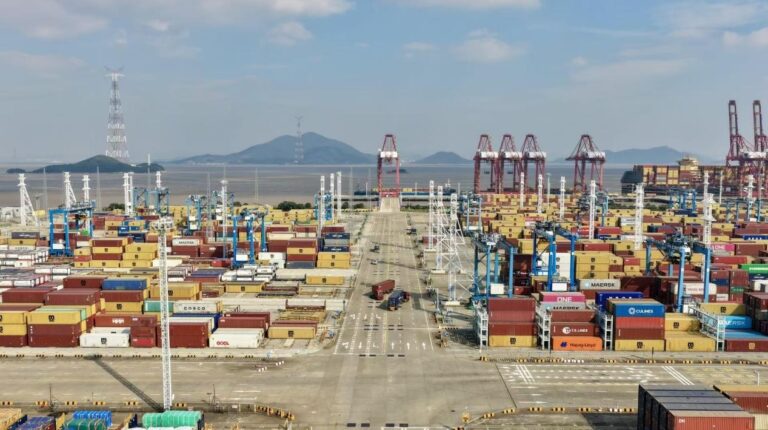
China’s Zhejiang Province is setting a benchmark in climate risk management with its advanced meteorological early warning practices, designed to protect critical infrastructure and vulnerable communities.
As part of the China Meteorological Administration’s (CMA) MAZU initiative for Early Warnings for All, the Zhejiang Provincial Meteorological Service has developed a comprehensive system that integrates monitoring, forecasting and warning across sectors.
The system delivers a full suite of early warning products, covering four severe weather categories and 13 disaster signals, ensuring precise alerts for hazards such as typhoons and flash floods. It also supports an intelligent service platform for the entire lifecycle of typhoons, leveraging experience in marine meteorology and disaster prevention.
Ningbo-Zhoushan Port, a global shipping hub, has seen tangible benefits. During Typhoon Co-May in 2025, tailored forecasts and adjusted wind force predictions enabled the port to regain 10 critical hours of operation. The proactive approach was reported to have “reduced disruptions and maintained operational efficiency”. The port’s resilience is further enhanced by the Early Warning and Pre-control System and its mobile app, Maritime Meteorological Report, which provide real-time, minute-scale alerts and multi-departmental data for decision-making and operational planning.
Beyond ports, Zhejiang’s efforts also extend to safety of people of rural areas. Yuyao, a flood-prone area on the eastern coast, has implemented the One Gully, One Policy platform in partnership with the Water Resources Bureau. This system uses real-time monitoring of water levels and precipitation in small watersheds, alongside machine learning, to predict flash flood risks. During Typhoon Kong-Rey in 2024, it reportedly enabled timely warnings and the evacuation of 1,238 residents and preventing significant economic losses.
In related news, Shanghai’s MAZU-Urban early warning system rolls out globally