


Close Menu
Meteorological Technology International
  • News
    • A-E
      • Agriculture
      • Automated Weather Stations
      • Aviation
      • Climate Measurement
      • Data
      • Developing Countries
      • Digital Applications
      • Early Warning Systems
      • Extreme Weather
    • G-P
      • Hydrology
      • Lidar
      • Lightning Detection
      • New Appointments
      • Nowcasting
      • Numerical Weather Prediction
      • Polar Weather
    • R-S
      • Radar
      • Rainfall
      • Remote Sensing
      • Renewable Energy
      • Satellites
      • Solar
      • Space Weather
      • Supercomputers
    • T-Z
      • Training
      • Transport
      • Weather Instruments
      • Wind
      • World Meteorological Organization
      • Meteorological Technology World Expo
  • Features
  • Online Magazines
    • January 2026
    • April 2025
    • January 2025
    • September 2024
    • April 2024
    • Archive Issues
    • Subscribe Free!
  • Opinion
  • Videos
  • Supplier Spotlight
  • Expo
LinkedIn X (Twitter) Facebook
  • Sign-up for Free Weekly E-Newsletter
  • Meet the Editors
  • Contact Us
  • Media Pack
LinkedIn Facebook
Subscribe
Meteorological Technology International
  • News
      • Agriculture
      • Automated Weather Stations
      • Aviation
      • Climate Measurement
      • Data
      • Developing Countries
      • Digital Applications
      • Early Warning Systems
      • Extreme Weather
      • Hydrology
      • Lidar
      • Lightning Detection
      • New Appointments
      • Nowcasting
      • Numerical Weather Prediction
      • Polar Weather
      • Radar
      • Rainfall
      • Remote Sensing
      • Renewable Energy
      • Satellites
      • Solar
      • Space Weather
      • Supercomputers
      • Training
      • Transport
      • Weather Instruments
      • Wind
      • World Meteorological Organization
      • Meteorological Technology World Expo
  • Features
  • Online Magazines
    1. January 2026
    2. September 2025
    3. April 2025
    4. January 2025
    5. September 2024
    6. April 2024
    7. January 2024
    8. September 2023
    9. April 2023
    10. Archive Issues
    11. Subscribe Free!
    Featured
    November 27, 2025

    In this Issue – January 2026

    By Hazel KingNovember 27, 2025
    Recent

    In this Issue – January 2026

    November 27, 2025

    In this Issue – September 2025

    August 11, 2025

    In this Issue – April 2025

    April 15, 2025
  • Opinion
  • Videos
  • Supplier Spotlight
  • Expo
Facebook LinkedIn
Subscribe
Meteorological Technology International
Satellites

NASA launches first pair of TROPICS CubeSats to study cyclones

Dan SymondsBy Dan SymondsMay 16, 20233 Mins Read
Share LinkedIn Facebook Twitter Email
Credit Rocket Lab
Share
LinkedIn Facebook Twitter Email

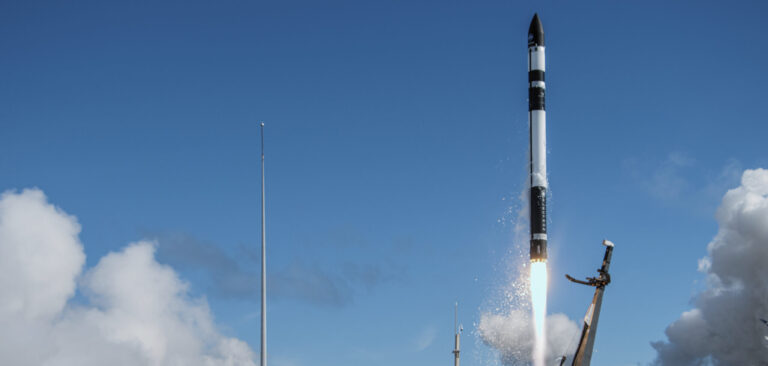
NASA launched the first pair of CubeSats as part of a constellation designed to study tropical cyclones from Rocket Lab’s base in Māhia, New Zealand, on May 8, 2023.

The Time-Resolved Observations of Precipitation structure and storm Intensity with a Constellation of Smallsats (TROPICS) mission is a constellation of four identical CubeSats designed to observe tropical cyclones in a unique, inclined low-Earth orbit over Earth’s tropics – an orbit that allows them to travel over any given storm about once an hour. Current weather tracking satellites have a timing of about once every six hours.

NASA and Rocket Lab team members successfully sent commands to the first CubeSat at 1:48am EDT, May 8, before establishing communications with the second CubeSat at 6:31 am EDT.

Karen St Germain, director, Earth Science Division at NASA headquarters in Washington, said, “Providing more frequent imaging will not only improve our situational awareness when a hurricane forms. The data will provide information to models that help us determine how a storm is changing over time, which in turn helps to improve forecasts from our partners like the National Hurricane Center and Joint Typhoon Warning Center.”

Peter Beck, Rocket Lab founder and CEO, said, “The TROPICS constellation has the real potential to save lives by providing more timely data about storm intensity and providing advance warning to those in storm paths, so it’s an immense privilege to have deployed these spacecraft to their precise orbits before the upcoming storm season. We’re grateful to the NASA team for entrusting us with such a critical mission and we look forward to completing the constellation with the second Electron launch in the coming days.”

Ben Kim, TROPICS program executive for NASA’s Earth Science Division, said, “We are extremely proud of all our partners, including MIT Lincoln Labs, Blue Canyon Technologies, KSAT and Rocket Lab for successfully executing on this first launch. We look forward to the entire constellation being on-orbit to realize the benefits for the agency, as well as for our colleagues around the world.”

The second pair of TROPICS CubeSats is planned to launch aboard another Rocket Lab Electron rocket in the coming weeks. The second launch will be timed to insert the next two CubeSats into the TROPICS constellation.

The TROPICS team is led by principal investigator Bill Blackwell at Massachusetts Institute of Technology’s Lincoln Laboratory in Lexington, Massachusetts; and includes researchers from NASA, the National Oceanic and Atmospheric Administration (NOAA), and several universities and commercial partners.

Previous ArticleTomorrow.io launches AI-enhanced precipitation nowcasting tool
Next Article Scottish marine scientists deploy pressure sensors to measure impact of ocean currents on climate

Read Similar Stories

Early Warning Systems

China expands MAZU early warning system for developing countries

April 30, 20262 Mins Read
Radar

EWR Radar Systems wins US Air Force contract for portable Doppler radar support

April 20, 20262 Mins Read
Space Weather

Northumbria University secures £4m to study Earth’s radiation belts

April 16, 20262 Mins Read
Latest News

Researchers investigate links between air pollution, extreme weather and climate

May 1, 2026

China expands MAZU early warning system for developing countries

April 30, 2026

Météo-France begins construction of France’s tallest weather radar tower in Sembadel

April 29, 2026

Receive breaking stories and features in your inbox each week, for free


Enter your email address:


Supplier Spotlights
  • GAMIC GmbH
Getting in Touch
  • Contact Us / Advertise
  • Meet the Editors
  • Media Pack
  • Free Weekly E-Newsletter
Our Social Channels
  • Facebook
  • LinkedIn
© 2026 UKi Media & Events a division of UKIP Media & Events Ltd
  • Cookie Policy
  • Privacy Policy
  • Terms and Conditions
  • Notice and Takedown Policy

Type above and press Enter to search. Press Esc to cancel.